Description
ABB AO2040 Advance Optima Continuous Gas Analyzer
Key Technical Specifications
| Parameter | Specification |
|---|---|
| Manufacturer | ABB |
| Series | Advance Optima AO2000 |
| Model | AO2040 |
| Product Type | Wall-mounted continuous gas analyzer system |
| Housing Type | Wall-mounted |
| Width | 444 mm |
| Depth | 199 mm |
| Height | 412 mm |
| Height with Connection Box | Up to 597 mm |
| Standard Housing Protection | IP20 |
| Protection with Connection Box | IP54 |
| Housing Without Power Supply/Display/Control Unit | IP65 |
| Power Supply | 100–240 VAC |
| Maximum Current | 2.2 A |
| Analyzer Modules | Up to 4 in a multiple-analyzer system |
| Maximum Sample Components | Up to 6 |
| System Bus | Linear, maximum 350 m |
| Communication | Ethernet TCP/IP, OPC, PROFIBUS, Modbus, configuration-dependent |
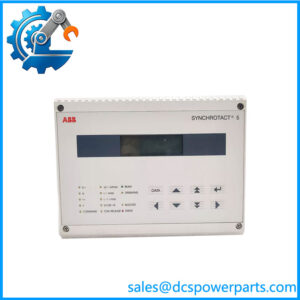
ABB specifies the as the wall-mounted version of the Advance Optima AO2000 platform. Its published dimensions are 444 mm wide × 199 mm deep × 412 mm high, with 597 mm applicable when the connection box is included. The standard housing is IP20, with IP54 available with the connection box and IP65 for the housing without the power supply/display/control unit.
The architecture is modular. ABB describes analyzer modules, an electronics module, I/O modules and boards, power supplies, housing/display-control equipment, and the system bus as separate system elements. Up to four analyzer modules can be combined, with a maximum multiple-analyzer arrangement handling up to six sample components.
Product Introduction
The is the wall-mounted housing configuration of the Advance Optima continuous gas analyzer system, intended for continuous process and emissions gas measurement. Unlike a fixed-function analyzer, the provides a modular platform in which different analyzer technologies can be installed according to the measurement task. ABB lists technologies including infrared and UV photometers, oxygen analyzers, thermal-conductivity analyzers, FID analyzers, and laser measurement modules within the family.
The central architecture combines system control, display and operator functions, power distribution, communications, and analyzer-module connectivity. This distinction matters during procurement: ordering an housing does not by itself define which gas component is measured. The installed analyzer module, gas path, sample conditioning equipment, I/O configuration, and system options determine the actual analytical function.
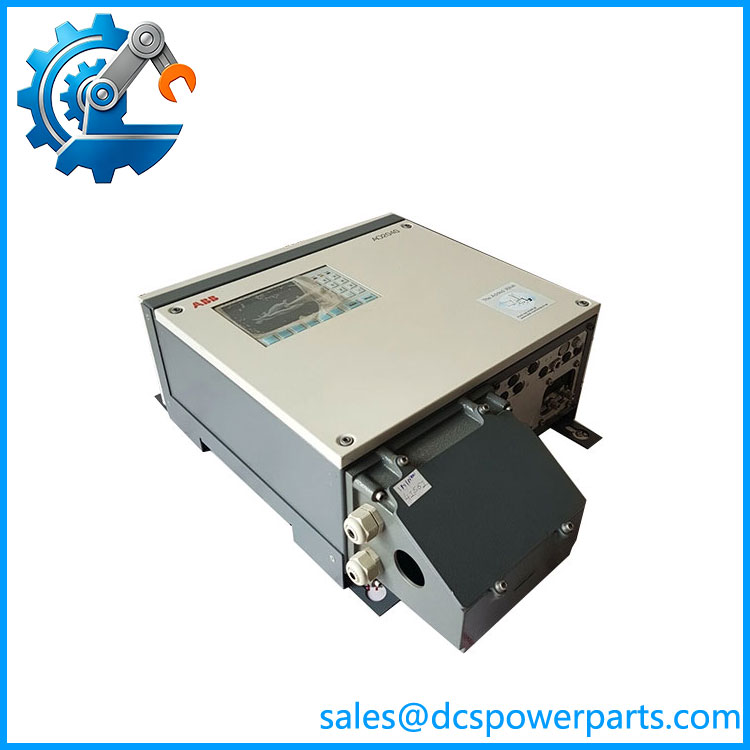
AO2040
Application Scenarios & Field Pitfalls — The Engineer’s Perspective
Engineering Pain Point
A common mistake with legacy gas-analysis equipment is identifying the complete analyzer system only by its housing designation. identifies the wall-mounted system configuration, but the actual measurement principle comes from the installed analyzer module. Replacing the housing or central electronics without recording the analyzer-module configuration can turn a seemingly simple spare-parts job into a commissioning problem.
Typical Applications
- Continuous Process Gas Analysis: Monitoring gas concentrations in industrial process streams.
- Emissions Monitoring: Supporting continuous measurement systems for combustion and environmental applications.
- Multi-Component Analysis: Combining multiple analyzer technologies in one centralized installation.
- Combustion and Energy Systems: Measuring oxygen and other process-gas components where continuous feedback is required.
- Hazardous-Area Applications: Selected configurations support hazardous-area applications and flammable-gas measurement, subject to the exact analyzer and housing configuration.
Technical Pitfalls
- is not the analyzer sensor itself. Confirm the installed analyzer module, such as Uras, Limas, Magnos, Caldos, Fidas, or LS-series equipment, before purchasing replacement components.
- Check the complete system configuration. ABB’s architecture allows analyzer modules, I/O, pneumatics, power supplies, and housing options to be combined in different ways.
- Do not assume all units have identical I/O. I/O modules and boards are configurable system components. Record the installed module types and terminal assignments before replacement.
- System-bus length matters. ABB documents a linear system-bus structure with a maximum length of 350 m. Remote analyzer modules and sample-conditioning equipment therefore need to be considered as part of the complete installation.
- Verify protection rating against the actual enclosure. IP20, IP54, and IP65 descriptions apply to different housing arrangements. Do not apply the highest rating universally.
- Power-supply configuration must be checked. ABB documentation identifies 100–240 VAC, 2.2 A maximum for the standard configuration, while special versions can have different electrical arrangements.
- Sample conditioning is part of measurement reliability. Cooler, flow, condensate, filtration, and sample-feed equipment can be connected to the system through appropriate I/O and system-bus arrangements. A healthy analyzer cannot compensate for poor sample preparation.
- Hazardous-area claims must be configuration-specific. The standard housing should not automatically be treated as an Ex-rated analyzer. ABB has separate hazardous-area configurations such as -Fidas24 Ex and -CU Ex.
Related Products
- ABB AO2020 — 19-inch rack-mounted housing; mechanically different from the wall-mounted .
- ABB -Fidas24 Ex — Specialized wall-mounted hazardous-area configuration for the FID analyzer.
- ABB AO2060 — Flameproof analyzer-unit configuration for hazardous locations.
- ABB Uras26 — Infrared photometer analyzer module for applicable systems.
- ABB Limas21 — UV/visible photometer analyzer technology for applicable gas measurements.
- ABB Magnos206 — Paramagnetic oxygen analyzer module.
- ABB Magnos27 — Oxygen analyzer module within the Advance Optima family.
- ABB Caldos25 — Thermal-conductivity analyzer module.
- ABB Fidas24 — Flame-ionization detector analyzer for applicable hydrocarbon measurements.
- ABB LS25 — Laser analyzer module used within compatible configurations.
These components should not be treated as interchangeable variants. They represent different functional layers or analyzer technologies within the Advance Optima architecture. ABB specifically describes the platform as a combination of housing, electronics, analyzer, I/O, power, and system-bus components.
Procurement Note
For an replacement, record the complete analyzer system configuration, including the central-unit/electronics module, installed analyzer-module type and serial information, I/O boards, power-supply version, display/control unit, connection box, sample-conditioning equipment, and communication configuration.
The most important procurement mistake to avoid is specifying only when the actual requirement is a complete configured analyzer. Two systems can share the same wall-mounted housing while performing different gas measurements and using different analyzer modules. For maintenance work, matching the analyzer technology and system configuration is more important than matching the enclosure designation alone.