Description
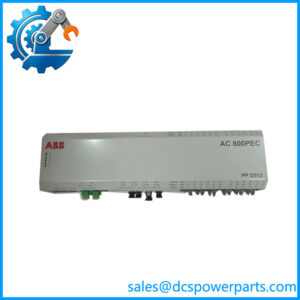
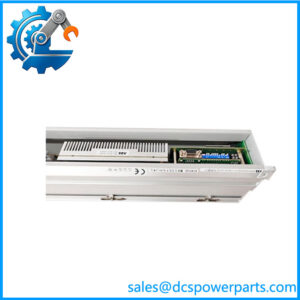
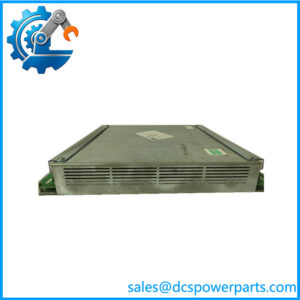
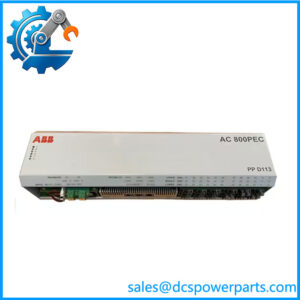
ABB AO01 Analog Output Module
Product Introduction
In a Symphony Plus control cabinet, analog outputs are often the point where a controller’s software configuration becomes a real process command—valve position, speed reference, damper position, or another continuous control signal. The ABB AO01 provides 16 independently configurable high-level analog outputs, with each channel supporting either 4–20 mA or 1–5 VDC. ABB assigns a dedicated 12-bit D/A converter to every channel rather than sharing one converter across the module.
AO01 belongs to the SD Series I/O family and is designed for Symphony Plus controller architectures. ABB specifies group isolation across the 16 channels, 1500 V galvanic isolation between field signal and logic, and open-circuit detection in current-output mode. The module can be configured through Symphony Plus function codes FC 221 and FC 223, so a physical replacement is only half the job—controller configuration and the actual field termination arrangement need to match as well.
Key Technical Specifications
| Parameter | ABB AO01 Specification |
|---|---|
| Product Model | AO01 |
| Manufacturer | ABB |
| System | ABB Ability™ Symphony Plus |
| I/O Series | SD Series I/O |
| Product Type | Analog Output |
| Number of Channels | 16 |
| Output Signal | 4–20 mA DC or 1–5 VDC |
| Channel Configuration | Independently configurable |
| D/A Conversion | Dedicated converter per channel |
| D/A Resolution | 12-bit |
| Accuracy | ±0.1% FSR |
| Current-Mode FSR | 25 mA |
| Voltage-Mode FSR | 6.25 VDC |
| Current Output Load | 0–750 Ω |
| Voltage Output Load | 22 kΩ–1 MΩ |
| Field I/O Power | 20 mA/channel at 24 VDC ±10% |
| Module Power | 24 VDC ±10% |
| Module Current | 58 mA typical / 75 mA maximum |
| Field-to-Logic Isolation | Galvanically isolated, 1500 V up to 1 minute |
| Channel Isolation | 1 × 16 group isolated, 1500 V up to 1 minute |
| Open-Circuit Detection | <5 seconds, current mode |
| Short-Circuit Protection | Maximum 26 mA, current mode |
| HART | No |
| SOE | No |
| Redundancy | No |
| Maximum Field Cable Length | 600 m |
| Form Factor | Standard, 190 mm |
| Mounting | Horizontal row or vertical column |
| Service Interface | Mini-USB |
| Operating Temperature | -40 to +70 °C |
| Status | Active |
The current ABB hardware selector lists AO01 with 24 VDC ±10% module power, 58 mA typical / 75 mA maximum module current, 0–750 Ω current-mode load capability, 22 kΩ–1 MΩ voltage-mode load capability, and ±0.1% full-scale accuracy.
Application Scenarios & Field Considerations
1. Control-valve position signals
is suited to continuous control applications where the field device accepts a conventional 4–20 mA command. This can include valve positioners, actuator interfaces, and other analog control elements. The actual load resistance must be checked before commissioning; a long cable run plus a receiver with substantial input resistance can consume part of the available current-loop voltage budget.
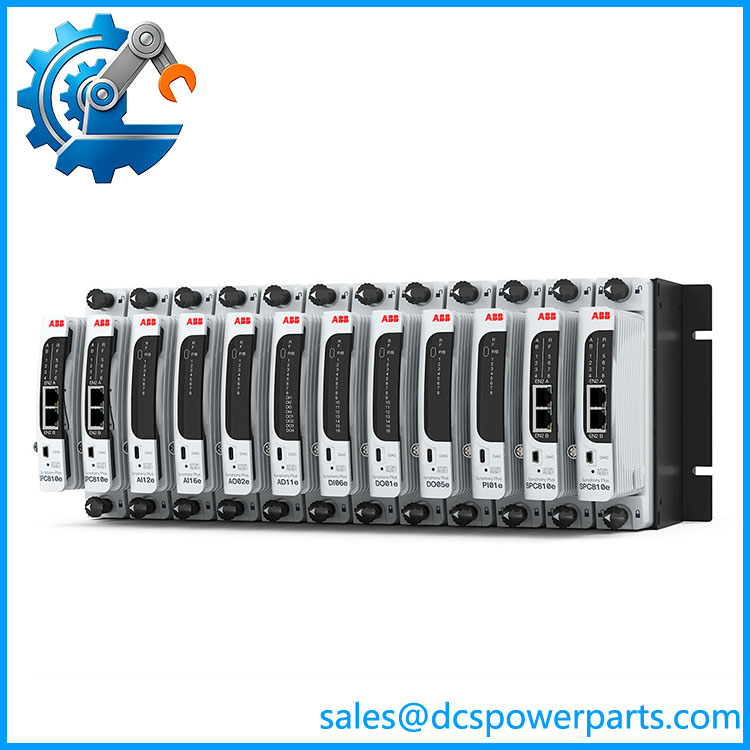
AO01
2. Process speed and output references
The 1–5 VDC mode allows to provide voltage-based references where the receiving controller or drive uses that signal standard. Each channel is configured independently, so one can contain a mixture of current and voltage outputs rather than forcing the entire module into one signal mode.
3. Symphony Plus control-system expansion
is intended for the SD Series I/O architecture. ABB’s product catalog specifically identifies HBS01-EPD and VBS01-EPD as compatible bases. Do not assume that every SD Series termination unit is interchangeable simply because the module uses the standard 190 mm form factor.
4. Legacy cabinet replacement
For an existing Symphony Plus installation, can be relevant when replacing or expanding conventional analog control outputs. The engineering check should include the existing base, field wiring, signal range, controller configuration, output loading, and required diagnostic functions.
Related Products
- ABB AO02 — 16-channel analog output module with HART capability. It is not simply a higher-specification ; the HART functionality changes the application and configuration requirements.
- ABB AO05 — 8-channel HART analog output module with individually isolated outputs and dedicated HART modem functionality per channel.
- ABB DI03 — 16-channel 24 VDC digital input module for discrete field signals.
- ABB AI01 — SD Series analog input module for conventional high-level analog signals.
- ABB AI02 — analog input module with HART functionality.
- ABB AI05 — HART-capable analog input module.
- ABB HBS01-EPD — horizontal SD Series mounting/termination base identified by ABB as compatible with .
- ABB VBS01-EPD — vertical SD Series mounting/termination base identified as compatible with .
The important distinction is between and AO02. Both handle 16 analog output channels, but AO02 is the HART version. A procurement substitution based only on channel count can therefore produce an unexpected loss of field-device functionality.
Engineer’s Guide — Field Pitfalls to Avoid
1. Check whether the field device needs HART.
is explicitly listed as HART: No. If the existing application uses HART communication on the analog loop, should not automatically be treated as an equivalent replacement for an AO02 or AO05 installation.
2. Don’t confuse 1–5 V with ±10 V output.
‘s documented voltage range is 1–5 VDC. It is not a bipolar ±10 V analog-output module. This matters when interfacing older drive or actuator equipment that expects a different voltage standard.
3. Calculate the current-loop load.
ABB specifies a current-mode output load of 0–750 Ω. Cable resistance, barriers, isolators, and the receiving instrument all contribute to the total loop burden. Check the complete circuit rather than looking only at the transmitter or valve positioner specification.
4. Understand the isolation architecture.
is group isolated rather than individually channel-isolated. ABB documents the 16 channels as one isolated group. If the cabinet has field circuits with substantially different electrical references, this distinction should be considered before selecting the module.
5. Match the base and wiring arrangement.
ABB specifically identifies HBS01-EPD and VBS01-EPD bases for . A replacement module should be checked against the actual cabinet termination hardware instead of assuming the existing mounting arrangement is compatible.
6. Verify the controller configuration.
ABB uses FC 221 for I/O device definition and FC 223 for analog-output channel configuration. Engineering units, alarm limits, and the default output behavior following controller communication loss are configuration parameters—not properties that can be inferred from the label.
FAQ
What is the ABB ?
The is a 16-channel analog output module belonging to the Symphony Plus SD Series I/O family. It provides configurable 4–20 mA or 1–5 VDC high-level analog outputs.
How many analog outputs does provide?
provides 16 independently configurable analog output channels. Each channel has its own D/A converter with 12-bit resolution.
Does ABB support both current and voltage output?
Yes. Each channel can be configured for either 4–20 mA DC or 1–5 VDC operation. This configuration is performed at the channel level rather than selecting one signal type for the entire module.
Does support HART?
No. ABB’s current hardware selector identifies as HART: No. If HART communication is required, the appropriate HART-capable Symphony Plus analog-output module should be evaluated instead.
What is the output accuracy of ?
ABB specifies ±0.1% of full-scale range, with the stated FSR being 25 mA for current mode and 6.25 VDC for voltage mode.
What bases are compatible with ABB ?
ABB’s product catalog identifies HBS01-EPD and VBS01-EPD as compatible bases for . The actual cabinet arrangement should still be checked before ordering a replacement.
Is a direct replacement for AO02?
Not functionally equivalent in every application. Both provide 16 analog outputs, but AO02 adds HART capability. If the existing field devices depend on HART communication, replacing with would remove that functionality.
What should be checked before purchasing an ABB replacement?
Confirm the exact model, module revision, base/termination unit, field signal type, output loading, controller configuration, and required diagnostics. For an installed system, also verify that the replacement’s firmware and configuration are accepted by the existing Symphony Plus controller architecture. For used or surplus inventory, actual physical condition should be confirmed separately from the model number.