Description
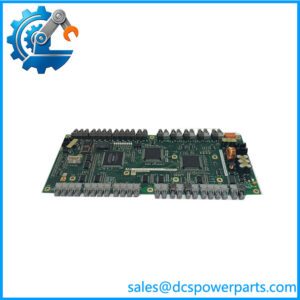
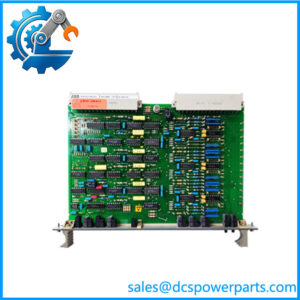
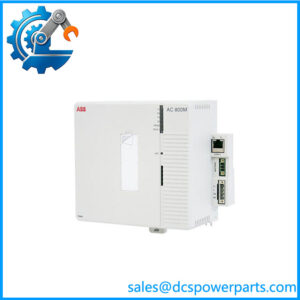
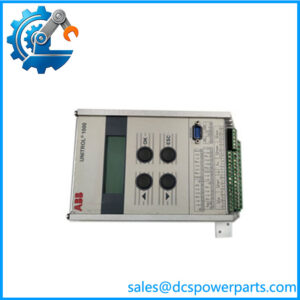
ABB AI02J Symphony Plus 16-Channel Analog Input Module
Key Technical Specifications
| Parameter | Specification |
|---|---|
| Model | AI02J |
| Manufacturer | ABB |
| Platform | Symphony Plus SD Series |
| Module Type | Analog Input |
| Number of Channels | 16 |
| Input Range | 4–20 mA / 1–5 VDC |
| Channel Configuration | Independently configurable |
| HART | HART v5.4 |
| HART Modem | 1 per module |
| HART Secondary Variables | Up to 24 total; up to 4 per channel |
| A/D Resolution | 12–16 bits with polarity |
| A/D Converter | 1 shared converter per module |
| Update Rate | 100 ms for all 16 channels |
| Accuracy | ±0.1% FSR |
| Current-Mode Input Impedance | 250 Ω |
| Voltage-Mode Input Impedance | ≥250 kΩ |
| Module Supply | 24 VDC ±10% |
| Typical Module Current | 100 mA |
| Field I/O Supply | 24 VDC ±10%, 20 mA/channel |
| Field-to-Logic Isolation | 1500 V, up to 1 minute |
| Channel Isolation | 1 × 16 group isolation, 1500 V |
| Short-Circuit Protection | Maximum 96 mA/channel |
| Open-Circuit Detection | <5 seconds |
| Operating Temperature | -40°C to +70°C |
| Storage Temperature | -40°C to +85°C |
| Relative Humidity | 20–95% at 40°C, non-condensing |
| Protection | IP20 cabinet installation |
The AI02J uses a single A/D converter for all 16 channels, with a complete 16-channel update within approximately 100 ms. Each input can be configured for either 4–20 mA or 1–5 VDC.
HART communication is integrated into the module. One HART modem can provide access to up to 24 secondary variables across the module, with a maximum of four secondary variables per channel.
Product Introduction
The ABB AI02J is a 16-channel analog input module designed for ABB Symphony Plus SD Series I/O systems. It accepts high-level process signals in either 4–20 mA or 1–5 VDC format and converts them into digital process data for the control system. Each channel can be configured independently, making the module suitable for mixed analog instrumentation within the same I/O assembly.
A major practical feature is integrated HART v5.4 communication. In addition to the primary analog process value, the module can retrieve secondary HART variables and diagnostic information from compatible smart transmitters. The field signal section is galvanically isolated from the logic section, while the 16 channels use group isolation rather than individual channel-to-channel isolation.
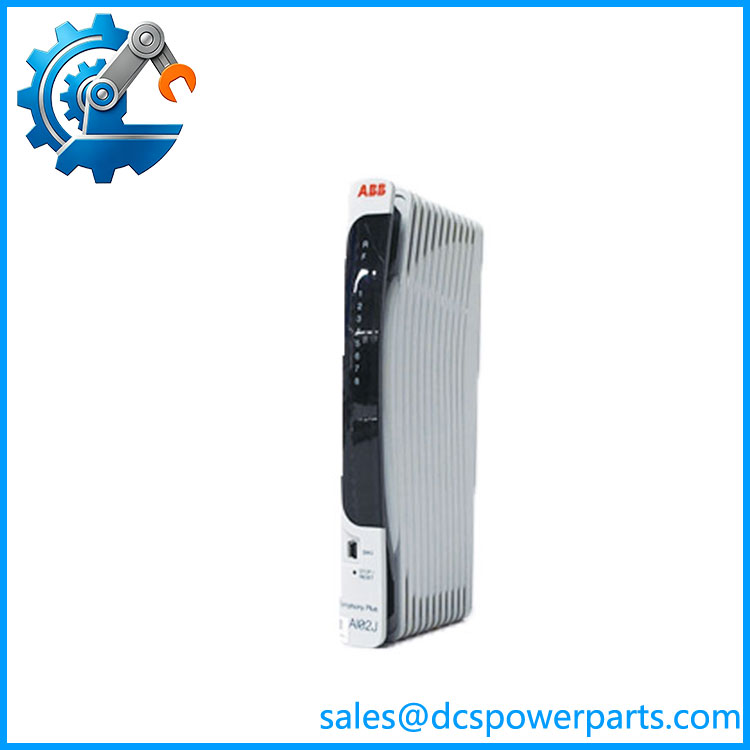
AI02J
Application Scenarios & Field Pitfalls
AI02J is typically used where a Symphony Plus controller needs a relatively high-density interface for continuous process measurements. The important field issue is usually not channel count but signal type, termination hardware, HART configuration, and isolation architecture.
Typical applications:
- Pressure, flow, level, and temperature transmitters
- Oil and gas process instrumentation
- Power-generation process monitoring
- Chemical and petrochemical control systems
- Water and wastewater process measurement
- Legacy Symphony Plus DCS maintenance and expansion
Engineer’s checks before replacement:
- Verify the termination unit. AI02J is intended to interface through dedicated Symphony Plus termination hardware such as cHBX01L or VBX01T. It should not be treated as a universal plug-in analog card.
- Check 4–20 mA versus 1–5 VDC configuration. These ranges use different input impedances and field wiring arrangements. Confirm the channel configuration before commissioning.
- Understand the isolation topology. The module provides 1500 V isolation between field signals and the logic section, but the 16 channels are described as 1 × 16 group isolated. Do not assume every channel is individually isolated from every other channel.
- Check HART requirements. The HART modem is shared at module level. The primary 4–20 mA process signal remains the control value, while HART provides additional digital information. HART performance depends on the complete loop wiring and connected transmitter.
- Do not confuse with AO02J. is an analog input module. AO modules perform the opposite signal direction and have different field-interface requirements.
- Preserve the original channel configuration. Engineering units, scaling, alarm limits, transmitter range, damping, HART settings, and channel assignments should be documented before replacing a field module.
Related Products
- ABB AO02J — Symphony Plus analog output module; provides output signals rather than acquiring field measurements.
- ABB DI02J — Digital input module for discrete field status signals.
- ABB DO02J — Digital output module for discrete control commands.
- ABB cHBX01L — Symphony Plus termination/base hardware associated with installations.
- ABB VBX01T — Alternative termination/base hardware used with Symphony Plus I/O.
- ABB PM860A — Symphony Plus controller family hardware used as part of the control architecture.
- ABB PM861A — Controller option for Symphony Plus systems.
- ABB PM864A — Higher-performance controller used in compatible Symphony Plus configurations.
The related modules should not be considered drop-in substitutes simply because they share the same Symphony Plus platform. Signal direction, field wiring, termination hardware, and controller configuration must all be checked.
Procurement Note
For procurement, specify:
ABB — Symphony Plus SD Series — 16-Channel Analog Input Module with HART
The minimum replacement information should include the model, installed termination unit, system/controller version, channel signal types, HART requirements, and existing configuration.
One detail worth preserving in your purchasing database is the isolation description: 1500 V field-to-logic isolation with 1 × 16 group isolation. Calling this “16 individually isolated channels” would be technically misleading.