Description
Product Overview
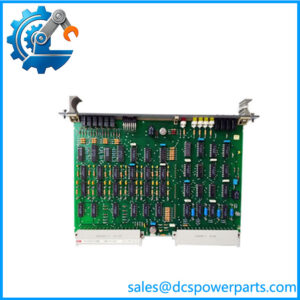
Protection systems need two things from their I/O hardware: accurate awareness of field conditions and dependable execution of trip commands. ABB 216DB61 HESG324063R100/J is the Binary Input and Tripping Output Unit used within the REG216 numerical protection platform. Its documented configuration combines 16 digital inputs with 8 outputs for two-pole control of auxiliary tripping relays, allowing the protection system to receive external status information and issue controlled trip commands through the same hardware assembly.
Within a REG216 installation, ABB 216DB61 occupies the protection-system I/O layer rather than the analog measurement stage. Binary signals can represent breaker, interlock, blocking, or other external equipment states, while the monitored output channels support the execution of protection trips. ABB documentation describes the unit as a plug-in module within the REG216 rack architecture, with activated inputs and outputs indicated by front-panel LEDs. The module uses the B448C parallel bus for communication with the REG216 system.
For procurement, ABB 216DB61 HESG324063R100/J should be matched by the complete part identification rather than by the generic description “digital I/O module.” This is protection hardware, and an incorrect output arrangement can affect the trip circuit itself. To be completely transparent, some secondary listings publish conflicting electrical specifications for the module. The core 16-input / 8-trip-output architecture is well supported, but voltage, isolation, timing, and environmental figures should be taken from the applicable REG216 documentation and installed protection scheme before being used as acceptance criteria.
Product Introduction
A protection relay can detect a fault perfectly and still fail at the last stage if its trip interface is incorrectly configured. ABB 216DB61 provides 16 binary inputs and 8 monitored tripping outputs within the REG216 protection architecture, linking field status signals with protection-trip execution.
For a legacy replacement, the complete HESG324063R100/J identification should be checked against the existing rack and protection configuration. This is not a generic PLC output card; it participates directly in a protection scheme.
Key Technical Specifications
| Parameter | Value |
|---|---|
| Manufacturer | ABB |
| Model | 216DB61 |
| Part Number | HESG324063R100/J |
| Product Type | Binary Input and Tripping Output Unit |
| Protection Platform | |
| Binary Inputs | 16 |
| Tripping Outputs | 8 |
| Output Configuration | Two-pole control of auxiliary tripping relays |
| Output Monitoring | Monitored output amplifiers |
| Input Function | External binary/status signals |
| Special Inputs | Two inputs can be used for external trip enable/block functions |
| Status Indication | Front-panel LEDs for activated inputs/outputs |
| System Bus | B448C parallel bus |
| Rack Position | One rack division |
| Installation | Plug-in protection-system unit |
| Primary Application | Generator, transformer, feeder, and other numerical protection schemes |
| Input Voltage | Configuration-dependent; verify system documentation |
| Output Contact Rating | Verify against the applicable documentation |
| Operating Temperature | Verify against the applicable hardware documentation |
| Condition | New Surplus, subject to inspection and functional testing |
The 16 binary inputs, 8 tripping outputs, monitored output amplifiers, LED indication, and one-rack-division arrangement are documented for the 216DB61.
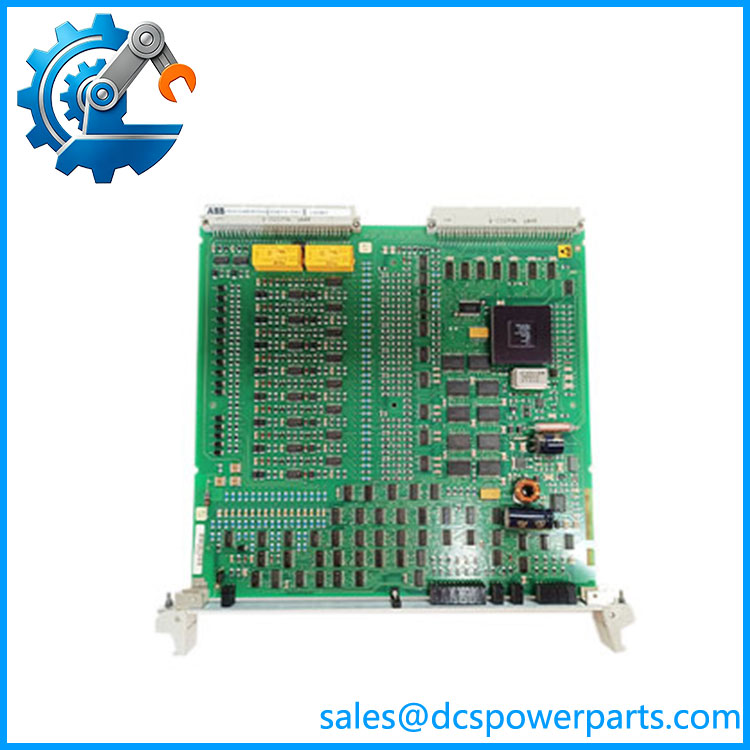
216DB61 HESG324063R100/J
Related Products
- 216EA62 — analog input unit. It handles analog measurement acquisition, while 216DB61 handles binary input and tripping-output functions.
- 216AB61 — Digital output unit within the family. Its output function differs from the combined binary-input and tripping-output role of 216DB61.
- 216GA61 — Output relay module used for signaling functions. It is complementary to 216DB61 but should not be treated as its replacement.
- 216GA62 — Tripping relay module associated with the architecture. It provides relay-level trip functions and works at a different hardware layer from 216DB61.
- 216GE61 — Input relay module used for binary signaling and relay-interface functions within the system.
- 216GW61 — Input transformer module associated with the measurement architecture. Its role is measurement interfacing rather than binary/trip I/O.
- 216MB66 — rack/hardware assembly used to accommodate the system’s plug-in electronic units.
- 216VC62 — processing/control hardware. It operates at the system-processing level rather than directly providing the 216DB61’s binary/trip interface.
Frequently Asked Questions
What is ABB 216DB61 HESG324063R100/J used for?
216DB61 is the Binary Input and Tripping Output Unit for the ABB protection system. It provides 16 digital inputs for external signals and 8 outputs used for two-pole control of auxiliary tripping relays.
Its function is therefore split between receiving field status information and executing protection-trip commands.
How many inputs and outputs does the 216DB61 have?
The documented configuration provides:
- 16 binary inputs
- 8 tripping outputs
- Monitored output amplifiers
- LED indication for activated inputs and outputs
The eight outputs are intended for two-pole control of auxiliary tripping relays, which is an important distinction from a conventional PLC digital-output module.
Can I hot-swap the ABB 216DB61?
Do not assume hot-swapping is permitted.
The 216DB61 is installed as a plug-in unit within the rack architecture, but that physical arrangement does not by itself establish a live-removal procedure.
Because the module participates in protection-trip circuits, replacement should follow the applicable protection-system maintenance procedure. Isolate the relevant circuits and confirm the trip path is safe before removing the module.
Can 216DB61 replace 216AB61?
Not automatically.
Although both belong to the I/O family, their functions differ. 216DB61 combines binary inputs with tripping outputs, whereas 216AB61 is identified as a digital-output unit.
Check the protection configuration, wiring, rack position, and output requirements before considering substitution.
Will replacing 216DB61 erase my protection logic?
The 216DB61 is an I/O unit rather than the primary processing module. Its documented role is field binary acquisition and trip-output control.
That means replacement would not normally be expected to erase the main protection application. Still, before maintenance:
- Record the existing configuration.
- Document every connected input and output.
- Record the rack position.
- Preserve available settings and event records.
- Verify all trip and blocking circuits after replacement.
The critical risk is incorrect wiring or I/O assignment, not simply loss of program memory.
Does 216DB61 directly trip the circuit breaker?
It provides the tripping-output interface used to control auxiliary tripping relays; it should not be described as a standalone circuit-breaker protection relay. The protection algorithms are executed elsewhere in the architecture, while 216DB61 provides the I/O path for the resulting trip command.
That distinction matters during troubleshooting. A missing trip can originate in protection logic, the communication path, the 216DB61 output stage, the auxiliary relay, or the breaker trip circuit.
How should I verify a New Surplus ABB 216DB61?
For a protection-system spare, I would inspect the actual assembly rather than relying only on the catalog description.
Verify:
- 216DB61 model marking
- HESG324063R100/J complete identification
- Hardware/revision markings
- Front-panel LEDs and connectors
- PCB condition
- Rack connector condition
- Evidence of previous installation or repair
- Functional test documentation
- Correct 16-input / 8-trip-output configuration