Description
Technical Specifications
| Parameter | Details |
|---|---|
| Product Model | 07KT94L |
| Manufacturer | ABB |
| Controller Family | Advant Controller 31 |
| Product Type | PLC basic unit |
| Digital Inputs | 24 documented for 07 KT 94 variants |
| Digital Transistor Outputs | 16 documented for 07 KT 94 variants |
| Digital I/O | 8 configurable digital input/output points |
| Analog Inputs | 8 |
| Analog Outputs | 4 |
| Rated Supply | 24 V DC for the documented 07 KT 94 family |
| Serial Interfaces | COM1 and COM2 |
| Supported Communication | MODBUS via COM2 is documented for the 07 KT 94 family; other options are variant-dependent |
| Program/Data Capacity | Family manual lists 240 kB user program and 120 kB user data for 07 KT 94 R101/R161 |
| Exact L-variant Hardware Revision | Confirm from nameplate and matching manual |
The specifications above are based on the 07 KT 94 family documentation and should not be assumed to describe every hardware revision of the 07KT94L without checking its exact order code.
Product Overview
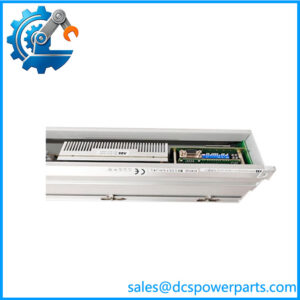
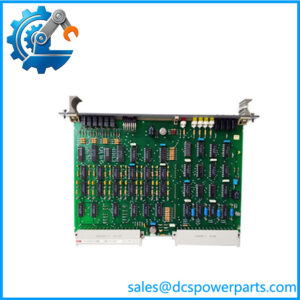
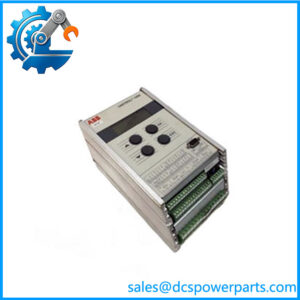
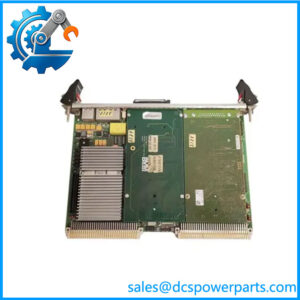
The ABB 07KT94L is associated with the Advant Controller 31 family of programmable logic controllers. This controller family was designed for industrial automation applications that require sequential logic, signal processing, and communication with distributed I/O or other automation equipment. As a PLC basic unit, it executes the user program and coordinates control tasks using its onboard digital and analog interfaces. ABB’s documentation identifies the 07 KT 94 as a basic unit that can operate as a bus master in the Advant Controller 31 decentralized automation system or as a slave/remote processor, depending on the configuration.
The documented 07 KT 94 family provides a substantial mix of onboard I/O, including digital inputs, transistor outputs, configurable digital points, analog inputs, and analog outputs. Its serial interfaces support configuration and communication functions, with MODBUS via COM2 described in the family manual. Exact interface availability and supported features must be checked against the installed variant. The suffix matters: the 07KT94L should not automatically be treated as identical to 07 KT 94 R101, R161, or other related variants.
For replacement planning, verify the complete order number, hardware markings, terminal arrangement, and the existing control-system configuration. Also check the user-program backup, I/O assignments, communication settings, and any connected CS31 bus devices before removing the existing controller. A replacement controller with a similar model designation may still require configuration work or may lack a variant-specific interface. The safest approach is to match the installed unit to the correct ABB manual and approved parts list rather than relying on a shortened model number alone.
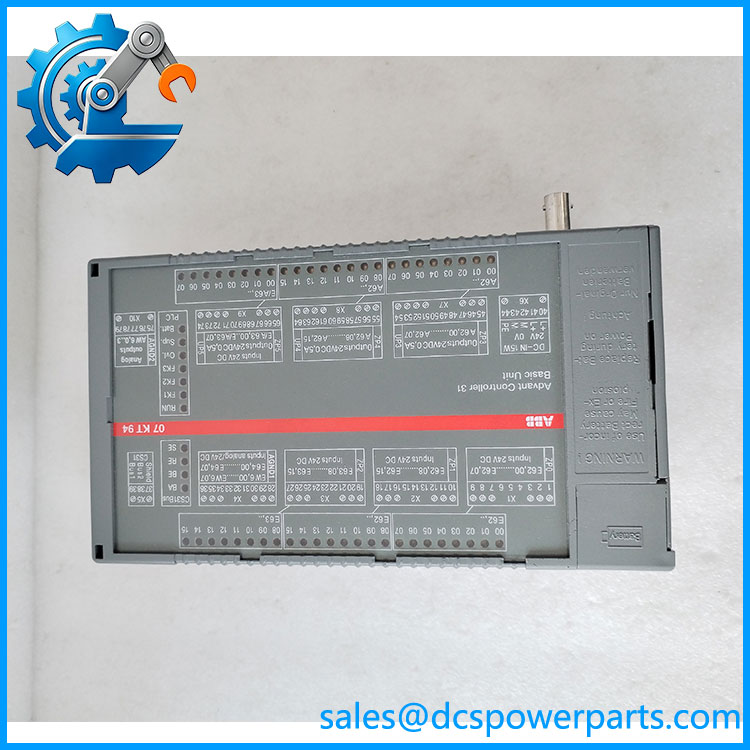
07KT94L
Major Features and Advantages
1. Integrated PLC Processing
The 07KT94L belongs to a controller family intended to execute user-defined industrial control logic. This allows a control system to handle machine sequences, interlocks, status processing, and coordination with connected I/O. The exact processing and memory specifications should be verified for the installed variant.
2. Onboard Digital and Analog I/O
The 07 KT 94 family documentation describes 24 digital inputs, 16 digital transistor outputs, 8 configurable digital I/O points, 8 analog inputs, and 4 analog outputs. These onboard resources can reduce the need for separate I/O modules in suitable applications. Confirm the exact configuration and signal requirements before designing a replacement.
3. Industrial Communication Support
COM1 and COM2 are documented on the 07 KT 94 family, and MODBUS via COM2 is described in the manual. The controller family also supports the Advant Controller 31 CS31 decentralized automation system. The available interfaces and communication modes depend on the exact variant and configuration.
4. Diagnostics and Status Indication
The family documentation describes diagnostic functions including cycle-time monitoring, battery monitoring, syntax-error detection, and checksum monitoring. These functions help maintenance staff investigate controller status and program-related issues. Exact front-panel indicators should be checked against the unit’s hardware documentation.
5. Support for Legacy-System Maintenance
For plants maintaining existing Advant Controller 31 installations, a correctly identified 07KT94L may be important for preserving the established control architecture. Replacement work should include program backup, I/O verification, communication checks, and confirmation of the required accessories.
Applications
- Machine automation: Executes PLC logic for sequences, interlocks, and equipment status handling.
- Process-control auxiliaries: Handles discrete and analog signals where the onboard I/O ranges match the application’s requirements.
- Distributed control: Works within the Advant Controller 31 CS31 system architecture when configured for the relevant bus role.
- Serial communications: Supports documented serial communication functions, including MODBUS via COM2 for applicable 07 KT 94 variants.
- Legacy equipment support: May serve as a replacement controller in existing systems when the order code, hardware variant, and application configuration match.
These are application categories consistent with the controller family. They are not confirmation that a particular 07KT94L is compatible with every Advant Controller 31 system or third-party device.
Related Products
| Product | Relationship |
|---|---|
| 07 KR 91 | Related Advant Controller 31 basic unit documented in the same controller manual. |
| 07 KT 94 R101 | A documented 07 KT 94 variant; verify differences before substitution. |
| 07 KT 94 R161 | Another documented variant with variant-specific interface capabilities. |
| 07 LE 90 | Battery module referenced in the 07 KT 94 documentation. |
| 07 SK 92 | System cable referenced in the controller documentation. |
| 07 MC 90 | SmartMedia card accessory referenced in the family manual. |
The accessories and related controller variants above are documented in the 07 KT 94 manual. Verify order numbers and compatibility with the actual 07KT94L before purchase.
Installation and Maintenance
Before replacing the 07KT94L, document the installed order number, hardware revision, terminal wiring, communication settings, and connected CS31 bus devices. Back up the user program and relevant configuration data wherever possible. Record the controller’s operating state and existing faults before disconnecting it.
Follow the manufacturer’s electrical safety procedures when isolating the control panel. Confirm that the replacement’s supply voltage, I/O characteristics, terminal layout, and communication interfaces match the application. Do not assume that matching the 07 KT 94 family name alone guarantees pin-for-pin compatibility.
After installation, restore the approved program and configuration, then verify I/O point by point. Check serial communication, connected bus devices, diagnostic indicators, and machine interlocks before returning the system to automatic operation. If the unit uses a battery-backed memory arrangement, follow the exact manual’s battery replacement procedure to avoid loss of retained data.
Product Assurance
For the ABB 07KT94L, product assurance should focus on correct variant identification, condition transparency, and configuration compatibility. Confirm the complete order number on the nameplate rather than relying only on the front-panel designation. The associated number GJR5252100R0161 appears in listings for the 07 KT 94 L variant, but it should be verified against the physical unit and procurement documentation.
Before dispatch, inspect the terminals, housing, connectors, and visible circuit-board areas for damage or corrosion. Claims about new condition, original manufacture, refurbishment, functional testing, and warranty should reflect the actual unit and available records. If testing is limited to visual inspection, disclose that limitation.
Procurement recommendation: Provide both 07KT94L and the complete order number from the installed controller. Verify the hardware revision, I/O requirements, communication interfaces, and program-restoration plan before approving a replacement.