Description
Key Technical Specifications
| Parameter | Value |
|---|---|
| Product Model | PPD512A10-150000 |
| ABB Material Number | 3BHE040375R1023 |
| Manufacturer | ABB |
| Product Family | AC800PEC / PPD512 |
| Product Type | Controller / Processor Module |
| Primary Application | High-speed power-electronic and excitation control |
| Programming Environment | Control Builder M |
| Programming Standard | IEC 61131-3 |
| Engineering Integration | MATLAB/Simulink with Real-Time Workshop supported on the AC800PEC platform |
| Control Architecture | High-speed control combined with conventional process-control functions |
| Field I/O | AC800PEC field I/O architecture |
| Configuration / Diagnostics | AC800PEC engineering and diagnostic tools |
| Installation | System-specific AC800PEC hardware architecture |
| Exact Supply Voltage | Verify against OEM hardware documentation |
| Communication Interfaces | System-dependent; verify installed AC800PEC configuration |
| Firmware | Verify controller revision and application compatibility before replacement |
ABB documentation describes as a high-performance control platform intended to combine fast power-electronics control with slower process-control functions. The platform can be configured using Control Builder M and supports IEC 61131-3 programming.
Product Introduction
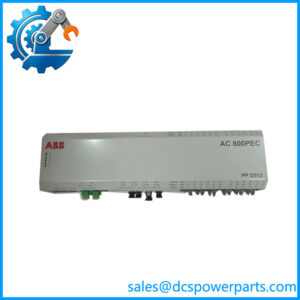
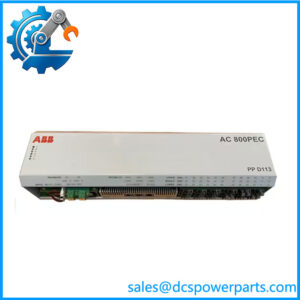
The ABB PPD512A10-150000 is an controller/processor module identified by ABB material number 3BHE040375R1023. It belongs to the PPD512 hardware family and is used where fast control execution is required alongside conventional process-control tasks.
Its practical value is strongest in installed power-electronics and excitation systems where replacing the controller without redesigning the complete control architecture can reduce outage scope. This is a system-specific processor, though. Match the hardware identifier, firmware, application software, I/O arrangement, and controller configuration before commissioning.
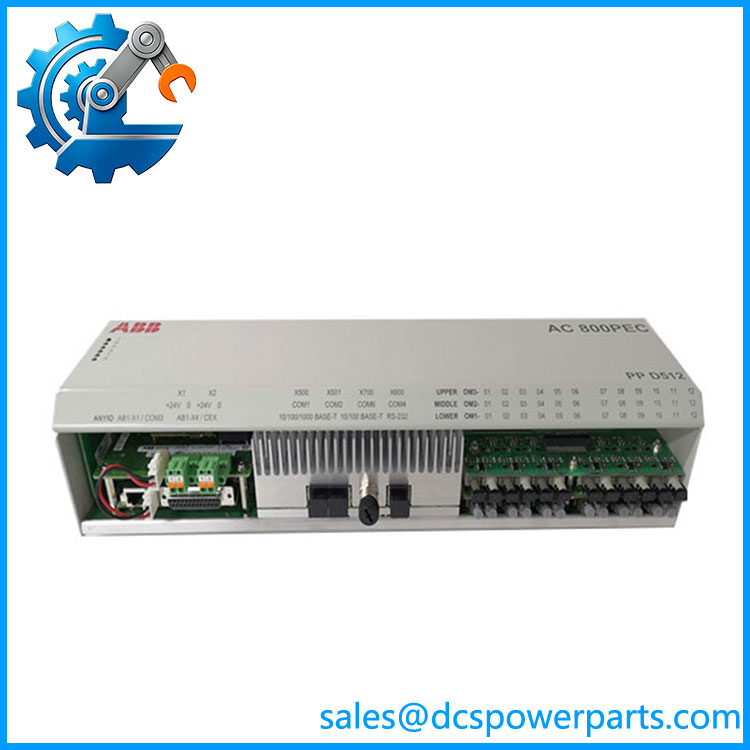
PPD512A10-150000
Application Scenarios & Field Pitfalls
Engineering Pain Point
A generator excitation controller rarely fails at a convenient time. When the controller goes down, the problem quickly becomes a plant-availability issue rather than a simple electronics replacement. The PPD512A10-150000 is part of an control architecture, so replacing it requires more than checking whether the front-panel connector fits. The controller software and hardware configuration matter just as much.
Typical Applications
- Power Generation — Static excitation control for synchronous generators and associated voltage-regulation functions.
- Power Electronics — High-speed control tasks where short process cycles are required.
- Rolling Mills — -based high-performance control applications requiring fast closed-loop execution.
- Industrial Process Control — Applications combining fast power-electronic control with conventional IEC 61131-3 process logic.
Technical Pitfalls to Avoid
- Do not confuse the controller with the complete excitation system.
PPD512 is part of a larger -based architecture. The controller does not replace the thyristor bridge, field interface, I/O hardware, or associated protection circuitry. The PPD512 static-excitation system controls excitation current through a thyristor rectifier bridge. - Back up the application before changing hardware.
systems use application software and configuration data. ABB’s training material specifically covers software upload/download, installation, diagnosis, and recovery procedures for equipment. - Verify firmware and hardware revision.
A controller with the same base model can still create commissioning problems if the installed application expects a different hardware or firmware revision. Record the existing controller identification and software version before removal. - Do not rely on generic voltage specifications from reseller listings.
The available documentation establishes the PPD512/ function, but does not provide enough reliable evidence here to state an installation supply voltage for this exact PPD512A10-150000 variant. Verify the cabinet drawings and OEM documentation.
Related Products
- ABB PPD512A10-454000 / 3BHE040375R103E — A related PPD512 controller variant. The different suffix and ABB material number indicate a different hardware configuration; it should not be treated as a direct replacement without checking the system design.
- — The broader controller family associated with the static-excitation platform. Useful when reviewing legacy system documentation, but the complete ordering code remains important for procurement.
- ABB PPD513 — A related PPD-series control platform reference. It belongs to the same general ABB control-hardware ecosystem but is not automatically interchangeable with PPD512A10-150000.
- ABB PPD517A — Another PPD-family controller reference. It may be relevant when evaluating broader ABB control architecture, but hardware and application compatibility must be established separately.
- ABB PPD539 — Related PPD-series hardware used in ABB control applications. Its different hardware designation means it should be considered an architectural reference rather than a drop-in replacement.
- ABB PPD539A102 / 3BHE039770R0102 — A specific PPD539 variant. It can be useful when identifying adjacent or alternative PPD-family hardware, but it does not establish direct compatibility with PPD512A10-150000.
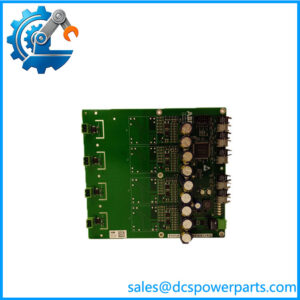
- ABB PCD235C101 / 3BHE057901R0101 — -related hardware used in high-performance control applications. ABB describes applications in generator excitation and demanding industrial process control, making this family relevant when evaluating the surrounding architecture.
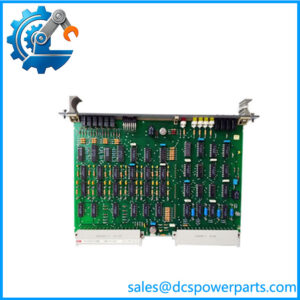
- ABB PM511V08 / 3BSE011180R1 — ABB controller hardware appearing in the same industrial automation spare-part ecosystem. It belongs to a different controller family and should not be considered a direct replacement.
Procurement takeaway: The critical identification for this unit is . ABB documentation supports its association with the high-performance control platform, including high-speed power-electronics control and excitation-related applications.
For an installed plant, verify the hardware revision, firmware, application backup, I/O architecture, and cabinet configuration before treating another variant as an equivalent replacement.