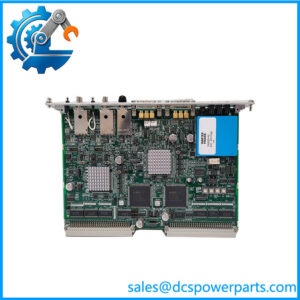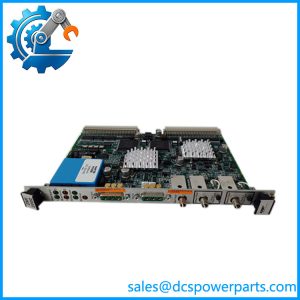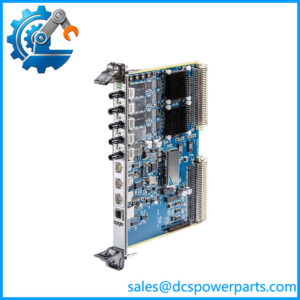
Description
Key Technical Specifications
| Parameter | Specification |
|---|---|
| Manufacturer | ZYGO Corporation |
| Product Model | ZMI-1000A |
| Product Family | ZMI Series |
| Product Type | Displacement Measuring Interferometer System |
| Measurement Principle | Laser interferometry |
| Position Resolution | Up to 0.6 nm |
| Maximum Measurement Speed | Up to 1.1 m/s |
| Position Measurement | Time-stamped position data |
| Optical Architecture | Fiber-optic |
| System Electronics | VME-based |
| Host Interface | VME backplane architecture |
| Typical Measurement Target | Precision motion stages |
| Typical Applications | Semiconductor, data storage, precision machinery |
| Measurement Role | Position feedback / motion metrology |
The historical ZMI-1000 documentation describes the system as providing the tools and performance needed to improve accuracy in precision motion systems. Its 0.6 nm resolution and 1.1 m/s maximum measurement speed were aimed at applications where both fine position resolution and dynamic stage measurement were required.
The optical architecture is important. ZMI systems calculate displacement from optical signals generated by interferometers driven by a ZMI laser source; the measurement electronics are therefore only one part of the complete measurement chain. ZYGO continues to describe its ZMI family as a displacement-position sensing technology for closed-loop motion control and precision metrology.
Application Scenarios & Pain Points
When a legacy precision stage starts reporting position drift, replacing the encoder is not always the answer. With an interferometer system, the actual fault may be in the laser source, fiber path, interferometer alignment, receiver electronics, or VME electronics. That distinction matters when the machine is already in a maintenance window.
Typical Applications
- Semiconductor Manufacturing: ZMI technology is used for precise measurement of relative motion in wafer and reticle stages. ZYGO specifically identifies ZMI displacement sensors for lithography and inspection-tool staging systems.
- Precision Motion Stages: The ZMI-1000A can serve as an independent position reference for stage characterization and closed-loop motion control.
- Data Storage Manufacturing: The original ZMI-1000 documentation specifically identifies data-storage manufacturing as an application requiring high-resolution motion measurement.
- Precision Machinery: Useful where non-contact displacement measurement is preferable to a mechanical or optical encoder with lower resolution.
Field Case:
On an older VME-based motion platform, a sudden position fault can tempt technicians to swap the measurement electronics immediately. A better sequence is to verify the laser/reference signal, fiber continuity, interferometer alignment, and receiver status first. Only after those checks should the ZMI electronics be treated as the primary suspect.
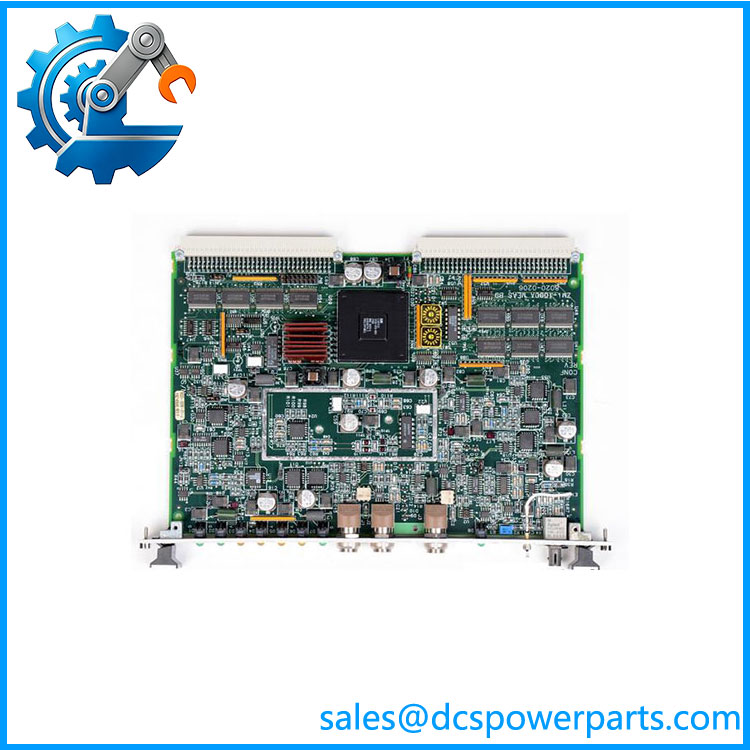
ZMI-1000A
Related Products
- ZYGO ZMI-2400 — Later ZMI measurement-board family providing one or two measurement axes. Its published resolution is 0.31 nm, making it a useful comparison when evaluating upgrades from older ZMI systems.
- ZYGO ZMI-4004 — Four-axis VME/VME64x measurement board with 0.15 nm position resolution under the specified double-pass configuration. It represents a significantly newer measurement-electronics architecture than the ZMI-1000A.
- ZYGO ZMI-4104C — Four-axis ZMI measurement board with published 0.15 nm resolution and a lower minimum optical-power requirement than the older 4004 architecture. It is a potential modernization reference, not a blind drop-in replacement.
- ZYGO ZMI 501A — Stand-alone ZMI measurement-electronics enclosure supporting two measurement axes. Its packaged architecture differs substantially from the VME-based ZMI-1000A.
- ZYGO ZMI Go! — Compact modern measurement electronics supporting up to four measurement channels and interfaces intended for contemporary motion-control systems. It is better suited to a system redesign than a direct legacy VME replacement.
- ZYGO ZMI Interferometers — Optical measurement heads that form the measurement path with the laser and electronics. Linear interferometers suit primarily one-dimensional motion, while plane-mirror configurations are used for multi-axis stage measurement.
- ZYGO ZMI Laser Heads — Provide the optical source for the interferometer system. ZYGO’s current documentation covers ZMI laser families including the 7702, 7714, and 7722/7724 platforms.
- ZYGO ZMI Fiber Optics — Carries the optical signal between the measurement components. Fiber condition and connector cleanliness should be checked before condemning measurement electronics.
The Engineer’s Guide: Field Pitfalls to Avoid
⚠️ Do Not Treat ZMI-1000A as a Conventional Encoder
The system measures displacement through optical interferometry. A fault in the optical path can look like an electronics failure.
How to avoid it: Verify the laser, optical fiber, interferometer, receiver signal, and electronics independently before replacing the main electronics.
⚠️ Do Not Assume a Newer ZMI Board Is Plug-Compatible
The current ZYGO portfolio includes the 2400, 4004, and 4104(C) VME/VME64x measurement boards, but they represent different system generations and specifications.
How to avoid it: Check the complete existing ZMI architecture, VME chassis, software, laser source, interferometer type, channel count, and data interface before approving a modernization.
⚠️ Optical Alignment Can Dominate the Final Measurement
At nanometer-level resolution, mechanical vibration, thermal effects, optical alignment, contamination, and air-path conditions can become significant.
How to avoid it: If a replacement board produces unstable measurements, compare it against a known-good channel and verify the optical path before adjusting system calibration.
Frequently Asked Questions (FAQ)
What is the ZYGO ZMI-1000A?
The is part of ZYGO’s ZMI displacement-measuring interferometer system, designed to measure precision motion using laser interferometry. The original ZMI-1000 documentation specifies resolution down to 0.6 nm and measurement speeds up to 1.1 m/s.
What is the resolution of the ?
The published ZMI-1000 specification gives up to 0.6 nm displacement resolution. This should be understood as a system specification under defined measurement conditions rather than a blanket guarantee for every installed machine.
Is a VME system?
Yes. The original ZMI-1000 documentation describes VME-based system electronics, allowing the electronics to be installed in standard VME backplanes.
This is an important compatibility point for legacy equipment. A later ZMI board may use VME64x while still differing in mechanical, electrical, software, or system-level requirements.
What industries use ZMI systems?
ZYGO identifies applications including semiconductor manufacturing, lithography, inspection equipment, data-storage manufacturing, and precision machinery. Its ZMI sensors are also used for closed-loop stage servo control.
Can ZMI-4004 or ZMI-4104C directly replace ?
Do not assume so. They are later ZMI measurement-electronics families with substantially different published specifications and system architectures. ZYGO currently lists the 2400, 4004, and 4104(C) as separate measurement-board products.
For a legacy machine, verify:
- VME/VME64x chassis and backplane
- Existing ZMI laser
- Interferometer configuration
- Fiber-optic interfaces
- Measurement-axis count
- Host software and drivers
- Position-data interface
- Required resolution and velocity
What should I request when purchasing a refurbished ?
Request an actual unit photograph showing the model and revision markings, plus:
- VME connector inspection
- Power-on test
- VME initialization test
- Optical input/output test
- Laser/interferometer compatibility test
- Position-data verification
- Measurement stability test
- Channel verification where applicable
- PCB and connector condition
- Serial number
- Test report
- Warranty terms
For this equipment, “powers on” is a very weak acceptance criterion. The meaningful test is whether the electronics operate correctly with a known-good ZMI optical measurement chain and return stable displacement data. ZYGO’s own system architecture makes clear that the measurement electronics work together with the interferometer and ZMI laser source.