Description
Key Technical Specifications
| Parameter | Specification |
|---|---|
| Manufacturer | ZYGO Corporation |
| Product Model | ZMI-2002 |
| Product Family | ZMI 2000 Series |
| Product Type | Dual-Axis Measurement Board |
| Measurement Axes | 2 |
| Board Format | 6U VME |
| VME Compliance | VMEBus Specification Revision C.1 |
| VME Addressing | A16 or A24 |
| Data Transfer | D16 or D32 |
| Interrupt Acknowledge | D08(0) |
| Power Requirement | +5 VDC ±5%, 3.5 A |
| Position Format | 36-bit, 2’s complement |
| Velocity Format | 32-bit, 2’s complement |
| Time Format | 32-bit, 2’s complement |
| Time Range | 107.4 seconds |
| Time Resolution | 25 ns |
| Optical Signals | Reference and measurement via fiber optics |
| System Synchronization | Clock input or clock output |
| P2 Data Rate | Up to 7.7 MHz |
| Multi-Axis Expansion | Up to 16 axes through P2 architecture |
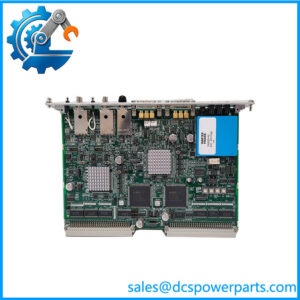
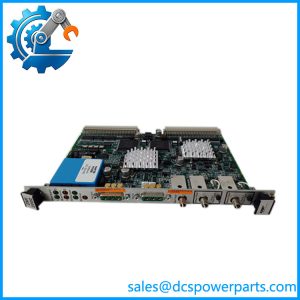
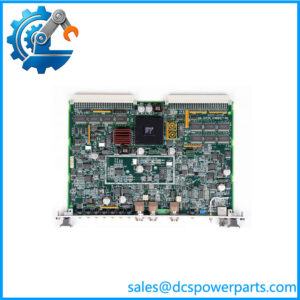
The ZMI-2002 provides two interferometry axes on a single 6U VME board. ZYGO’s ZMI 2000 documentation also identifies the ZMI-2001 as the single-axis VME version, while the ZMI-2002 doubles the measurement channels on the same board format.
The data architecture is particularly relevant to legacy motion-control equipment. The board provides 36-bit position data, 32-bit velocity data, and 25 ns time resolution, with error-status information covering reference signal/PLL/DLL conditions, measurement dropout and glitches, velocity, acceleration, and numerical overflow.
Application Scenarios & Pain Points
A failed ZMI-2002 in a production motion system is not simply an ordinary VME-card replacement. The board sits between the optical measurement chain and the machine’s servo/control architecture, so a fault can originate from either side.
Typical Applications
- Precision Motion Stages: Two independent interferometer channels can monitor stage displacement for closed-loop positioning and stage characterization.
- Semiconductor Equipment: ZYGO identifies ZMI displacement-measuring interferometers for reticle/mask and wafer-stage measurement at nanometer scale.
- Legacy VME Metrology Systems: The 6U VME format makes the ZMI-2002 particularly relevant to older measurement and motion-control platforms where replacing the complete electronics architecture would be impractical.
- Multi-Axis Servo Systems: The P2 interface supports data rates up to 7.7 MHz, with the architecture expandable to systems using multiple measurement axes.
Field Case:
A useful troubleshooting sequence for a dead measurement channel is surprisingly simple: verify the laser/reference path first, then inspect the fiber-optic connection, and only afterward condemn the VME board. If one axis works and the other reports a measurement dropout, the board’s channel-level status information can help distinguish an optical-path problem from an electronics fault.
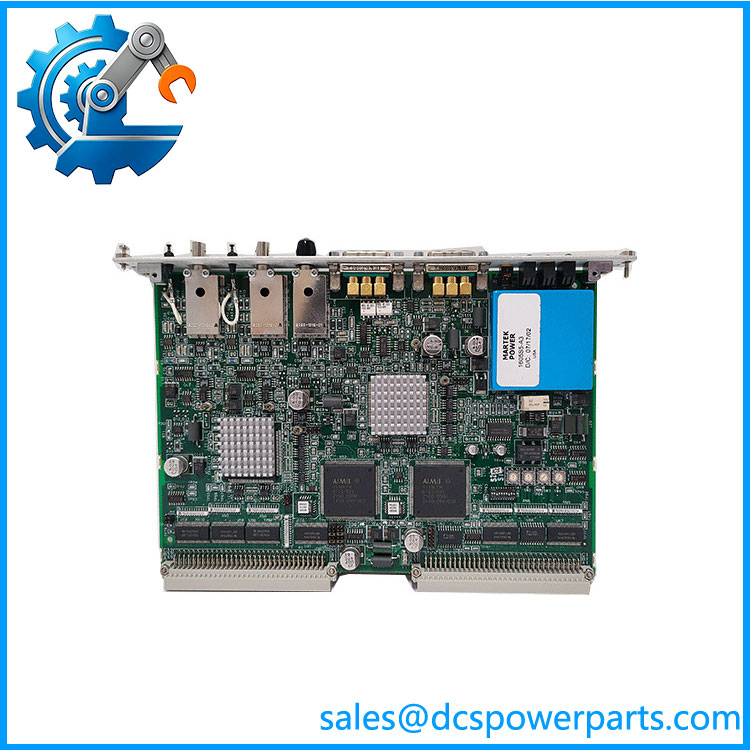
ZMI-2002
Related Products
- ZYGO ZMI-2001 — Single-axis 6U VME measurement board from the same ZMI 2000 family. It is the logical lower-channel alternative when only one interferometer measurement axis is required.
- ZYGO ZMI-2002 — Dual-axis version covered here. It places two interferometer measurement channels on one 6U VME board and is preferable to using two single-axis boards where the existing architecture supports it.
- ZYGO ZMI-2400 — Later ZMI measurement-board family supporting one or two axes. It represents a different generation of electronics and should be evaluated for system/software compatibility before being considered for replacement.
- ZYGO ZMI-4004 — Four-axis ZMI measurement board using a later VME/VME64x architecture. It provides substantially greater channel density but is not automatically a drop-in replacement for the .
- ZYGO ZMI-4104C — Four-axis measurement electronics from the 4100 family. It is another later-generation alternative for system modernization rather than a direct hardware substitution.
- ZYGO ZMI 501A — Stand-alone ZMI measurement electronics for applications that do not use the older 6U VME board architecture.
- ZYGO ZMI Go! — Compact ZMI measurement electronics designed around newer motion-control interfaces. It is more relevant to a system redesign than maintenance of a legacy VME installation.
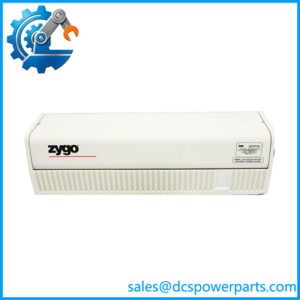
- ZYGO ZMI Linear Interferometer — Optical measurement component for primarily linear displacement. The processes the optical measurement signal; it does not replace the interferometer itself.
- ZYGO ZMI Plane Mirror Interferometer — Used for multi-dimensional stage measurement with plane-mirror targets. This is particularly relevant to wafer and stacked-stage applications.
The Engineer’s Guide: Field Pitfalls to Avoid
⚠️ Do Not Treat a VME Power-On Test as a Full Functional Test
The can power up normally while an optical measurement channel remains faulty.
How to avoid it: Require testing with appropriate reference and measurement optical signals. Verify both measurement axes independently, not merely the board’s power rail and VME initialization.
⚠️ Verify the VME Chassis Power Budget
The published requirement is +5 VDC ±5% at 3.5 A. A physically compatible 6U VME chassis still needs to provide a clean, adequately loaded 5 V rail.
How to avoid it: Measure the 5 V rail under load and inspect the VME backplane contacts before installing a replacement board.
⚠️ Check P2 Wiring Before Swapping Boards
The can use its P2 interface for high-speed measurement-data transfer. A legacy servo controller may depend on specific P2 pin assignments or clock/synchronization wiring.
How to avoid it: Photograph the existing P2 connector wiring and document the clock-in/clock-out arrangement before removing the old board. Do not assume two VME boards with identical P1/P2 connectors use the same application wiring.
Frequently Asked Questions (FAQ)
What is the ZYGO ?
The is a dual-axis 6U VME interferometer measurement board in ZYGO’s ZMI 2000 family. It processes fiber-optic reference and measurement signals and produces position and velocity information for precision motion systems.
How many measurement axes does provide?
It provides two measurement axes on one 6U VME board. The related ZMI-2001 provides one axis.
This makes the 2002 useful when a legacy machine needs two synchronized displacement channels without consuming two separate VME board positions.
What are the power requirements?
The published specification calls for +5 VDC ±5% at 3.5 A.
For a replacement installation, check the actual VME backplane voltage under load rather than relying only on the chassis nameplate.
Does use VME?
Yes. It is a 6U VME board conforming to VMEBus specification revision C.1, with A16/A24 addressing and D16/D32 data transfer.
The board can also use the P2 interface for high-speed data distribution, which is important when it is integrated directly with a servo or motor controller.
What type of optical signals does the process?
The board accepts fiber-optic reference and measurement signals from the ZMI interferometer system. Its status structure includes separate reference and measurement fault information, including missing signals, dropout, and glitch conditions.
That means a reported measurement fault should not automatically be interpreted as a failed PCB. Check the optical chain first.
Can ZMI-2001 replace ?
Not as a direct functional equivalent. Both belong to the ZMI 2000 family, but the ZMI-2001 provides one axis while the provides two.
Using a 2001 in a two-axis machine would require confirming the control-system configuration and potentially providing another measurement board.
Can ZMI-4004 replace ?
Not without engineering verification. The ZMI-4004 provides four axes and uses a later VME/VME64x architecture, while the is a two-axis ZMI 2000-series board. Mechanical fit alone does not establish electrical, software, optical, or data-interface compatibility.
For a legacy machine, verify the VME chassis, host software, P2 wiring, optical interfaces, synchronization scheme, and required measurement performance before approving the substitution.
What should I request when purchasing a refurbished ?
Request:
- Actual front/rear photographs
- identification and serial number
- PCB revision
- VME P1/P2 connector condition
- +5 VDC power test
- VME initialization test
- Both measurement-channel tests
- Reference-signal verification
- Optical measurement-signal verification
- Clock synchronization test
- P2 data-output test where used
- Error-status verification
- Test report
- Warranty terms
For this board, “powers on” is not sufficient evidence of functionality. A meaningful acceptance test should demonstrate both interferometer channels processing known-good optical signals and producing stable position data. ZYGO’s ZMI architecture is specifically intended to provide displacement feedback for closed-loop precision motion control.