Description
WS139-5AAC Power Supply
Key Technical Specifications
| Parameter | Specification |
|---|---|
| Model | WS139-5AAC |
| Manufacturer | Shanghai Winsun Power Supply Technology Co., Ltd. |
| Product category | Power supply |
| AC input voltage | 100–240 VAC, reported |
| Input frequency | 50/60 Hz, reported |
| DC output voltage | Verify from the original nameplate |
| Rated output current | Verify from the original nameplate |
| Rated output power | Not confirmed |
| Output regulation and ripple | Not confirmed |
| Protection features | Verify from the applicable datasheet |
| Mounting and dimensions | Verify against the installed unit |
| Operating temperature | Not confirmed |
| Lifecycle status | Reported discontinued |
Specification note: The available certification record identifies WS139-5AAC among Winsun power-supply models. Secondary product listings report the input voltage and frequency, but a complete manufacturer datasheet establishing output ratings was not located. Do not infer the output voltage, current, or wattage from the model number alone.
Product Introduction
The WS139-5AAC is an AC-input power supply intended for use in compatible electronic equipment. Its reported 100–240 VAC input range and 50/60 Hz frequency rating make the input specification relevant to equipment operating on different AC mains systems. Actual suitability, however, depends on its DC output characteristics, connector arrangement, mounting dimensions, and the electrical requirements of the host equipment.
For maintenance and procurement teams, the key issue is confirming the exact electrical interface rather than selecting a replacement based on input voltage alone. Because this model is reported discontinued, retain the original unit’s nameplate information and compare all output and mechanical specifications before approving an alternative.
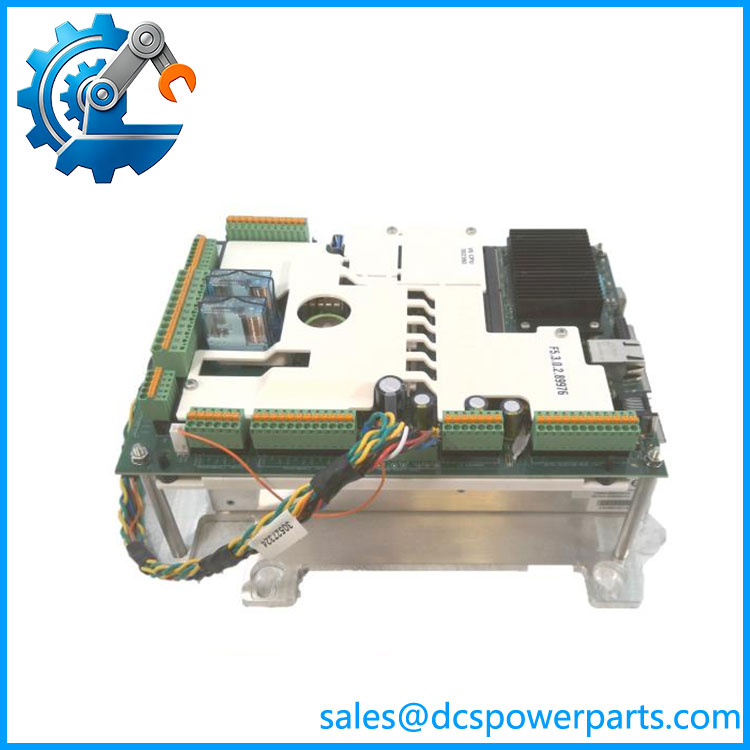
WS139-5AAC
Application Scenarios & Field Pitfalls — The Engineer’s Perspective
Engineering Pain Point
A power supply can have the correct AC input range and still be unsuitable for the equipment it serves. An incorrect DC output voltage, inadequate current capacity, incompatible connector, or different output polarity can cause equipment faults or damage. The WS139-5AAC should therefore be matched against the installed unit and the host equipment’s service documentation.
Typical Applications
- Legacy equipment maintenance: Replacement of a failed power supply where the installed component is confirmed as WS139-5AAC.
- Electrical panel servicing: Inspection and replacement of a power supply within an existing assembly, subject to verified mounting and wiring details.
- Obsolescence planning: Identification of a suitable replacement path when the original model is no longer available from the manufacturer.
- Spare-parts management: Documentation of exact model numbers and electrical ratings to reduce the risk of incorrect replenishment.
Technical Pitfalls to Avoid
- Do not match on input voltage alone. Verify the DC output voltage, rated current, power rating, and polarity.
- Confirm the output connector and pinout. A connector that physically fits may use a different pin assignment.
- Check the mechanical envelope. Compare mounting points, dimensions, ventilation clearance, and cable routing before installation.
- Review protection requirements. Confirm the original unit’s overcurrent, overvoltage, thermal, and isolation characteristics where required by the application.
- Check startup behavior. The replacement must support the host equipment’s startup current and transient load demands, not just its steady-state consumption.
- Treat lifecycle status as a procurement risk. Since the model is reported discontinued, request clear evidence of condition, test results, and warranty terms for any available unit.
- Do not assume a neighboring Winsun model is interchangeable. A similar model number does not establish equivalent output ratings, connectors, or safety approvals.
Related Products
The following are other Winsun power-supply model numbers appearing in the same certification listing. They are reference models, not confirmed direct replacements for .
- WS129-4AAC-UL — Separate AC-input power-supply model; verify output ratings and approvals.
- WS76-2AAC — Separate power-supply model; not confirmed as an equivalent.
- WS54-1BAC — Separate power-supply model with a different designation.
- WS175-3CAC — Separate power-supply model; confirm electrical and mechanical compatibility.
- WS121-3AAC — Separate power-supply model; output specifications require verification.
- WS40-1PAC — Separate power-supply model; do not assume matching input/output characteristics.
- WS50-3BAC — Separate power-supply model; direct replacement status unconfirmed.
- WS50-3AAC — Separate power-supply model; verify the full specification before considering substitution.
Procurement Note
When sourcing , request photographs of the original nameplate, all connectors, and the mounting arrangement. Record the input range, output voltage, output current, polarity, and any revision or certification markings. Compare those details against the equipment manufacturer’s requirements.
If an alternative is proposed, require a documented electrical and mechanical cross-reference rather than relying on a supplier’s “equivalent” description. Confirm the item’s actual condition, inspection or load-test results, warranty coverage, and return terms before purchase. Do not approve installation until the replacement has been verified against the original equipment requirements.