Description
Woodward 9908-1501 GS16 Gas Fuel Metering Valve
Product Overview
Fuel control valves sit at the boundary between the turbine control system and the combustion process. The Woodward 9908-1501 is part of the GS16 gas fuel valve family and is specifically cataloged as the 1.5 in² port, single-resolver version. Unlike a conventional control valve that depends on a separate positioner, the GS16 incorporates its electronic valve-position controller into the valve assembly. This makes the unit a complete electromechanical fuel-metering element rather than simply an actuator or passive valve body.
In an industrial gas turbine installation, the Woodward 9908-1501 receives a position demand from the turbine control architecture and moves the spherical metering element to establish the required effective flow area. The GS16 design uses a single moving shaft carrying the metering element, actuator rotor, and resolver feedback, eliminating separate mechanical coupling between these functions. Woodward specifies a self-cleaning shear-type metering action intended to reduce the effect of gas condensate and contamination around the metering port.
For system engineers, the important point is that the Woodward 9908-1501 is not a generic PLC/DCS final-control element that can be selected by port size alone. Its electrical interface, resolver feedback, shutdown circuit, valve calibration, gas pressure, fuel characteristics, and turbine control configuration all matter. Woodward specifies a 24 VDC control supply with an 18–32 VDC operating range for the documented GS16 configuration, while the valve can communicate through 4–20 mA or DeviceNet/CANopen arrangements depending on system configuration.
The documented GS16 application range covers industrial gas turbines from approximately 10 to 50 MW and includes power generation, compressor-drive, mechanical-drive, and multiple-valve Dry Low Emission applications. The 1.5 in² metering port sits between the 1.0 and 2.0 in² versions, making exact valve sizing important when replacing an installed unit.
Product Introduction
A turbine fuel valve failure is not simply an actuator maintenance issue. Position feedback, demand scaling, shutdown behavior, fuel pressure, and valve calibration all affect whether the replacement actually behaves like the original unit. The Woodward 9908-1501 combines the metering valve, electric actuator, resolver feedback, and position-control electronics in one assembly.
For a DCS system upgrade, turbine control retrofit, or legacy replacement, verify the complete valve configuration rather than matching only the 9908-1501 number. In particular, confirm the installed control interface and turbine application before treating a replacement as electrically interchangeable.
Key Technical Specifications
| Parameter | Value |
|---|---|
| Product Model | 9908-1501 |
| Manufacturer | Woodward |
| Product Series | |
| Product Type | Gas fuel metering valve with on-board driver |
| Metering Port | 1.50 in² / 968 mm² |
| Resolver | Single resolver |
| Actuation | Electric, integrated on-board position controller |
| Power Supply | 24 VDC nominal; 18–32 VDC |
| Typical Steady-State Current | <2.0 A |
| Maximum Current | 5.0 A |
| Maximum Transient Current | 12 A for up to 100 ms |
| Gas Flow Control Range | 22–13,608 kg/h (50–30,000 lb/h), application dependent |
| Gas Supply Pressure | 345–5,171 kPa (50–750 psig) |
| Recommended Minimum Differential Pressure | 138 kPa (20 psid) |
| Control Signal | 4–20 mA, DeviceNet, or CANopen depending configuration |
| Position Feedback | 4–20 mA or DeviceNet/CANopen |
| Shutdown Input | Contact closure to run; open contact commands shutdown |
| Fault Output | Isolated FET output |
| Maximum Fault Output Current | 500 mA |
| Slew Rate | <100 ms |
| Ambient Temperature | −40 to +93°C (−40 to +200°F) |
| Fuel Temperature | −40 to +93°C (−40 to +200°F) |
| Ingress Protection | IP66 |
| Gas Connection | 2.00 in. ANSI B16.5 Class 600 RF flanges |
| Approx. Weight | 48 kg / 105 lb |
| Metering Valve Leakage | <0.1% of rated maximum flow under specified test conditions |
| Shutoff Performance | ANSI B16.104 Class III or better |
These values are taken from Woodward’s Product Specification 03284. Flow capacity is not a simple “30,000 lb/hr” guarantee for every installation; actual usable flow depends on gas properties, inlet/outlet pressure, temperature, pressure drop, and the selected metering-port geometry.
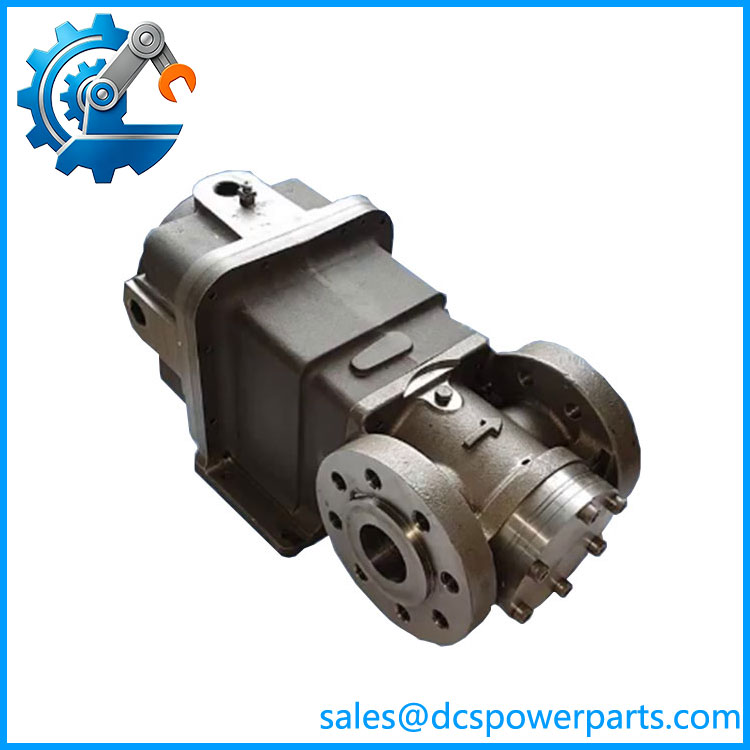
9908-1501
Major Features / Practical Advantages
Integrated Electronic Position Control
The places the valve driver and terminal arrangement directly on the valve assembly. That reduces the amount of separate actuator-to-controller wiring normally required between a turbine control cabinet and the fuel valve. The on-board controller performs closed-loop valve positioning using resolver feedback.
For maintenance teams, this integration is useful but also creates a procurement risk: the valve and electronics must be treated as one controlled assembly. Replacing the mechanical valve while overlooking the installed electronics or signal architecture can produce a mismatch even when the mechanical dimensions appear correct.
1.5 in² Metering Port
The 9908-1501 uses the ‘s 1.50 in² metering-port geometry. Woodward also lists 1.00 and 2.00 in² versions, so these should not be treated as interchangeable alternatives. The metering port is formed to provide an approximately square-law relationship between commanded position and effective flow area.
That matters during turbine commissioning. A valve with a different port size changes the relationship between demand, pressure drop, and fuel flow. Substituting by physical fit alone is poor engineering practice.
Self-Cleaning Metering Action
The spherical fuel-metering element uses a shear-type action intended to keep deposits, condensates, and system debris from restricting the metering port. Woodward specifies a single moving assembly incorporating the metering element, actuator rotor, and resolver feedback.
This design is particularly relevant to gaseous-fuel installations where contamination or condensate can affect valve movement and metering repeatability.
Multiple Control Interfaces
The documented architecture can accept a 4–20 mA position demand or DeviceNet/CANopen communication. Position feedback can also be provided through analog or network communication, depending on the installed configuration. Woodward also documents the possibility of redundant demand sources in appropriate configurations.
Do not assume that every 9908-1501 in the field is wired identically. The actual turbine package documentation and valve configuration remain the controlling references.
Independent Shutdown and Fault Reporting
The valve includes a separate shutdown input and a system fault output. Opening the shutdown circuit commands the valve toward its shutdown position, while diagnostic conditions can also place the driver into shutdown. Woodward documents fault monitoring for conditions including input-power problems, feedback faults, position error, internal driver faults, actuator faults, and overcurrent.
That makes the part of the turbine’s fuel-control and protection architecture, not merely a modulating process valve.
Industrial and Hazardous-Area Applications
Woodward’s specification covers hazardous-location certifications including Class I, Division 1 and Division 2 North American applications, along with specified ATEX configurations. Proper conduit, grounding, wiring, and installation practices are therefore part of the equipment qualification—not optional installation details.
Related Products
- 9908-273 — gas fuel valve with 1.0 in² metering port and single resolver; smaller flow-area configuration.
- 9908-1502 — gas fuel valve with 2.0 in² metering port and single resolver; larger metering-area configuration.
- — Base Woodward gas fuel metering valve family with integrated position controller.
- GS16DR — Related GS16DR configuration with a different electrical/mechanical configuration; do not assume direct interchangeability with the standard .
- 9908-1536 — GS6 gas fuel valve, 0.30 in² port, single resolver; smaller valve family.
- 9908-1540 — GS6 gas fuel valve, 0.45 in² port, single resolver.
- 9908-1544 — GS6 gas fuel valve, 0.60 in² port, single resolver.
- 9908-1552 — GS6 gas fuel valve, 0.75 in² port, single resolver.
- 9907-894 — GSOV25HT gas fuel shutoff valve with 24 VDC solenoid and open-position switch; shutoff function rather than continuous metering.
Woodward’s industrial catalog distinguishes the 1.0, 1.5, and 2.0 in² versions by individual part number. The GSOV25HT and GS6 families serve different valve functions and should not be considered drop-in substitutes for the 9908-1501.
FAQ
What exactly is Woodward 9908-1501?
It is a Woodward electrically actuated gas fuel metering valve. The 9908-1501 configuration is listed as the 1.5 in² port, single-resolver version. It includes an on-board electronic position controller.
Is 9908-1501 a PLC or DCS I/O module?
No. It is a turbine fuel final-control device. A PLC, DCS, or turbine controller may issue its demand signal, but the valve itself contains the actuator, resolver feedback, and local position-control electronics.
What supply voltage does the use?
Woodward’s specification documents a 24 VDC nominal supply with an 18–32 VDC operating range. The documented maximum steady-state current is 5 A, with a transient requirement of up to 12 A for 100 ms.
Some surplus listings describe individual 9908-1501 units with different voltage descriptions. For procurement, the actual nameplate and installed documentation should take precedence over a generic listing.
Can I hot-swap the 9908-1501?
No hot-swap assumption should be made. This is a pressurized fuel-control valve connected to hazardous-area electrical circuits and a turbine control/protection system. Replacement requires appropriate turbine shutdown, fuel isolation, depressurization, electrical isolation, and commissioning procedures.
Does 9908-1501 support CANopen?
The documentation specifies DeviceNet/CANopen communication capability, along with 4–20 mA control and feedback options. The exact interface arrangement must be confirmed from the installed valve configuration and turbine control drawings.
Does this part have firmware?
Yes, the on-board valve controller contains configurable control electronics. Woodward’s manual documents service-tool access, configuration settings, and firmware information through the valve’s service interface. Do not assume that two physically similar valves have identical configuration data.
Can 9908-1501 replace 9908-1502?
Not automatically. Both belong to the family, but 9908-1501 is the 1.5 in² version while 9908-1502 is the 2.0 in² version. Changing metering-port geometry can alter the turbine fuel-flow relationship, so replacement must be validated against the turbine fuel-system design and calibration.
What should I verify before purchasing a replacement?
At minimum, verify the complete Woodward part number, nameplate data, metering-port size, resolver configuration, electrical interface, turbine application, valve calibration data, mechanical flange arrangement, and condition of the integrated electronics. For a used or New Surplus unit, request clear photos of the nameplate and evidence that the valve has been electrically and mechanically tested.
Procurement Note
The Woodward 9908-1501 is a specialized turbine fuel-metering assembly. Procurement should not be based on the phrase “ valve” alone. The 1.5 in² metering port, single-resolver configuration, control interface, power supply, valve calibration, and turbine fuel-system requirements all need to match.
For a replacement project, the most useful receiving inspection is a comparison against the removed valve: full part number, serial number, nameplate markings, resolver configuration, connector/terminal arrangement, mechanical flange dimensions, and available configuration data. If the application is safety-critical, perform controlled valve-position and feedback testing before returning the turbine to service.
Woodward documentation identifies Product Specification 03284 and the technical-manual family as the governing technical references for this valve family.