Description
Woodward 9907-1200 | CPC-II Current-to-Pressure Converter
Key Technical Specifications
| Parameter | Specification |
|---|---|
| Manufacturer | Woodward |
| Model | 9907-1200 |
| Product Series | CPC-II |
| Product Type | Current-to-Pressure Converter |
| Control Input | 4–20 mA isolated analog input |
| Input Impedance | 250 Ω |
| Output Pressure Range | 0–10 bar / 0–145 psi |
| DC Supply | 18–32 VDC |
| Steady-State Current | 1.5 A |
| Peak Current | 8 A for 100 ms |
| Analog Output | 4–20 mA |
| Maximum Analog Output Load | 300 Ω |
| Discrete Inputs | Optically isolated; 24 VDC wetting voltage required |
| Discrete Output | 1 A at 30 VDC |
| Service Interface | RS-232 |
| Accuracy | < ±0.2% of full range |
| Repeatability | 0.1% of full range |
| Temperature Drift | < ±0.01% of full range/°C |
| Operating Temperature | -40 to +85°C |
| Ingress Protection | IP66 |
| Maximum Supply Pressure | 25 bar / 363 psi |
| Recommended Filtration | 24–40 μm nominal, β75 or ISO 20/16 class |
| Recommended Oil Viscosity | 20–100 cSt |
| Approx. Dimensions | 290 × 270 × 270 mm |
| Approx. Weight | 25 kg without oil |
| Mounting | Four M10 threaded holes |
Woodward’s specification identifies 9907-1200 specifically as the CPC-II 0–10 bar Zone 2 model. It should not be confused with 9907-1199, which has the same 0–10 bar pressure range but a different hazardous-area rating, or with the 25-bar 9907-1197/1198 versions.
Product Introduction
The Woodward 9907-1200 is a CPC-II Current-to-Pressure Converter used in electro-hydraulic steam turbine valve control. It accepts an isolated 4–20 mA pressure-demand signal and regulates control oil pressure to position a single-acting turbine valve servo. Internally, the unit combines an electronic driver, pressure sensor, rotary hydraulic valve, and actuator rather than functioning as a conventional PLC or I/O module.
For plant operators, the important point is that the 9907-1200 sits directly in the hydraulic control loop. Woodward specifies a 0–10 bar output range, internal pressure feedback, millisecond-level response to valve-step demands, and a spring-return failsafe action that sends control oil to drain when power or critical internal functions fail.
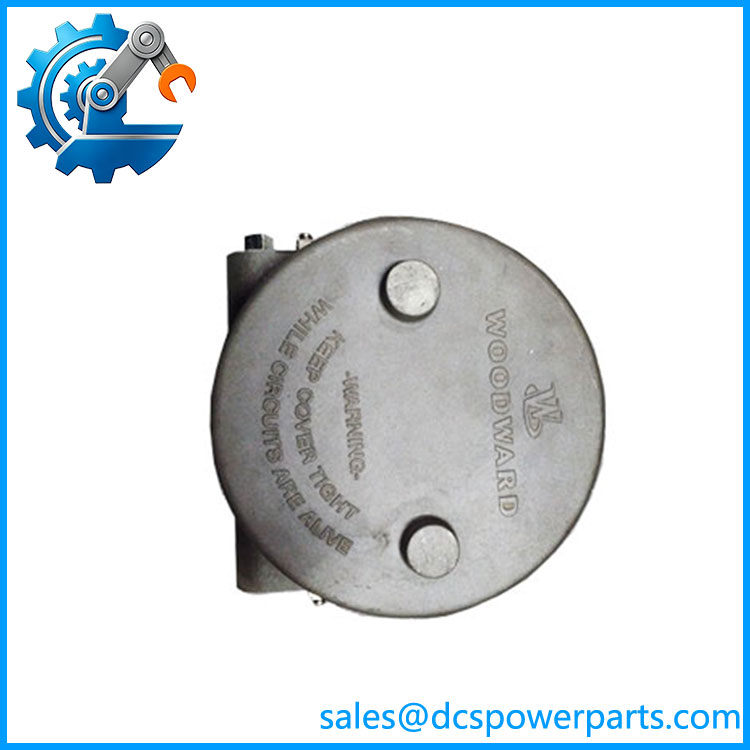
9907-1200
Application Scenarios & Field Pitfalls — Engineer’s Perspective
Engineering Pain Point
A failed CPC-II can be mistaken for a turbine governor, servo valve, or hydraulic-system fault because all three can produce similar symptoms: poor valve positioning, slow response, unstable pressure, or a valve moving toward the fail position. Before replacing the converter, check the 4–20 mA demand signal, 24 VDC supply, hydraulic supply pressure, return/drain pressure, oil cleanliness, and pressure-feedback behavior.
Typical Applications
- Steam turbine governor-valve positioning where a controlled hydraulic pressure is required.
- Industrial turbine speed and load control using an electronic controller and hydraulic actuator.
- Single-acting turbine valve servos requiring proportional pressure control.
- Critical turbine systems using redundant controller signals, pressure sensing, or dual-CPC arrangements.
Technical Pitfalls to Avoid
- Do not identify 9907-1200 as a turbine governor.
It is the CPC-II electro-hydraulic converter downstream of the electronic turbine control system. It converts the controller’s pressure-demand signal into hydraulic control pressure. - Do not substitute the nearby CPC-II part numbers solely because the pressure range matches.
9907-1200 is a 0–10 bar Zone 2 model. Woodward lists 9907-1199 as 0–10 bar Zone 1 & 2, while 9907-1198 and 9907-1197 are 25-bar models with different hazardous-area classifications. - Check the hydraulic system, not just the electronics.
Woodward specifies a maximum supply pressure of 25 bar, maximum drain pressure of 2 bar, recommended filtration of 24–40 μm nominal, and recommended oil viscosity of 20–100 cSt. Oil contamination or incorrect hydraulic conditions can cause problems that appear to be CPC electronics failures.
Related Products
- Woodward 9907-1199 — CPC-II 0–10 bar model with Zone 1 & 2 hazardous-area rating; not the same certification configuration as 9907-1200.
- Woodward 9907-1198 — CPC-II 0–25 bar Zone 2 model for applications requiring the higher pressure range.
- Woodward 9907-1197 — CPC-II 0–25 bar Zone 1 & 2 version.
- Woodward 9907-1228 — Another 0–10 bar Zone 2 CPC-II configuration; verify the exact application and nameplate before substitution.
- Woodward 9907-1253 — Dual-redundant 0–10 bar CPC-II configuration.
- Woodward 9907-1254 — Dual-redundant 0–25 bar CPC-II configuration.
- Woodward 8918-116 — CPC-DX dual-redundant skid using CPC units in a complete hydraulic arrangement.
- Woodward 8918-118 — CPC-DX dual-redundant skid for the 25-bar configuration.
Procurement Check
For a Woodward 9907-1200 replacement, verify the following before installation:
- Exact nameplate number: 9907-1200
- CPC-II generation
- 0–10 bar pressure configuration
- Zone 2 certification marking
- 18–32 VDC supply compatibility
- 4–20 mA controller output
- Hydraulic supply and drain pressures
- Oil type, cleanliness, viscosity, and filtration
- Existing turbine valve servo/actuator
- Mechanical mounting and hydraulic-port arrangement
- Current CPC configuration and calibration
- Redundancy arrangement, if used
- Existing Woodward controller and service-tool configuration
Recommended procurement description:
Woodward 9907-1200 CPC-II Current-to-Pressure Converter, 4–20 mA Input, 0–10 bar Hydraulic Output, 18–32 VDC Supply, Zone 2 Configuration, for Single-Acting Steam Turbine Valve Control.
The key distinction is simple: 9907-1200 is a hydraulic valve-control converter, not a PLC communication module or standalone turbine governor. When replacing one in an operating turbine, matching the pressure range, hazardous-area certification, hydraulic arrangement, controller signal, and existing calibration is more important than simply matching the 9907 family number.