Description
Key Technical Specifications
| Parameter | Specification |
|---|---|
| Product Model | 8290-191 |
| Manufacturer | Woodward |
| Product Series | Electrically Powered Governor (EPG) |
| Product Type | Electronic droop speed control |
| Rated Supply Voltage | 24 VDC |
| Permissible Supply Range | 20–32 VDC |
| Maximum Power Consumption | 95 W |
| Recommended Battery Charger Capacity | At least 5 A while governor is energized |
| Speed Frequency Range | 3,000–6,000 Hz |
| Control Mode | Single-phase droop |
| Compatible EPG System Family | 512/524 and 1712/1724 |
| Engine Application | Diesel or turbine |
| Magnetic Pickup Input | Minimum 1.5 Vrms |
| Typical Pickup Frequency During Cranking | 100 Hz |
| Steady-State Speed Band | Typically ±0.25% of rated speed |
| Operating Temperature | -40 to +75°C (-40 to +167°F) |
| Mounting | Engine-skid mounting; installation wiring limits apply |
| Protection Rating | Not confirmed |
| Communication Protocol | Not specified as a network communication device |
| Dimensions | Verify against the applicable product drawing |
The electrical and operating figures above are from Woodward Product Specification 04106. The frequency range and application are specifically listed for model 8290-191.
Product Introduction
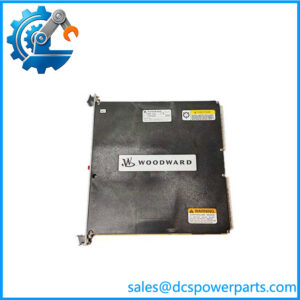
Woodward 8290-191 EPG Droop Speed Control
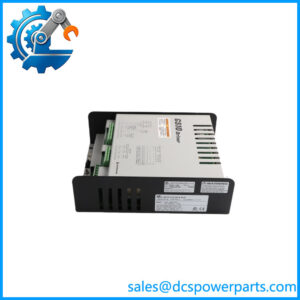
The Woodward 8290-191 is a 24 VDC electronic speed control for the Electrically Powered Governor system. It provides droop regulation for diesel-engine or turbine applications using compatible 512/524 and 1712/1724 actuator systems. Its specified speed-frequency range is 3,000–6,000 Hz.
In operation, the controller evaluates engine-speed feedback from a magnetic pickup and adjusts the actuator command to regulate engine speed. Correct actuator selection, pickup signal quality, supply voltage, and governor tuning are essential when replacing or recommissioning this unit.
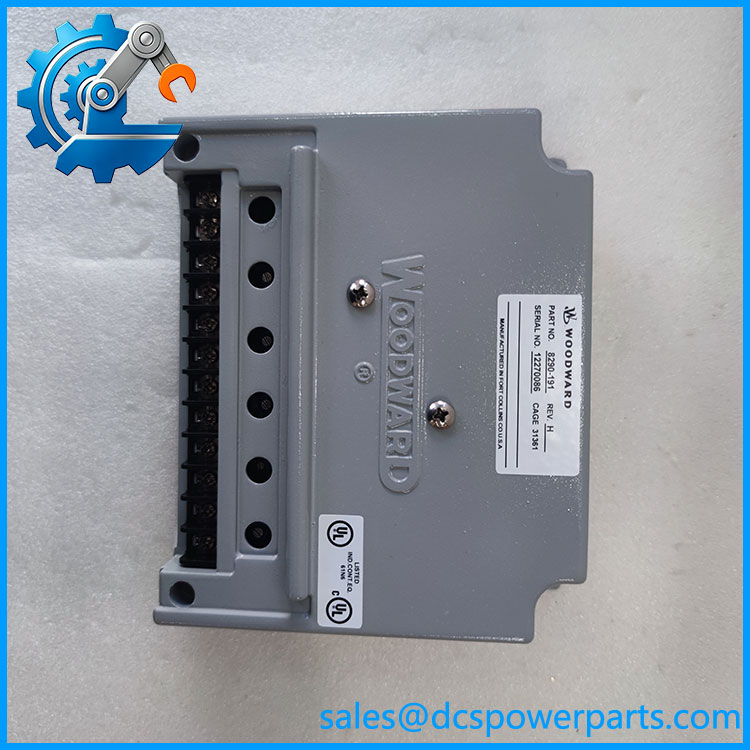
8290-191
Application Scenarios & Field Pitfalls (Engineer’s Perspective)
A speed-control replacement can appear straightforward until the engine fails to reach rated speed, hunts under load, or responds incorrectly during load changes. The 8290-191 is a droop controller, so the replacement must match the original governor configuration rather than simply the nominal supply voltage.
Typical application scenarios
- Diesel generator sets: Provides droop speed regulation where the generator installation is designed for this control mode.
- Industrial diesel prime movers: Regulates engine speed through an electrically driven fuel-control actuator.
- Turbine prime movers: Supports applicable turbine installations using the specified EPG system configuration.
- Parallel generator installations: Droop control can support load sharing when the overall generator-control arrangement is designed and configured accordingly.
Field pitfalls to check before replacement
1. Droop versus isochronous control: The 8290-191 is a droop model. Do not substitute an isochronous controller such as 8290-184 solely because both use a 24 VDC supply. Their control behavior and application configuration differ.
2. Actuator and mechanical linkage matching: Confirm the installed actuator model, its supply-voltage rating, shaft travel, linkage geometry, and fuel-control direction. The EPG specification identifies the 512/524 and 1712/1724 actuator families, but the actual installation must be checked before commissioning.
3. Power and magnetic pickup wiring: Verify that the supply remains within 20–32 VDC under operating conditions. Woodward specifies a 10 A slow-blow fuse or circuit breaker in the ungrounded battery lead, direct battery wiring to the speed control, and a magnetic pickup signal of at least 1.5 Vrms. Poor grounding, incorrect shielding, or weak pickup output can cause unstable speed feedback.
Related Products
The following models are listed in Woodward’s EPG product specification as related controllers or actuators. They are not all direct substitutes for 8290-191.
| Model | Product Description | Relationship |
|---|---|---|
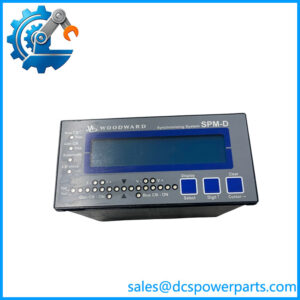
| 8290-192 | 12 VDC droop speed control for diesel or turbine | Same droop function, different supply voltage |
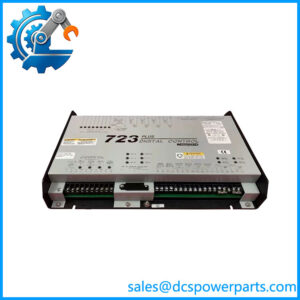
| 8290-045 | 24 VDC droop speed control for natural gas or turbine | Different fuel/application configuration |
| 8290-184 | 24 VDC isochronous speed control for diesel or turbine | Different governing mode |
| 8290-185 | 24 VDC isochronous speed control for natural gas or turbine | Different governing mode and fuel application |
| 8256-021 | Model 524, 24 VDC EPG actuator | Associated actuator family |
| 8256-016 | Model 1724, 24 VDC EPG actuator | Associated actuator family |
| 8256-022 | Model 512, 12 VDC EPG actuator | Associated actuator family; voltage differs |
| 8256-017 | Model 1712, 12 VDC EPG actuator | Associated actuator family; voltage differs |
| 8290-103 | 24 VDC speed control with position feedback | Different control configuration |
These part numbers are identified in Woodward’s EPG specification. Confirm the actuator, feedback arrangement, fuel application, and operating frequency range before treating any related model as a replacement.
Procurement and Quality Control Notes
Market listings report the 8290-191 as discontinued, but current manufacturer lifecycle status should be confirmed before a purchasing decision.
For replacement procurement, verify:
- Full part number and nameplate revision.
- 24 VDC supply compatibility and wiring arrangement.
- Droop-control configuration and 3,000–6,000 Hz frequency range.
- Installed actuator model and linkage arrangement.
- Connector condition, terminal integrity, and signs of corrosion or heat damage.
- Available inspection or functional-test documentation.
A physical inspection alone cannot establish governor performance. Where possible, request documented testing of speed response and control stability under an appropriate test setup.