Description
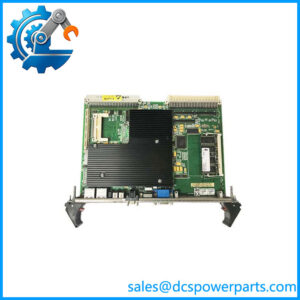
VMIVME-7740-840 350-07740-840-M | VMEbus Single-Board Computer | Legacy Industrial Computing
Key Technical Specifications
| Parameter | Specification |
|---|---|
| Model | VMIVME-7740-840 |
| Part Number | 350-07740-840-M |
| Product Type | VMEbus Single-Board Computer |
| Processor Architecture | Intel Pentium III, PGA370 |
| VME Format | 6U dual-Eurocard |
| VME Standard | VMEbus Specification Rev. C.1 |
| VME Modes | A32/A24, D32/D16/D08(EO), MBLT64, BLT32 |
| Memory | Up to 256 MB SDRAM in the VMIVME-7740 family |
| Ethernet | Two Fast Ethernet controllers, 10BaseT/100BaseTX |
| Serial | Two 16550-compatible serial ports |
| USB | Front-panel USB |
| Expansion | PMC expansion site |
| Storage Interface | Ultra-DMA-33 hard-drive/floppy controllers |
| Nonvolatile Memory | 32 KB battery-backed SRAM |
| VME Functions | System controller, interrupt handler, interrupter and slave |
| Cooling | Forced-air cooling required |
The original VMIC brochure identifies the VMIVME-7740 as a Pentium III PGA370 VME CPU with up to 256 MB SDRAM, two Fast Ethernet controllers, two serial ports, USB, PMC expansion, VME64 transfer modes, and byte-swapping hardware for mixed-endian VME applications.
Product Introduction
The VMIC VMIVME-7740-840, part number 350-07740-840-M, belongs to the VMIVME-7740 family of Pentium III processor-based VMEbus single-board computers. It combines PC-compatible computing with a VMEbus interface, allowing the board to operate as a VMEbus controller or communicate with other VME modules through the onboard PCI-to-VME bridge and endian-conversion hardware.
For legacy industrial computers, test equipment, motion platforms, data-acquisition systems, and other VME installations, the board is usually a system-level computing component rather than a conventional PLC I/O card. Its operating-system environment and VMEbus configuration can be just as important as the processor specification when replacing an installed unit.
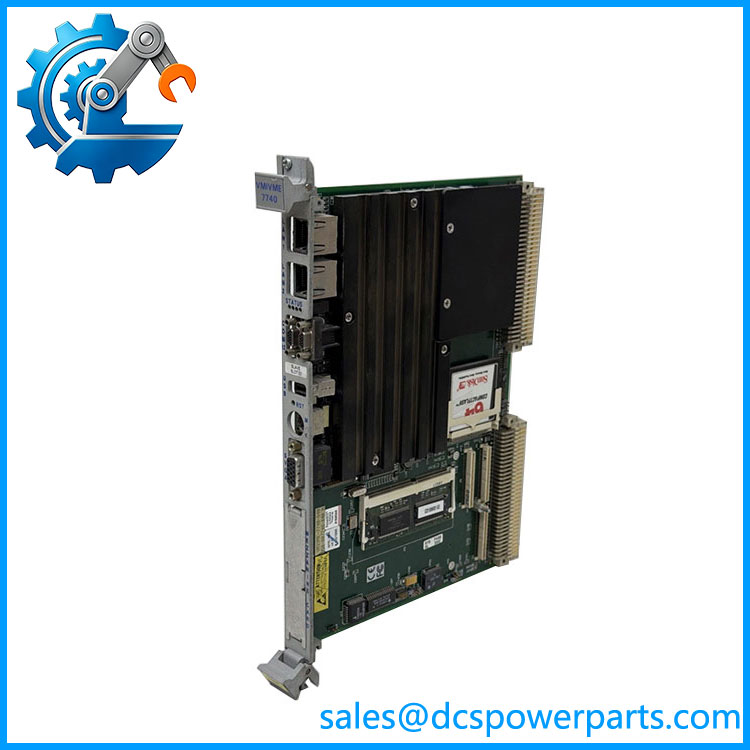
VMIVME-7740-840 350-07740-840-M
Application Scenarios & Field Pitfalls — The Engineer’s Perspective
Engineering Pain Point
Replacing an old VME CPU is rarely just a matter of matching the front-panel part number. The application may depend on a particular operating system image, PMC device, VME interrupt configuration, P2 I/O wiring, or boot/storage arrangement. The can function as a VMEbus system controller and also as a VMEbus slave, so its role inside the rack should be confirmed before installation.
Typical Applications
- Legacy VME industrial control computers
- Data acquisition and test systems
- Multi-processor VMEbus architectures
- Motion and machine-control platforms
- Industrial automation systems using PC-compatible operating environments
- Replacement of obsolete VMIC VME CPU boards
Technical Pitfalls
- Do not confuse the with newer VME CPU generations. The 7740 is based on the Pentium III/PGA370 architecture and belongs to an older generation of VME computing hardware.
- Verify the exact -840 configuration. Public documentation clearly describes the family, but configuration suffix documentation for VMIVME-7740-840 is much less complete. Before procurement, compare the requested part number with the installed board label, processor marking, memory configuration, and system BOM.
- Check the VME backplane. The installation documentation specifies a dual P1/P2 VMEbus backplane. If the board is intended to act as system controller, slot position also matters.
- Cooling is not optional. VMIC installation guidance calls for forced-air cooling and recommends blank panels over unused VME slots to improve airflow. A replacement board should therefore be tested under the actual rack cooling arrangement rather than on an open bench alone.
- Operating-system compatibility matters. The family documentation lists support for operating environments including Windows NT, Windows CE, Linux, VxWorks, QNX and Solaris. A replacement board may require restoration of the customer’s existing OS, drivers, application software, and boot configuration.
- Do not substitute by processor speed alone. PMC hardware, VME P2 assignments, firmware, memory configuration, and application software can make two apparently similar VMIVME boards functionally different.
Related Products
- — Closely related configuration; verify processor, memory, and option coding before substitution.
- — Base family designation covering the Pentium III VMEbus SBC platform.
- VMIVME-7750 — Later-generation VME single-board computer family; architecture and processor platform differ from the 7740.
- VMIVME-7658 — Older VME processor board family with a different processor architecture and system configuration.
- VMIVME-7807 — Later VMEbus processor platform; not a direct drop-in replacement for the 7740.
- VMIVME-7645 — Intel-based VME SBC family with a substantially different chipset and processor generation.
- VMIACC-0584 — VMIC accessory family item; verify the exact interface/application before pairing with a VMIVME CPU.
- VMIVME-4150 — VME analog output board, useful when the requirement is I/O rather than VME computing.
Procurement Note
For a replacement VMIVME-7740-840 / 350-07740-840-M, the safest purchasing specification is the complete part number plus the installed processor, memory, PMC configuration, operating system, and board revision. The family is sufficiently old that software and configuration compatibility can be more restrictive than the basic VMEbus electrical interface.