Description
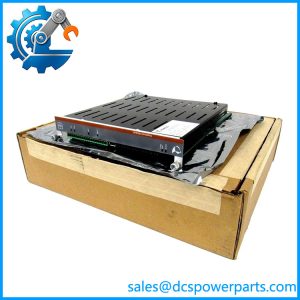
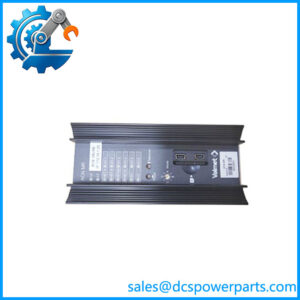
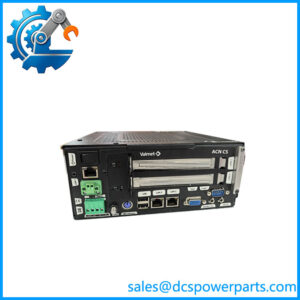
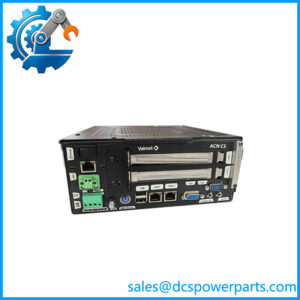
Valmet DPU-MR2 PDP616 Process Controller
Product Overview
The Valmet DPU-MR2 PDP616 is a MaxDNA distributed processing unit designed to perform process-control and I/O processing functions within Valmet’s legacy MaxDNA automation architecture. Unlike an individual I/O card such as an IOP329, the PDP616 operates at the controller level, coordinating the distributed I/O hardware and executing the configured control application. Procurement records identify PDP616 specifically as a distributed controller used in DCS systems, while BHEL documentation identifies the corresponding hardware as 69230D616A / ED69230D616A.
The Valmet PDP616 is specifically documented as an MR Version 2 DPU with IRIG. BHEL’s spare-parts documentation lists “DPU MR V2 PDP616A W/IRIG” against ED69230D616A, and a later BHEL drawing identifies 69230D616A as the module inscription associated with PDP616. This provides a stronger identification than generic reseller descriptions that simply call the unit a MaxDNA controller.
For replacement work, the Valmet DPU-MR2 should be treated as a system-level controller rather than a plug-and-play processor. The DPU works with MaxDNA I/O modules, rack hardware, communication infrastructure, application configuration, and system time synchronization. The IRIG designation is particularly important when the controller participates in an installation where synchronized event or sequence-of-events timing is required. Exact processor specifications, memory capacity, network ports, supply requirements, and environmental ratings should be verified against the installed hardware revision rather than copied from unrelated MaxDNA DPU variants.
Technical Specifications
| Parameter | Specification |
|---|---|
| Product Model | DPU-MR2 |
| Manufacturer | Valmet Automation |
| Legacy Manufacturer | Metso Automation |
| Product Type | Distributed Processing Unit / Process Controller |
| Control System | MaxDNA |
| DPU Generation | MR Version 2 |
| Module Code | 69230D616A |
| BHEL Material Code | ED69230D616A |
| Configuration | PDP616A with IRIG |
| Primary Function | Distributed process control / I/O processing |
| System Architecture | MaxDNA distributed control system |
| I/O Interface | MaxDNA I/O architecture |
| Time Synchronization | IRIG-equipped configuration |
| External Protocol | Verify installed system configuration |
| Supply Voltage | Verify applicable DPU-MR2 documentation |
| Operating Temperature | Verify hardware revision documentation |
| Mounting | MaxDNA system rack / controller assembly |
| Protection Rating | System/rack dependent |
| Communications | MaxDNA system communications; exact interfaces revision-dependent |
Specification discipline: The identification of , MR Version 2, IRIG capability, and the 69230D616A / ED69230D616A relationship is supported by BHEL documentation. I would not publish a processor speed, RAM capacity, Ethernet port count, voltage range, or temperature rating without the applicable hardware manual. The available records do not establish those values reliably.
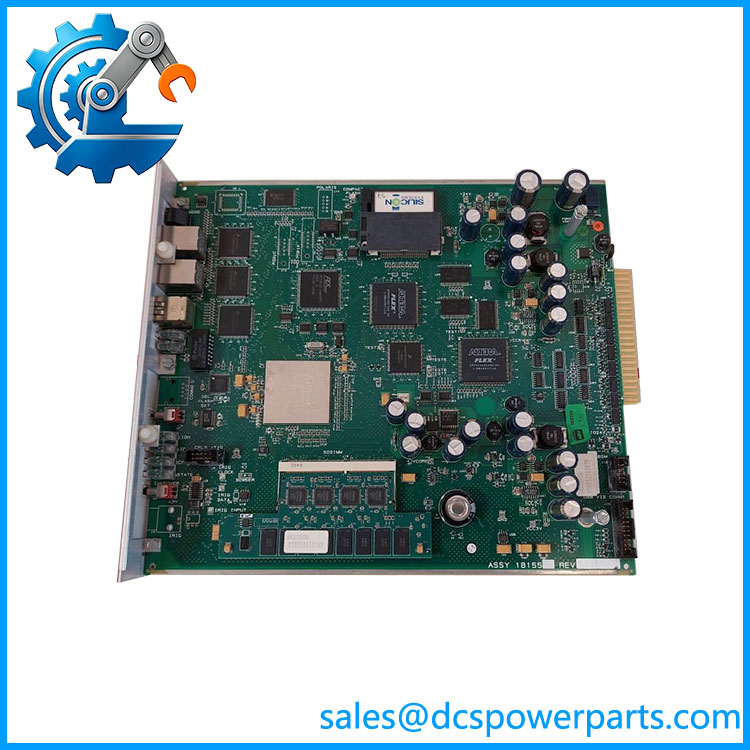
DPU-MR2 PDP616
Main Features and Engineering Considerations
The defining characteristic of the Valmet DPU-MR2 is its position in the MaxDNA control hierarchy. It is a distributed processing unit, so its failure can affect substantially more of the control system than the failure of a single analog or digital I/O module. A replacement therefore needs to be approached as a controller migration task, with configuration preservation and system-state verification taking priority over simply matching the front-panel model number.
The MR2 designation is important. BHEL documentation separately identifies PDP611 and within the MR Version 2 DPU family, so these model numbers should not be treated as interchangeable merely because they belong to the same DPU generation. The configuration is specifically documented with IRIG, making the complete ordering description more informative than the generic term “MaxDNA DPU.”
IRIG capability matters where time synchronization is part of the plant’s control and event-recording architecture. Before replacing a , determine how the existing system receives its time reference and how that timing is used by the control application. Do not assume that installing a controller with a similar base model automatically reproduces the original time-synchronization behavior.
The associated I/O architecture also needs to be documented. BHEL records list alongside MaxDNA I/O modules including IOP301, IOP320, IOP321, IOP329, IOP330, and other MaxDNA hardware. This confirms that belongs to the same broader MaxDNA control-system ecosystem as the I/O modules, but it does not mean that every DPU can freely replace every other DPU.
Procurement and Replacement Checks
- Confirm the complete marking .
- Verify 69230D616A / ED69230D616A where applicable.
- Confirm the MR Version 2 hardware generation.
- Verify the IRIG-equipped configuration.
- Record the existing DPU configuration before removal.
- Document all connected MaxDNA communication and I/O connections.
- Verify the DPU rack and associated power arrangement.
- Preserve application and controller configuration files.
- Confirm system time-source configuration.
- Perform controlled I/O and control-loop testing after replacement.
Application Scenarios
- MaxDNA distributed control systems
- Process-control applications
- Power-generation automation
- Industrial process plants
- Distributed I/O processing
- Legacy Valmet / Metso automation installations
- Systems requiring synchronized event timing
- MaxDNA control-system modernization and maintenance
BHEL’s documentation confirms as part of the MaxDNA hardware ecosystem and specifically identifies the MR2 with IRIG configuration.
Engineer’s Guide: Field Pitfalls
Do not confuse with an I/O module.
is a DPU/process controller. IOP-series modules such as IOP329 and IOP330 perform field I/O functions.
Do not drop the IRIG designation.
The documented configuration is . If the plant relies on synchronized event timing, this detail should remain part of the replacement specification.
Verify the complete module code.
The BHEL documentation associates with 69230D616A / ED69230D616A. Recording only “” loses useful procurement information.
Do not assume PDP611 is interchangeable.
BHEL separately lists PDP611 and as different MR2 DPU models. Their similar naming does not establish functional interchangeability.
Preserve the controller configuration.
A replacement DPU without the correct MaxDNA application and system configuration may power up normally while still failing to assume the required control role.
Check the system before declaring the DPU defective.
Rack power, communication infrastructure, I/O modules, backplane connections, configuration corruption, and timing-source problems can produce symptoms that appear to originate in the controller.
Frequently Asked Questions
What is Valmet ?
It is a MaxDNA distributed processing unit / process controller, specifically an MR Version 2 configuration with IRIG capability.
What is the associated hardware code?
BHEL documentation identifies 69230D616A and with the configuration.
What does “W/IRIG” mean?
It identifies the configuration as having IRIG time-synchronization capability. The exact IRIG implementation and connection method should be checked against the installed system documentation.
Is an I/O module?
No. It is a DPU/process controller. MaxDNA I/O modules such as the IOP-series hardware operate as part of the larger system architecture.
Is the same as PDP611?
No. BHEL documentation lists PDP611 and as separate MR2 DPU models. Functional interchangeability should not be assumed.
What should be verified before purchasing a replacement?
Confirm the full designation, marking, MR2 generation, IRIG configuration, hardware revision, system configuration, rack arrangement, communications, and time-synchronization architecture.
Procurement Note
For a legacy Valmet , the safest procurement identification is the complete combination of + MR2 + W/IRIG + 69230D616A / where those markings apply. BHEL documentation provides strong evidence for this identification, while detailed electrical and processor specifications should be taken from the actual hardware documentation rather than inferred from other MaxDNA DPU models.