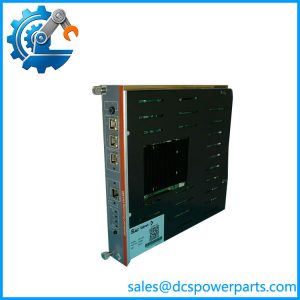
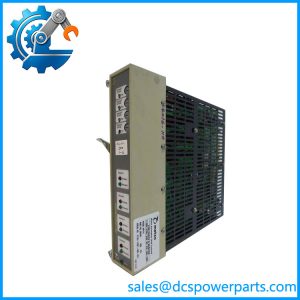
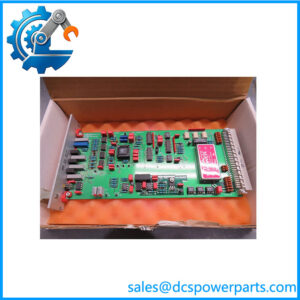
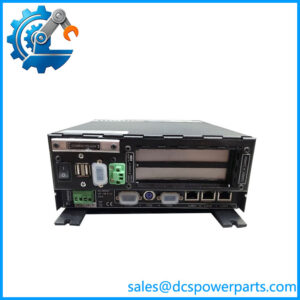
Description
Key Technical Specifications
| Parameter | Specification |
|---|---|
| Manufacturer | Dametric |
| Product Model | TVD-RM3 |
| VAL Number | VAL0123117 |
| SKC Number | SKC9251496 |
| Product Type | Touch Point Vibration Detector |
| System | RMS / RMS-EX Refiner Monitoring System |
| Supply Voltage | +24 VDC ±10% |
| Maximum Current | 0.19 A |
| Internal Supply | ±12 VDC, isolated from supply |
| Compatible Sensors | TVD-T1, TVD-T2, TVD-T2S |
| Sensor Type | Low-impedance piezoelectric accelerometer |
| TVD-T2 Frequency Range | 0.2–40 kHz |
| TVD-T2S Frequency Range | 0.2–10 kHz |
| Sensor Excitation | 10 mA constant current, 20 VDC |
| Amplifier Input Impedance | 50 kΩ |
| AC Signal Gain | 0.1–20, internally adjustable |
| Low-Gain Filter | Passive high-pass, 0.3–19 kHz, DIP configurable |
| Internal Zero Level | +1.0 V ±0.5% |
| Internal Full-Scale Level | +5.0 V ±0.5% |
| Digital Outputs | DO+TVD1, DO+TVD2 |
| Maximum Digital Output Current | 0.1 A |
| Analog Output | Isolated 4–20 mA, ±1%, sub-board option |
| Analog Output Load | 0–800 Ω |
| Isolation Voltage | Up to 500 V |
| Module Dimensions | 220 × 100 × 30 mm |
| Rack Format | 6HE / 6TE class module |
The published TVD-RM3 documentation specifies +24 VDC ±10%, maximum 0.19 A, an isolated ±12 VDC internal supply, and a 220 × 100 × 30 mm module size. It also specifies a 10 mA constant-current sensor excitation at 20 VDC.
The vibration measurement chain is particularly important. The TVD-RM3 accepts TVD-T1, TVD-T2, or TVD-T2S piezoelectric sensors. The documentation gives 0.2–40 kHz for TVD-T2 and 0.2–10 kHz for TVD-T2S.
Application Scenarios & Pain Points
A refiner can sound and behave normally during a short maintenance test while developing excessive plate-contact vibration once production load returns. That is why a TVD-RM3 fault should be investigated as a measurement-chain problem, not just a PCB problem.
Typical Applications
- Refiner Plate Contact Monitoring: The TVD-RM3 measures broadband vibration produced by contact between refiner plates during both idle and production operation.
- Touch Point Detection: Its primary job is detecting the vibration signature associated with plate contact, allowing the RMS system to identify operating conditions that require attention.
- TVD Piezoelectric Sensor Interface: The unit monitors low-impedance piezoelectric accelerometers and supplies the required constant-current excitation.
- RMS-EX Protection and Monitoring: Digital limit outputs can be connected to the RMS control architecture, while an optional isolated 4–20 mA output can provide a proportional signal for external instrumentation.
Field Case:
When a TVD alarm appears only at production speed, start at the sensor and cable. Check connector integrity, sensor mounting, shielding, and signal level before replacing the monitor. A mechanically loose piezoelectric sensor can generate an unstable signal that looks like an electronic failure.
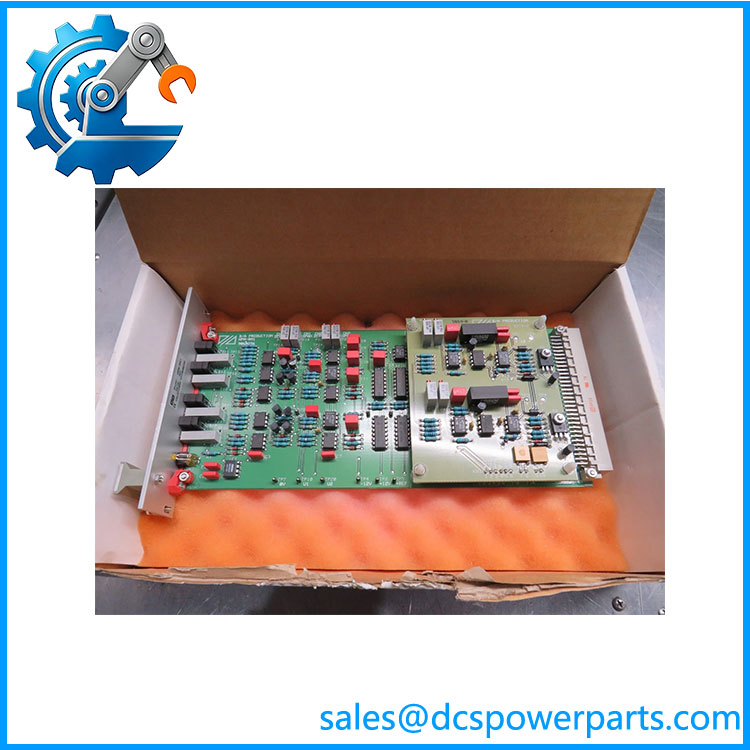
TVD-RM3
Related Products
- Dametric TVD-T2 — Piezoelectric vibration transducer compatible with TVD-RM3. Its documented frequency range is 0.2–40 kHz, making it appropriate for the higher-frequency TVD measurement configuration.
- Dametric TVD-T2S — Alternative piezoelectric vibration transducer with a 0.2–10 kHz frequency range. It is used in configurations where the lower-frequency response is appropriate.
- Dametric TVD-T1 — Another compatible piezoelectric transducer listed in the documentation. Verify the physical mounting and configured sensor type before substitution.
- Dametric POM-RM1 — Position Monitor, VAL0123032 / SKC9068249. It monitors refiner position rather than contact vibration and is a complementary RMS monitoring module.
- Dametric HPM-RM1 — Hydraulic Pressure Monitor, VAL0122850 / SKC9068256. It monitors hydraulic pressure and occupies a different measurement role within the RMS architecture.
- Dametric MPM-RM2 — Motor Power Monitor, VAL0122979 / SKC9374469. Used for motor-power measurement rather than vibration detection.
- Dametric VIM-RM1 — Vibration Monitor, VAL0123136 / SKC9068201. Although both VIM-RM1 and involve vibration, their measurement purposes and signal-processing functions differ.
- Dametric LDU-RM1 — Limit Display Unit, VAL0122977 / SKC9068232. Used for displaying monitoring limits/status rather than acquiring the TVD vibration signal.
- Dametric OTM-RM1 — Optional Temperature Monitor, VAL0122982 / SKC9068263. Provides temperature monitoring within the same broader RMS architecture.
The Engineer’s Guide: Field Pitfalls to Avoid
⚠️ Do Not Confuse With a General Vibration Monitor
specifically measures vibration associated with refiner plate contact. VIM-RM1 serves a different vibration-monitoring function.
How to avoid it: Match the complete identification: / VAL0123117 / SKC9251496, then verify the installed transducer type.
⚠️ Sensor Type and DIP Settings Matter
The module supports different TVD sensor configurations. The documentation specifies different filter behavior for TVD-T2/T1 and TVD-T2S, with DIP switches used to configure the sensor/filter characteristics.
How to avoid it: Photograph the original DIP-switch positions before removing the old card. Do not copy a factory-default setting unless the actual sensor configuration is known.
⚠️ Do Not Calibrate Blindly
The uses internal ZERO and SPAN adjustments, with documented calibration procedures involving specific test signals and test points.
How to avoid it: Record the original settings and use the documented calibration procedure. Calibration should be performed by qualified personnel; randomly turning P1, P2, or P3 is a poor diagnostic method.
Frequently Asked Questions (FAQ)
What is Dametric VAL0123117?
It is a Touch Point Vibration Detector for the RMS-EX refiner monitoring system. The documented identifiers are / VAL0123117 / SKC9251496.
Its purpose is to measure broadband vibration associated with refiner plate contact.
Which sensors can be connected to ?
The documentation identifies TVD-T1, , and piezoelectric accelerometer-type sensors as compatible sensor types.
is specified for approximately 0.2–40 kHz, while is specified for 0.2–10 kHz. The sensor choice affects the required configuration.
What power supply does require?
The documented supply is +24 VDC ±10%, with maximum current consumption of approximately 0.19 A. The unit generates an isolated ±12 VDC internal supply.
Does provide PLC outputs?
Yes. The unit provides two digital limit outputs, identified as DO+TVD1 and DO+TVD2. The documented output circuit is an optically isolated P-channel device connected to the RMS system voltage, with a maximum stated current of 0.1 A.
An optional isolated 4–20 mA analog output is also documented, with a 0–800 Ω load range and up to 500 V isolation.
Can I replace with VIM-RM1?
No, not as a direct assumption. Both modules involve vibration, but is specifically intended for touch-point/plate-contact vibration detection, while VIM-RM1 serves another vibration-monitoring function.
Match the module number and measurement architecture before approving a substitution.
What should I request when buying a refurbished ?
Request:
- Actual front and rear photographs
- marking
- VAL0123117 identification
- SKC9251496 identification
- PCB revision/date information
- Connector inspection
- DIP-switch configuration
- 24 VDC power-up test
- Sensor excitation test
- Simulated vibration-input test
- Digital LIMIT 1/2 output test
- Analog 4–20 mA test if fitted
- Calibration/test report
- ESD-safe packaging
- Warranty terms
For this module, a simple power-up test is not sufficient. The meaningful test is to verify the sensor excitation, signal conditioning, configured limits, and outputs.
What is the biggest replacement risk?
Incorrect sensor configuration. A replacement may power up normally while producing incorrect measurements if the sensor type, DIP-switch settings, gain, or filter configuration does not match the installed transducer.
For procurement, specify the full Dametric / VAL0123117 / SKC9251496 identification and provide the installed sensor model whenever possible.