Description
Key Technical Specifications
| Parameter | Value |
|---|---|
| Manufacturer | TEWS Technologies |
| Model | TVME200-10 |
| Product Family | TVME200 |
| Product Type | VMEbus IndustryPack Carrier |
| Form Factor | 6U VMEbus board |
| IndustryPack Slots | 4 single-size IP modules or 2 double-size IP modules |
| IP Interface | ANSI/VITA 4-1995 |
| VMEbus Interface | Slave |
| Short I/O Addressing | A16 |
| Short I/O Data Width | D08/D16 |
| Short I/O Space | 1 Kbyte |
| Standard Memory | A24, D08/D16 |
| Standard Memory Size | Programmable, 32 Kbytes to 2 Mbytes per IP |
| Extended Memory | A32, D08/D16 |
| Extended Memory Size | Fixed 8 Mbytes per IP |
| VME Interrupts | IRQ1–7 |
| VMEbus Interface Speed | 8 MHz |
| DMA | Not supported |
| IP I/O Connection | 50-pin, 0.1-inch ribbon cable |
| I/O Access | Front-panel I/O |
| IP Power | +5 V, +12 V, -12 V |
| IP Power Protection | Self-healing fuses |
| IP Power Filtering | RF filtering |
| Operating Temperature | -40°C to +85°C |
| Version | Non-RoHS TVME200-10 |
The TEWS datasheet specifies the four-slot architecture, VMEbus addressing modes, IRQ1–7 support, 8 MHz interface, absence of DMA, 50-pin ribbon-cable I/O, and -40°C to +85°C operating range.
Product Introduction
TEWS TVME200-10
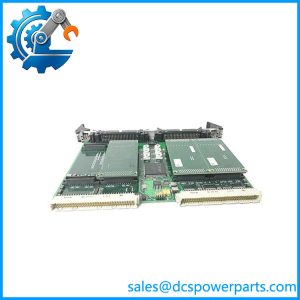
The TEWS TVME200-10 is a 6U VMEbus carrier board for IndustryPack modules, providing the bridge between up to four single-size IP modules—or two double-size modules—and a VMEbus backplane. It supports A16, A24, and A32 addressing and routes IP interrupts to VMEbus IRQ1–7.
This board is useful when maintaining legacy VME-based industrial or embedded systems where replacing the complete VME architecture is impractical. The carrier itself does not provide application-specific I/O; the installed IndustryPack modules determine the actual analog, digital, communication, or other I/O functions.
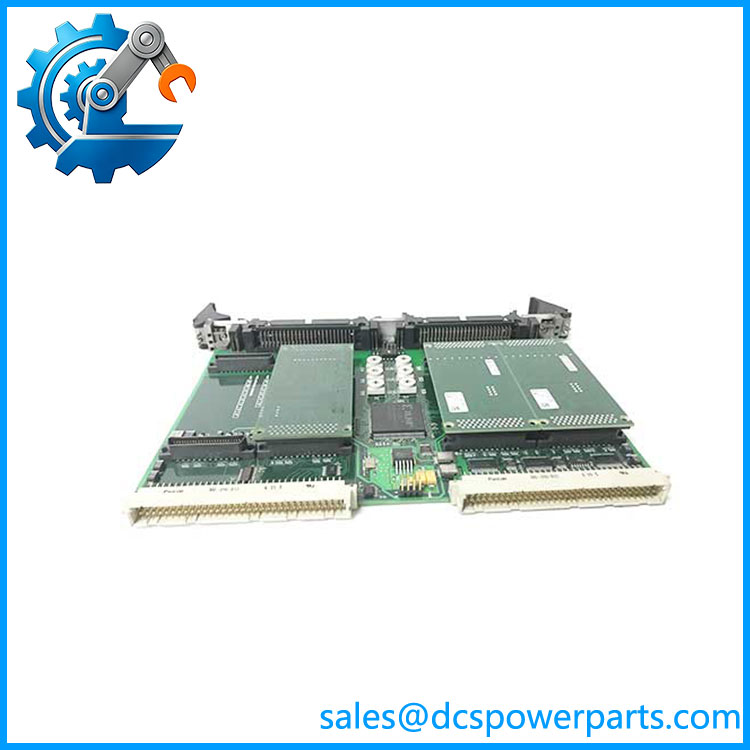
TVME200-10
Application Scenarios & Field Pitfalls
Engineering Pain Point
Legacy VME systems rarely fail in a convenient way. A single carrier problem can appear as several missing I/O functions because multiple IndustryPack modules share the same VMEbus carrier. Before replacing four IP modules independently, check the TVME200-10, its VMEbus connection, IP power rails, interrupt configuration, and individual slot status.
Typical Applications
- Industrial Process Control — Hosting IndustryPack analog and digital I/O modules in legacy VME control systems.
- Factory Automation — Modular machine-control I/O where VMEbus remains the system backplane.
- Telecommunications Equipment — IndustryPack-based interface expansion in embedded VME platforms.
- Test and Measurement — Multi-function acquisition and control systems using several IP modules in one 6U VME carrier.
Technical Pitfalls to Avoid
- Do not mistake the carrier for an I/O module.
The -10 provides the VMEbus/IP infrastructure. The actual I/O function comes from the installed IndustryPack modules. - Check IP slot loading.
The board accommodates four single-size IP modules or two double-size modules. Do not install a mechanical combination that exceeds the carrier’s supported arrangement. - Verify the IP power rails.
The carrier distributes +5 V, +12 V, and -12 V to the IP modules. TEWS specifies self-healing fuses and RF filtering on the IP power lines. A power fault can therefore affect an individual IP slot without necessarily indicating a VMEbus failure. - Do not assume DMA capability.
The -10 uses an 8 MHz VMEbus interface and does not provide DMA. Applications expecting DMA-based high-throughput transfers need an architecture review. - Check interrupt mapping.
IP interrupt levels are routed to VMEbus IRQ1–7 and can be configured by software or through predefined rotary-switch settings. Incorrect interrupt configuration can produce symptoms that look like software or IP-module faults. - Record rotary-switch settings before replacement.
The carrier uses sixteen-position rotary switches for address and interrupt configuration. Photograph the original settings before removing a failed board. - Do not confuse -10 with -20.
The provides front-panel I/O, while the -20 adds rear I/O capability for specified IP modules. The distinction matters when the existing cabinet uses rear-panel signal access. - Check the RoHS suffix.
is the RoHS-compliant successor/configuration, while is the non-RoHS version. Do not assume that the suffix is cosmetic when procurement or site compliance requirements are involved. - Inspect the VME P2 connector carefully.
uses P2 for VMEbus signals and power connections. TEWS documentation specifically identifies the P2 pin assignment for this version. - Verify the actual IndustryPack module.
A carrier replacement does not guarantee system recovery if the installed IP module has a different memory map, interrupt requirement, or I/O connector arrangement.
Related Products
- — RoHS-compliant version . It retains the four-IP-module, 6U carrier concept but should be checked against the original system’s compliance and revision requirements.
- — 6U VMEbus carrier for four IP modules with additional rear-I/O capability for specified IP-C and IP-D modules. Choose this configuration when the existing system requires rear-panel I/O.
- — RoHS-compliant version of the -20. It combines the rear-I/O configuration with the newer compliance version.
- TEWS TVME001-TM-10R — 6U transition module for VME64x IndustryPack carrier applications using 50-pin ribbon-cable connections. It is complementary to carrier/transition-module architectures rather than a replaceme.
- TEWS TA305 — Cable kit intended for modules using 50-pin ribbon-cable connectors. It is useful when rebuilding the field/I/O cabling around an IndustryPack carrier.
- TEWS TVME020-TM-10R — 6U transition module for VME64x PMC-carrier applications. It belongs to the broader TEWS VME transition-module family but is intended for PMC rather than the IndustryPack architecture.
- TEWS TVME020-TM-20R — Related PMC transition module with P2/P0 support and two PIM slots. It is relevant to VME-based PMC systems, not as a direct substitute for the four-slot IP carrier.
- — User documentation for the family. For maintenance work, this is more useful than generic VMEbus documentation because the IP interrupt, address-switch, and connector arrangements are carrier-specific.