Description
Product Overview
The TEWS TPMC866-11 is an eight-channel RS422 serial communication PMC designed for embedded computing systems that need multiple independent serial links without consuming a conventional PCI expansion slot. TEWS identifies the TPMC866 family as a standard single-width 32-bit PMC module, while the TEWS TPMC866-11 specifically provides eight RS422 channels with front-panel and P14 rear I/O. Each channel uses differential TxD+/TxD− and RxD+/RxD− signaling, with GND provided as part of the serial interface.
From an integration standpoint, the TEWS TPMC866-11 is intended for PMC-compatible carrier hardware used in VME, CompactPCI, embedded computer, and other industrial computing architectures. The board uses a PCI-compliant PMC interface and a pair of quad-UART devices to service its eight serial ports. Each channel has a 64-byte transmit FIFO and 64-byte receive FIFO, reducing processor intervention during sustained serial traffic. Baud rate is individually programmable up to 460.8 Kbaud per channel.
The TEWS TPMC866-11 also provides 120-ohm receiver termination between RxD+ and RxD− on each RS422 channel. That is a useful field detail when the card is connected to longer differential serial runs, although system-level termination still needs to be checked against the actual topology. TEWS lists software support for Windows, Linux, VxWorks, QNX, and Integrity environments through its TPMC866 software family.
TEWS now lists the TPMC866 product family as discontinued, with a last-time-buy date of December 31, 2025. For maintenance departments keeping older embedded platforms operational, this makes verified surplus inventory and exact hardware identification more important than simply finding a board with eight RS422 ports.
Key Technical Specifications
| Parameter | Value |
|---|---|
| Manufacturer | TEWS Technologies GmbH |
| Model | TPMC866-11 |
| Product Family | TPMC866 |
| Product Type | 8-Channel Serial Communication PMC |
| Serial Standard | |
| Number of Channels | 8 |
| Interface | PCI Mezzanine Card (PMC) |
| PMC Width | Single-width |
| PMC Architecture | 32-bit PCI |
| PCI Interface | PCI Rev. 2.2, 33 MHz / 32-bit |
| PCI Signaling | 3.3 V and 5 V |
| Maximum Baud Rate | 460.8 Kbaud per channel |
| Serial Data | TxD+, TxD−, RxD+, RxD−, GND |
| FIFO | 64-byte transmit + 64-byte receive per channel |
| Receiver Termination | 120 ohms per channel |
| Front I/O | HD50 female SCSI-2 type connector |
| Rear I/O | 64-pin P14 interface |
| Serial Controller | 2 × ST16C654 quad UART |
| PCI Target Controller | PLX PCI9030 |
| Standard Operating Temperature | 0°C to +70°C |
| Extended Temperature Version | -40°C to +85°C, TPMC866-11R-ET |
| Typical Power | 15–85 mA @ +5 V; 100 mA typical @ +3.3 V |
| Board Size | 149 × 74 mm |
| Weight | Approximately 76 g |
| Humidity | 5–95% non-condensing |
| Status | Discontinued |
| Driver Options | Windows, Linux, VxWorks, QNX, Integrity |
The specifications above are based on TEWS’ published documentation. One important naming point: current TEWS documentation uses for the version, while older documentation identifies . er manual explicitly describes the product as an eight-channel PMC.
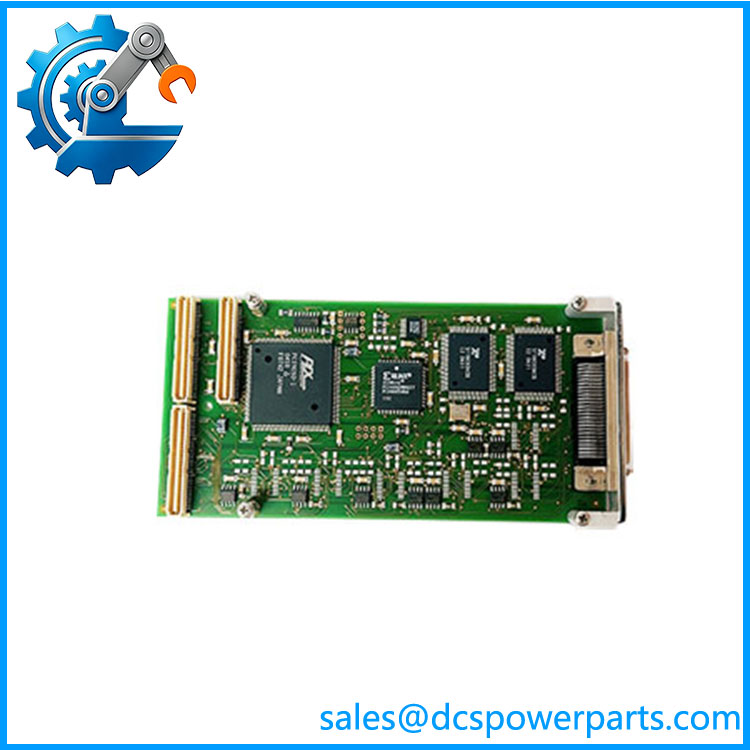
TPMC866-11
Related Products
- — Eight-channel RS232 version of the same PMC family. It is appropriate when the host equipment requires single-ended RS232 rather than differential communication.
- — Current designation for the eight-channel version. It corresponds closely to er identification and should be checked against the installed board revision before replacement.
- TEWS -11R-ET — Extended-temperature variant rated from -40°C to +85°C. It is intended for applications where the standard 0°C to +70°C operating range is insufficient.
- — Eight-channel /RS485 version supporting both full- and half-duplex operation. This is useful where RS485 compatibility is required, but it should not be assumed to be a direct replacement for an -only configuration.
- TEWS -TM-10R — Transition module providing eight DB25 connectors for serial channels. It simplifies field wiring between the PMC card and external serial equipment.
- TEWS -TM-20R — Transition module providing eight RJ45 connectors. It offers a different physical termination arrangement while remaining compatible with the serial family.
- TEWS -IO-10R — DIN-rail I/O distribution module with eight DB9 connectors. It is useful when the needs to be wired into a cabinet-mounted serial interface arrangement.
- TEWS TPMC868-11R — Sixteen-channel PMC module. It provides twice the channel count of -11R and can reduce the number of PMC cards required in higher-channel-count systems.
Frequently Asked Questions
1. What isWS used for?
he is an eight-channel serial communication PMC. It allows a compatible embedded computer or industrial carrier to communicate with up to eight independent devices through one PMC card. The published interface provides differential transmit and receive pairs for each channel.
It is particularly useful in embedded control, instrumentation, data-acquisition, test, and industrial communication systems where multiple serial devices must be handled by one host processor.
2. Can ce with -10R?
Not as a direct electrical replacement.
The important difference is the serial standard:
- RS232
uses differential signaling, while RS232 uses single-ended signaling and different electrical levels. The external equipment and cable pinout therefore need to match the replacement card.
es support firmware v3.1?
he is primarily a PMC hardware interface module, and TEWS documentation does not establish a universal “firmware v3.1” requirement for this board.
Software compatibility is more relevant. TEWS provides driver packages for Windows, Linux, VxWorks, QNX, and Integrity.
For an existing installation, verify the host operating system and driver version before changing the board.
4. Can I hothe ?
No—do not treat it as a hot-swappable PMC.
The board is electrically connected to the host through the PMC PCI interface. A controlled replacement should normally involve:
- Shut down the host system.
- Remove system power according to the equipment procedure.
- Disconnect the serial I/O.
- Replace the PMC card.
- Restore the I/O connections.
- Start the host and verify PCI recognition.
- Test all required channels.
A carrier-specific maintenance procedure always takes priority.
5. Will ng erase my application logic?
Normally, nohe is a serial communication expansion card rather than the host computer’s primary application-storage device.
Still, preserve the host configuration before replacement. In particular, document:
- Serial port assignments
- Baud rates
- Data bits
- Parity
- Stop bits
- Application-to-port mapping
- Driver version
- wiring
The TEWS driver supports configuration of baud rate, data bits, parity, and stop bits.
Is still manufactured?
TEWS currently lists the product family as discontinued and gives December 31, 2025 as its last-time-buy date.
That makes the original board revision particularly relevant for legacy equipment. A newer serial card with similar functionality may require driver, mechanical, connector, or host-carrier changes.
7. How should I verify a Neus before installation?
For a maintenance spare, I would check the following rather than relying only on the model number:
- Confirm or corresponding marking.
- Verify eight channels.
- Inspect the PMC edge connectors for damage or oxidation.
- Confirm the HD50 front connector and P14 interface where applicable.
- Check PCB revision and manufacturing labels.
- Power the card on a compatible PMC carrier.
- Verify PCI enumeration.
- Test representative channels at the intended baud rate.
- Confirm driver recognition under the target operating system.
The original TEWS documentation warns that the PMC module must be installed in a compatible carrier; using incompatible hardware can cause serious damage.