Description
Key Technical Specifications
| Parameter | Specification |
|---|---|
| Model | SST-PB3-PCIE-2 |
| Manufacturer | Woodhead / Molex |
| SAP Number | 1120110029 |
| Product Type | PROFIBUS PCI Express interface card |
| Number of Channels | 2 |
| Host Bus | PCI Express x1 |
| PCIe Revision | 1.0a listed in the technical reference |
| PROFIBUS Data Rate | 9.6 kbps to 12 Mbps |
| Protocol Support | DP-V0 Master/Slave, DP-V1 Master, FDL Layer 2 |
| Network Connector | 9-pin female D-sub per channel |
| Electrical Isolation | 1000 V |
| Supply Voltage | 3.3 V |
| Operating Temperature | 0°C to +60°C |
| Software Interfaces | DLL, CommDTM, OPC DA |
| Mounting | PC expansion slot |
Specifications are based on the Molex product data and SST technical documentation.
Product Introduction
The Molex Woodhead SST-PB3-PCIE-2 is designed to connect an industrial computer directly to PROFIBUS networks through two independent communication channels. It supports master and slave operation for DP-V0, DP-V1 master communication, and FDL Layer 2 messaging. The card can operate at standard PROFIBUS speeds from 9.6 kbps through 12 Mbps, making it suitable for PC-based automation, supervisory control, device configuration, and industrial communication applications.
The PCI Express x1 interface distinguishes this model from the older SST-PB3-PCU-2, which uses a conventional PCI bus. When replacing an installed card, verify the host computer’s PCIe slot, operating system, driver package, application libraries, and PROFIBUS configuration. A mechanically compatible slot alone does not establish software compatibility.
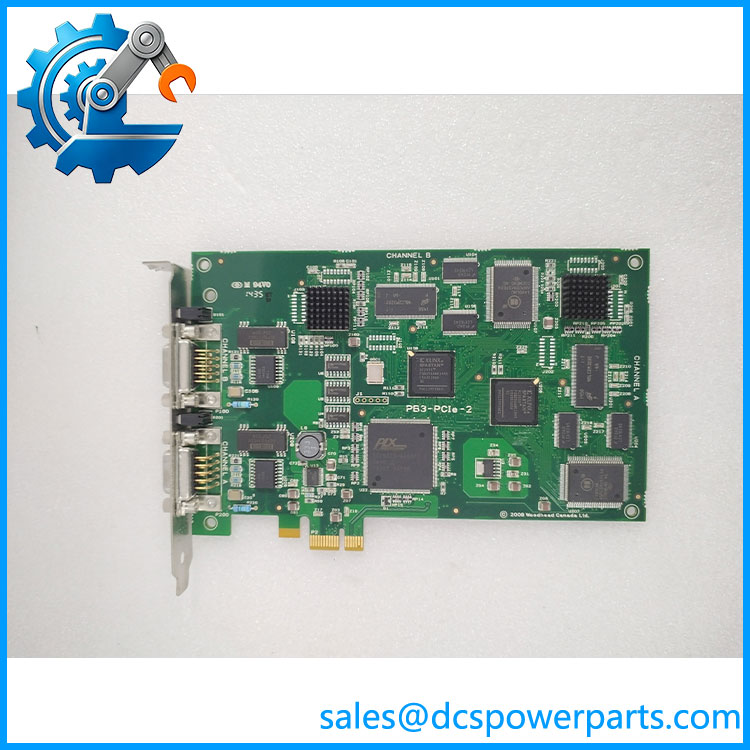
SST-PB3-PCIE-2
Application Scenarios & Field Pitfalls
Typical applications
- Industrial PCs communicating with PROFIBUS DP field devices.
- PC-based control and monitoring systems requiring two PROFIBUS channels.
- PROFIBUS master stations and slave-device integration.
- Maintenance and expansion of legacy automation networks.
- Engineering workstations using DLL, CommDTM, or OPC DA interfaces.
Field pitfalls
- PCIe and PCI are not interchangeable: The SST-PB3-PCIE-2 uses PCI Express x1. Do not substitute the SST-PB3-PCU-2 without checking the host motherboard and software architecture.
- Driver and operating-system compatibility: The card’s communication functions depend on the correct driver and application interface. Confirm compatibility with the installed Windows version and control software before commissioning.
- Bus configuration: Check station addresses, baud rate, termination, cable shielding, and network topology on both channels. Incorrect termination or duplicate addresses can cause intermittent communication faults.
Related Products
| Model | Description | Relationship |
|---|---|---|
| SST-PB3-PCIE-1 | Single-channel PCI Express PROFIBUS card | Same family, one channel |
| SST-PB3-PCU-2 | Dual-channel universal PCI PROFIBUS card | Same family, different host bus |
| SST-PB3-CNF-U | PROFIBUS configuration console with USB key | Configuration software product |
| SST-PB3-OPC | PROFIBUS OPC DA server | Software interface |
These models appear in the SST product documentation; they are related products, not automatic drop-in replacements.
Procurement and Quality-Control Notes
Before ordering, confirm the following:
- Exact part number: SST-PB3-PCIE-2.
- SAP number: 1120110029.
- Two PROFIBUS channels and PCIe x1 connector.
- PCB revision and hardware identification.
- Availability of compatible drivers and configuration software.
- Condition of both 9-pin D-sub connectors.
- Communication test results on both channels, including master operation and bus diagnostics.
Lifecycle note: Historical Molex product data identifies the part number and technical specifications, while some secondary inventory records describe it as discontinued. Confirm current manufacturer support and software availability rather than assuming that an available spare has current OEM support.
Procurement recommendation: For a replacement purchase, prioritize an exact part-number match and request a functional test of both PROFIBUS channels. A visual inspection or power-on test alone does not verify network communication performance.