Description
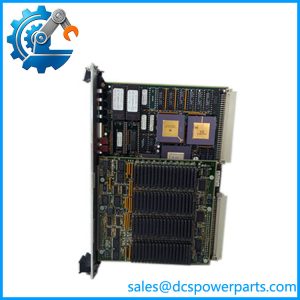
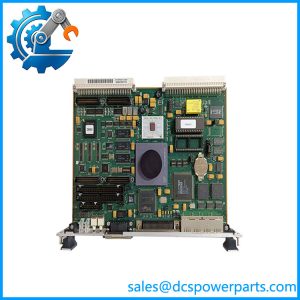
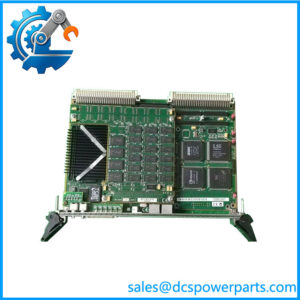
Motorola MVME-5110-2261 VME Processor Module
Product Overview
The Motorola MVME-5110-2261 is a high-performance 6U VMEbus processor module from the MVME5100 family, built around the PowerPlus II architecture. It was designed to put substantial PowerPC processing capability into a single VME slot for embedded computing, industrial control, telecommunications, defense, aerospace, and other systems requiring deterministic VME-based computing. The Motorola MVME-5110-2261 uses an MPC7410 PowerPC processor with a 400 MHz processor clock, 2 MB of secondary cache, and 512 MB of ECC SDRAM.
From a system-integration standpoint, the Motorola MVME-5110-2261 is a computer module, not a conventional PLC CPU or DCS controller. It provides VMEbus system-controller capability, PCI-based local expansion, PMC slots, Ethernet connectivity, serial communication, nonvolatile storage, and real-time clock/NVRAM resources. The module’s PowerPlus II architecture was developed to improve memory and PCI throughput within the VME environment, making it suitable for embedded applications where a general-purpose processor had to coexist with specialized VME and PMC hardware.
The board provides 512 MB of ECC SDRAM and 17 MB of flash memory, while the architecture supports memory expansion through optional RAM500 modules. The standard configuration also includes dual 10/100BaseTX Ethernet and two 16550-compatible asynchronous serial ports. Two PMC expansion positions provide a practical way to add application-specific I/O, storage, communication, or other processing hardware without abandoning the VME backplane.
One procurement detail is easy to overlook: the -2261 suffix is configuration-specific. It should not be treated as interchangeable with every MVME5110 variant. For example, MVME5110-2263 is separately cataloged, and the MVME5100 family contains multiple processor, memory, and front-panel configurations.
Product Introduction
When a legacy VME system fails, replacing the processor board with a superficially similar PowerPC module is not enough. The MVME-5110-2261 sits at the center of the VME computing architecture, so processor type, memory, PMC hardware, firmware environment, front-panel configuration, and operating-system image all matter.
For a legacy VME system upgrade or embedded-controller replacement, the practical objective is to reproduce the original computing environment rather than merely restore bus power. Existing application software, boot configuration, PMC assignments, VME address mapping, and operating-system dependencies should be documented before the board is exchanged.
Key Technical Specifications
| Parameter | Value |
|---|---|
| Product Model | MVME-5110-2261 |
| Manufacturer / Brand | Motorola / Emerson Network Power |
| Product Series | MVME5100 |
| Product Type | 6U VME processor module |
| Architecture | PowerPlus II |
| Processor | MPC7410 PowerPC |
| Processor Speed | 400 MHz |
| Front-Side Bus | 100 MHz |
| L1 Cache | 32 KB instruction + 32 KB data |
| Secondary Cache | 2 MB backside cache |
| SDRAM | 512 MB ECC |
| Optional Memory Expansion | Up to 1.5 GB with RAM500 expansion modules |
| Flash Memory | 17 MB |
| NVRAM | 32 KB |
| Ethernet | 2 × 10/100BaseTX |
| Serial Ports | 2 × 16550-compatible asynchronous serial ports |
| PMC Slots | 2 × IEEE P1386.1-compatible PMC |
| PCI Mezzanine Expansion | 64-bit PCI expansion connector |
| VME Interface | VMEbus / VME64 architecture |
| Form Factor | 6U VME |
| Backplane Power | VMEbus supply; exact system consumption depends on configuration |
| Product Status | Legacy / discontinued |
The 400 MHz MPC7410, 512 MB ECC SDRAM, 17 MB flash, dual Ethernet, dual serial ports, and PMC expansion are supported by available MVME5110-2261 technical listings.
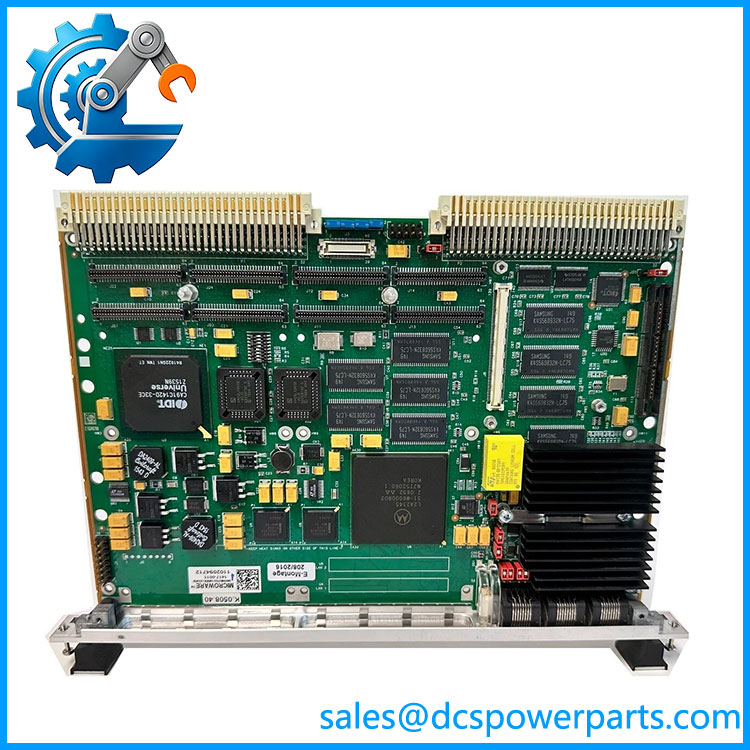
MVME-5110-2261
Major Features and Advantages
PowerPC processing in a 6U VME slot
The combines an MPC7410 PowerPC processor with the VMEbus architecture, allowing existing VME systems to retain their backplane-based I/O while gaining a substantially more capable embedded processor than earlier-generation VME boards. Its 100 MHz front-side bus and 2 MB backside cache were part of the PowerPlus II architecture used across the MVME5100 family.
This is particularly relevant in legacy control, test, simulation, defense, and industrial computing equipment where the VME backplane is part of the system design rather than simply an obsolete interface.
ECC SDRAM
The standard 512 MB ECC SDRAM provides error-detection and correction capability appropriate for embedded computing environments where memory integrity matters. Optional RAM500 expansion hardware can increase installed memory capacity to as much as 1.5 GB according to available product documentation.
For replacement work, however, memory capacity alone is not enough. Verify whether the existing application depends on a particular memory configuration or expansion module.
Dual Ethernet
Two 10/100BaseTX Ethernet interfaces provide network connectivity without consuming a PMC slot. This allows the board to communicate with supervisory computers, engineering workstations, network services, or other embedded controllers while preserving PMC positions for application-specific hardware.
Do not confuse these interfaces with modern gigabit Ethernet hardware. A network migration may require external infrastructure changes if the original system depended on 10/100 Mbps operation.
PMC expansion
Two IEEE P1386.1-compatible PMC slots provide the principal local expansion mechanism. PMC cards can add specialized communication, storage, data acquisition, or other functions while maintaining the main processor’s VME architecture.
The 64-bit PCI expansion mezzanine connection further expands the available PCI/PMC architecture.
VME system-controller role
The MVME5110 family was designed for VMEbus systems and can operate as a VME system controller. That makes the processor board part of the backplane architecture, not simply another peripheral card.
This distinction matters during replacement: a board with a similar processor but different VME system-controller behavior may not be a functional substitute.
NVRAM and real-time clock
The board includes 32 KB NVRAM and a real-time clock with battery backup. These resources can hold persistent system information that may be relevant to the application.
For an older spare board, inspect the battery condition. A replacement board that boots correctly but has lost battery-backed configuration or clock data can still create commissioning problems.
Legacy software environment
The MVME5100 platform was intended for embedded operating-system environments rather than PLC programming alone. Depending on the installed application, systems based on this hardware may use VxWorks, Linux, QNX, LynxOS, pSOS, or other supported environments.
The important procurement point is straightforward: the operating system is part of the system compatibility equation. A mechanically compatible replacement board without the required boot image or application environment is not necessarily a usable replacement.
Related Products
- Motorola MVME5110-2263 — Closely related MVME5110 configuration; compare front-panel and hardware configuration before substitution.
- Motorola -2161 — Another configuration with different ordering-code characteristics; verify processor/memory/front-panel details.
- Motorola -2163 — Related 6U VME processor module configuration used in embedded computing applications.
- Motorola -2151 — variant with 256 MB ECC SDRAM in documented procurement records; not automatically equivalent to the 512 MB -2261 configuration.
- Motorola MVME5101-0161 — MVME5100-family VME processor module with a different hardware configuration.
- Motorola MVME5101-0163 — Related processor-board variant; verify all configuration suffixes before replacement.
- Motorola -0161 — Earlier -series configuration suitable for comparison when maintaining legacy VME systems.
- Motorola MVME6100 — Later VME processor family with a substantially different processor and platform architecture; it should not be assumed to be a drop-in replacement.
- Motorola MVME712 — Related VME transition/PMC-support hardware used with various MVME processor systems.
FAQ
Can I hot-swap the ?
Do not assume hot-swap capability. This is a VME processor board rather than a modern hot-swappable industrial Ethernet or I/O module. The board should normally be installed or removed according to the VME chassis manufacturer’s power-down procedure, with the application safely stopped first.
Does the support firmware v3.1?
A generic firmware v3.1 designation cannot be confirmed as the defining firmware version for this exact board. The platform uses firmware/boot-monitor software, and the installed revision can depend on the individual board and application. Verify the actual boot-monitor version from the board before assuming compatibility with an existing software image.
Is the a PLC CPU?
No. It is a VMEbus processor module / embedded single-board computer. It can perform control and data-processing tasks in an industrial system, but it is fundamentally a PowerPC-based VME computer rather than a conventional PLC CPU.
What processor does use?
The -2261 configuration is documented with an MPC7410 PowerPC processor at 400 MHz, together with a 100 MHz front-side bus and 2 MB backside cache.
How much memory does it have?
The documented standard configuration provides 512 MB ECC SDRAM. The architecture can be expanded through RAM500 memory expansion modules, with documentation indicating capacity up to 1.5 GB.
Is compatible with MVME-5110-2263?
They are closely related configurations, but do not treat them as automatic drop-in equivalents. The ordering suffix identifies hardware/configuration differences, and the front-panel arrangement is one documented distinction within the family. Confirm the original system’s mechanical, PMC, software, and I/O requirements before substitution.
What should I check before buying a replacement?
For a legacy VME installation, verify:
- Complete part number:
- Board revision and serial number
- Processor configuration
- Installed SDRAM and RAM expansion
- PMC cards and their I/O routing
- VME slot and system-controller requirements
- Flash/boot-monitor contents
- Operating-system image
- Application software and boot parameters
- NVRAM and battery condition
- Ethernet and serial-port assignments
- VME chassis/backplane compatibility
Does “New Surplus” mean the board is unused?
Not necessarily. “New Surplus” is a condition description, not proof of factory-unused status. For an old MVME board, procurement inspection should include the board label, revision, connector condition, battery, PMC sockets, VME pins, power-up behavior, memory test, Ethernet/serial interfaces, and boot-monitor status.
Procurement and Compatibility Note
The is a legacy VME processor module, and its replacement risk is concentrated in the surrounding system rather than the processor board alone. The part is documented as NSN 5998-01-538-0062, providing another useful identifier when reconciling old equipment records.
For a controlled replacement, compare the original board’s hardware revision, PMC population, VME configuration, boot software, NVRAM contents, and application image before installation. A board can pass a basic power-on test and still fail to reproduce the behavior of the installed controller.
The should therefore be sourced as a configuration-specific VME computer, not simply as an interchangeable “ board.”