Description
Product Overview
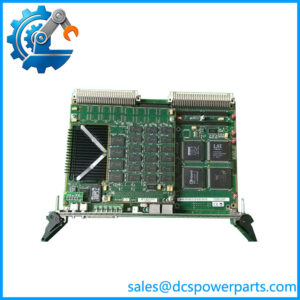
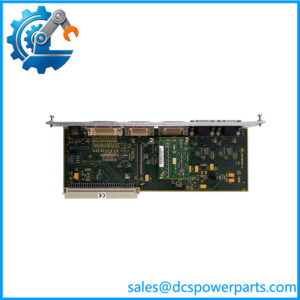
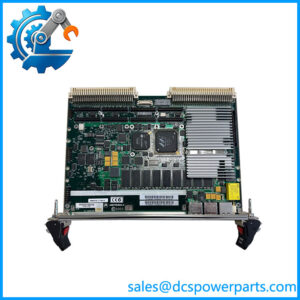
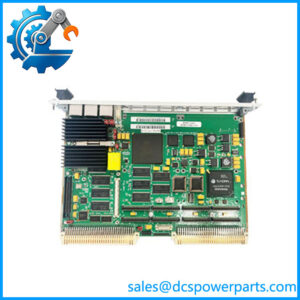
The Motorola IPMC761 Multifunction Rear I/O PMC Module is an expansion module designed to provide legacy-compatible input/output functionality for supported Motorola Computer Group single-board computers. Built around the PCI Mezzanine Card (PMC) form factor, it combines a PCI-to-ISA bridge, Ultra-Wide SCSI support, parallel I/O, and multiple serial interfaces. The IPMC761 was developed for systems that use compatible rear transition modules, allowing established computer platforms to retain their original peripheral connections without redesigning the complete I/O architecture. Documented applications include selected MVME2600, MVME2700, MVME5100, and MVME5500 configurations, subject to host-board and transition-module compatibility.
The Motorola IPMC761 provides one single-ended Ultra-Wide SCSI interface, one parallel port, two asynchronous serial ports, and two synchronous/asynchronous serial ports. Its PMC connection uses the P11, P12, P13, P14, and P15 connectors to interface with the host board. The module’s rear I/O capabilities depend on the selected host platform, jumper configuration, and matching transition hardware. For example, the IPMC761 is associated with the MVME761 transition module, while the related IPMC712 uses the MVME712M transition module; these pairings should not be treated as interchangeable without checking the system documentation.
For maintenance teams supporting legacy embedded computers, the Motorola IPMC761 can be an important component when serial devices, parallel peripherals, or SCSI storage must remain connected to an existing system. Before replacement, compare the complete board part number and revision, host-board model, PMC connector condition, jumper positions, and transition-module configuration. Also verify the required serial signaling and port assignments, since the IPMC761 and IPMC712 differ in selected physical interfaces. A board that fits the PMC slot may still fail to provide the required rear I/O if the host configuration or transition hardware is incorrect.
Product Introduction
Legacy VME computer systems can depend on specific rear I/O layouts for serial terminals, industrial peripherals, and SCSI devices. The Motorola combines four serial ports, parallel I/O, and Ultra-Wide SCSI support in a single PMC module for compatible MVME platforms.
When sourcing a replacement, check the host-board model, transition module, jumper configuration, and serial-port signaling. These details are essential for restoring the original I/O paths without introducing changes to established system wiring.
Key Technical Specifications
| Parameter | Specification |
|---|---|
| Manufacturer | Motorola Computer Group |
| Subsequent Brand Association | Emerson |
| Model | |
| Related Family | IPMC712 / |
| Product Type | Multifunction rear I/O PMC module |
| Form Factor | Single-wide, standard-length, standard-height PMC |
| Host Interface | 32-bit PCI via PMC connectors |
| PMC Connectors | P11, P12, P13, P14, P15 |
| SCSI Interface | 1 × single-ended Ultra-Wide SCSI |
| Parallel Interface | 1 × parallel port |
| Asynchronous Serial Ports | 2 |
| Synchronous/Asynchronous Serial Ports | 2 |
| Bridge Architecture | PCI-to-ISA bridge |
| Host Platforms | Supported MVME5100 and MVME5500 configurations; selected legacy platforms subject to compatibility |
| Typical Transition Module | MVME761 |
| Power Input | Through PMC connectors |
| Voltage Requirements | Verify host-board and module documentation |
| Operating Temperature | Verify the applicable hardware manual |
| Protection Rating | Not specified as an IP-rated field device |
| Installation | Compatible PMC slot and supported host/transition configuration |
Specifications are based on the IPMC712/761 installation manual and MVME platform documentation. Exact board revision and system configuration should be verified before installation.
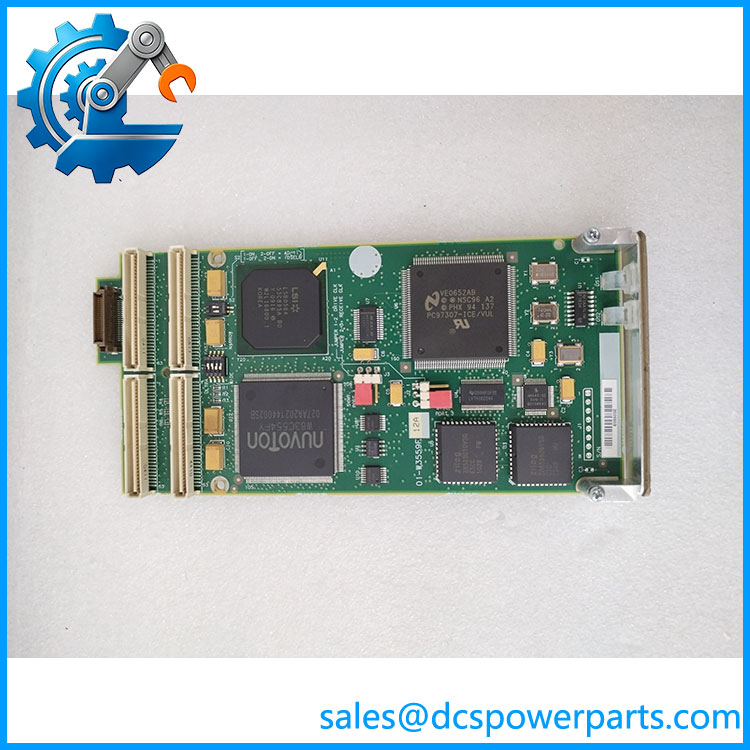
IPMC761
Related Products
These products support related MVME computer or rear I/O functions. They are not all direct replacements for the .
- IPMC712 — Related multifunction I/O module with a different serial-port and Ethernet physical-interface arrangement. It is normally paired with the MVME712M transition module.
- IPMC7616E-001 — Related module designation for MVME platforms; verify the full ordering code and host compatibility.
- IPMC7616E-002 — Universal variant identified for selected MVME5XXX and MVME6100 systems.
- MVME761 — Rear transition module designed for compatible configurations, providing external connections for the module’s I/O functions.
- MVME712M — Transition module used with the IPMC712 configuration; not the default substitute for the MVME761.
- MVME5100 — Motorola VME single-board computer that supports IPMC modules in designated configurations.
- MVME5500 — VME single-board computer family with documented support for compatible configurations.
- MVME2600 / MVME2700 — Earlier Motorola computer families associated with legacy MVME761/MVME712M rear I/O compatibility, subject to the specific transition hardware and configuration.
Frequently Asked Questions
1. What is the Motorola used for?
It provides multifunction rear I/O for compatible Motorola MVME single-board computers. Its interfaces include Ultra-Wide SCSI, parallel I/O, and four serial ports, supporting legacy peripherals and communication equipment.
2. How many serial ports does the have?
The documented configuration includes four serial ports: two asynchronous ports and two synchronous/asynchronous ports. The physical connection and signaling arrangement depend on the host and compatible transition hardware.
3. Can I use the with an MVME5100 or MVME5500?
Yes, these platforms have documented support in designated configurations. The host-board mode, PMC slot, jumper settings, and transition module must match the intended arrangement. Confirm the applicable platform manual before installation.
4. Can I replace the with an ?
Not as an automatic drop-in replacement. The two modules differ in the physical interfaces for Ethernet and selected serial ports, and they use different transition-module pairings. Review the required rear I/O signals and connector arrangement before changing models.
5. Can I hot-swap the while the computer is running?
Do not assume hot-swap capability. The module connects to the host’s PMC bus and draws power through its connectors. Follow the host computer manufacturer’s shutdown and electrostatic-discharge procedures before removing or installing the card.
6. How can I verify the condition of a replacement ?
Check the complete part number, board revision, connector pins, component condition, and jumper positions. Request functional-test evidence for the serial, parallel, and SCSI interfaces where possible. A visual inspection alone does not establish that all I/O channels are operational.
7. Will the replacement retain the original system configuration?
Do not assume that the replacement board will automatically reproduce the existing setup. Document jumper settings, host-board mode, transition-module model, serial assignments, and peripheral connections before removal. After installation, verify each required interface and peripheral connection before returning the host system to service.