Description
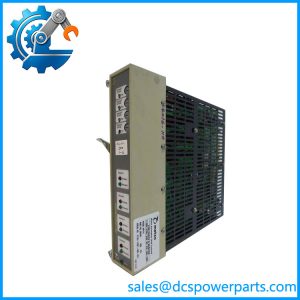
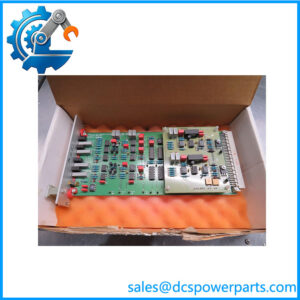
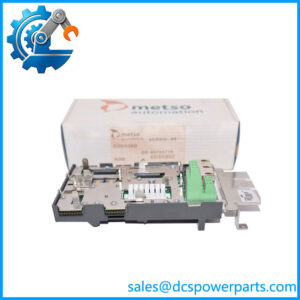
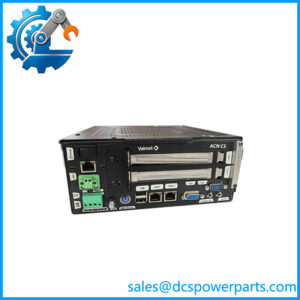
Metso Automation A413310 Power Supply Unit
Product Introduction
Power-supply failures in an older DCS rack can be deceptively difficult to diagnose: a controller may remain partially powered, I/O behavior can become intermittent, and technicians can waste hours chasing field wiring when the real problem is upstream. Metso Automation A413310 is identified in procurement records as a 2 A, 230 VAC, 50 Hz power supply unit associated with the Metso Automation/Valmet control-system spare-parts ecosystem.
For replacement work, the important issue is not simply whether an A413310 physically fits the installation. The original electrical rating, rack position, connector arrangement, revision, and surrounding power architecture should all be matched against the installed unit. Some current reseller descriptions conflict substantially on the input/output specifications, so procurement should be based on the original nameplate and system documentation rather than a generic online parameter sheet.
Key Technical Specifications
| Parameter | Specification |
|---|---|
| Product Model | A413310 |
| Manufacturer / Brand | Metso Automation / Valmet |
| Product Type | Power Supply Unit |
| System Family | Metso Automation / Valmet Damatic XD / DNA-related systems |
| Rated Input | 230 VAC |
| Frequency | 50 Hz |
| Current Rating | 2 A |
| Installation | System-specific / rack-associated installation |
| Application | Industrial DCS control-system power supply |
| Product Status | Legacy / discontinued |
| Exact Output Specification | Verify from the installed unit nameplate and original system documentation |
| Exact Environmental Rating | Verify against the applicable hardware revision |
A procurement listing specifically identifies A413310 as “POWER UNIT 2AMP 230VAC 50HZ,” while another established industrial-parts record lists the manufacturer as Metso Automation and the unit as a discontinued power supply.
Application Scenarios & Pain Points
The A413310 is most relevant where an existing Metso Automation/Valmet control installation still depends on legacy power hardware and a direct system migration is not yet practical.
- Legacy DCS maintenance: Used as a replacement spare when an installed power unit fails or begins showing unstable behavior.
- Paper and process plants: Particularly relevant to older Metso control-system installations where maintaining the existing architecture is preferable to replacing an entire rack.
- Control-rack troubleshooting: Useful when investigating controller resets, loss of rack power, or unexplained power-related faults.
- Planned shutdown maintenance: Keeping a correctly matched spare available can reduce troubleshooting time during a scheduled outage.
Field Note
Do not diagnose a failed from controller symptoms alone. Measure the incoming supply and inspect the unit’s actual output rails and connector condition. A loose terminal, degraded connector, or upstream protection device can produce symptoms that look almost identical to a failed power unit.
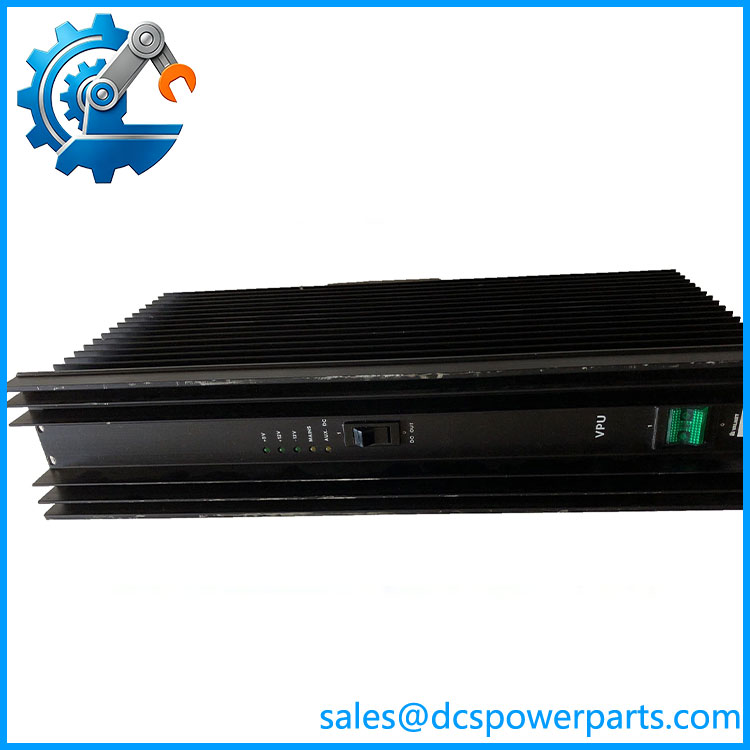
A413310
Related Products
For a legacy Metso/Valmet installation, these part numbers may appear in the same broader spare-parts environment:
- A413325 — power-related unit reported within the same Metso spare-parts family; confirm electrical role before substitution.
- A413345 — backup power module designation appearing in the same product family.
- A413042 — Metso Automation processor board/CPU assembly; not a power-supply substitute.
- A413016 — Metso/Neles circuit-board assembly; different system function.
- A413177 — interface module; verify rack and system revision before considering it.
- A413222 — output-module circuit board; not interchangeable with .
- D201832L — Valmet DCS power-related legacy hardware from a different numbering family; verify architecture before replacement.
- S420154 — Metso/Valmet PLC rack assembly designation; relevant when checking the complete rack architecture rather than the power unit alone.
Related part numbers should be treated as system references, not automatic substitutes. Matching the model number alone is insufficient for legacy DCS power hardware.
Engineer’s Guide — Field Pitfalls to Avoid
1. Do not trust a generic online specification sheet
Several secondary listings describe with completely different electrical characteristics. One describes a 10–30 VDC input and 24 VDC output, while another identifies it as a 230 VAC, 50 Hz, 2 A power unit.
Procurement rule: use the rating plate, original Metso documentation, and the installed rack configuration as the controlling references.
2. Do not substitute another power module because the connector looks similar
Legacy DCS hardware can share mechanical or connector characteristics while having different electrical functions. A visually similar module can still damage downstream equipment or simply fail to start the rack.
Before replacement: record input rating, output rating, connector positions, revision markings, and rack location.
3. Check the complete system power architecture
If a replacement unit repeatedly trips or fails after installation, do not immediately assume the replacement is defective. Excessive downstream loading, a shorted I/O card, deteriorated wiring, or a secondary power fault may be responsible.
Practical check: isolate the downstream load where the maintenance procedure permits it, then verify the power rails progressively.
4. Verify the actual hardware revision
The is a legacy component, so physical appearance alone should not establish compatibility.
For purchasing: request clear photographs of the nameplate, front/rear connector area, revision marking, and any PCB identification visible without opening the assembly.
5. Treat “new” and “used” as separate procurement conditions
For obsolete DCS power hardware, inventory condition matters. A previously energized unit may require electrical inspection even if its exterior looks clean.
Recommended receiving inspection: visual inspection, connector inspection, insulation checks where appropriate, power-up verification, and output-voltage measurement under a controlled test setup.
FAQ
Is Metso Automation a PLC module or a power supply?
It should be treated as a power supply unit, not a conventional PLC CPU, analog I/O, or digital I/O module. Procurement records identify it as a Metso Automation power supply, with one listing specifying 2 A, 230 VAC, 50 Hz.
What is the input voltage of ?
The strongest available identification specifies 230 VAC at 50 Hz. Because other secondary sources publish contradictory electrical data, the installed unit’s nameplate should be checked before ordering.
Is still manufactured?
Available industrial-parts records identify the as discontinued by the manufacturer. This makes revision and condition verification particularly important when sourcing a replacement.
Can be replaced by A413325?
Do not assume so. A413325 appears in the same broader Metso/Valmet spare-parts environment, but the two part numbers should not be considered interchangeable without confirmation of the rack architecture, electrical ratings, connectors, and system revision.
How should I verify an before purchasing?
Ask for the complete part number, rating-plate photograph, revision information, connector photographs, and confirmation of whether the unit is unused, refurbished, or previously installed. For a legacy DCS component, these details are more useful than a generic “compatible” statement.
Is the suitable for a new DCS installation?
It is primarily a legacy replacement component. If the existing control system depends on , retaining a verified spare can make sense for maintenance planning. For a new control-system design, the appropriate power architecture should be selected from the current system design rather than assuming an obsolete spare is suitable.
What should be checked after replacing ?
Verify the incoming AC supply, correct installation position, connector seating, output rails, alarm/status behavior, controller startup, and downstream I/O operation. If the replacement produces abnormal symptoms, stop and investigate the load and power distribution rather than repeatedly cycling the unit.