Description
Metso Automation A413150
Product Overview
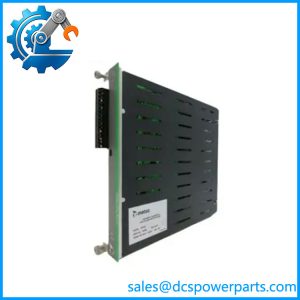
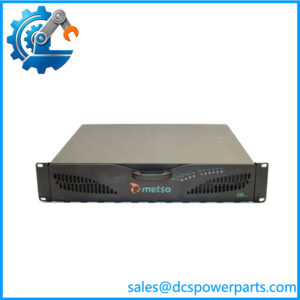
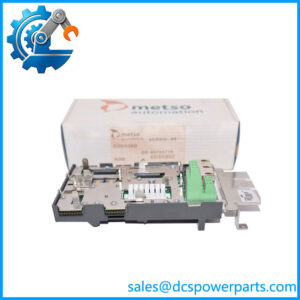
The Metso Automation A413150 is a BOU-8 Binary Output Module used with legacy Valmet Automation PLC and industrial control equipment. Available equipment records consistently associate the A413150 part number with the BOU-8 designation, and multiple physical examples have been documented with different revision levels, including Rev. 10, Rev. 11, Rev. 13, and Rev. 15.
In a Valmet control architecture, the A413150 serves at the binary-output layer rather than acting as a CPU, analog module, power supply, or communications processor. Its job is to provide the system-side interface for discrete output signals used by the control application. That makes it relevant to legacy PLC maintenance where an existing BOU-8 assembly has failed and the plant needs to retain the installed controller architecture rather than redesign an entire I/O system.
One point deserves attention during procurement: the public record confirms the BOU-8 binary-output identity, but does not provide sufficiently reliable primary documentation for the exact output voltage, current per channel, electrical isolation arrangement, switching characteristics, or environmental ratings of every A413150 revision. A supplier listing may show a revision-specific board, but that does not make its electrical details universal across the A413150 family. For an actual replacement, the installed board revision and the associated Valmet system documentation should take precedence.
Product Introduction
When an older Valmet PLC has been in service for years, the difficult part of an I/O replacement is often not identifying the failed board. It is proving that the replacement matches the installed revision and field interface. Metso Automation is the BOU-8 binary output board associated with that legacy architecture.
For a legacy replacement or DCS/PLC maintenance project, verify the complete board marking, revision, rack position, field termination, and output application before installation. should not be treated as a generic modern digital-output module.
Key Technical Specifications
| Parameter | Value |
|---|---|
| Product Model | |
| Manufacturer / Brand | Metso Automation / Valmet Automation |
| Product Family | BOU-8 |
| Product Type | Binary Output Module |
| Application | Legacy Valmet PLC / industrial automation systems |
| Board Form | Plug-in PLC/I/O circuit-board assembly |
| Known Revision Examples | Rev. 10, Rev. 11, Rev. 13, Rev. 15 |
| Lifecycle Status | Discontinued / legacy |
| Output Type | Binary / discrete output |
| Output Voltage | Not reliably verified from primary documentation |
| Output Current | Not reliably verified from primary documentation |
| Channel Count | Not reliably verified from sufficiently authoritative documentation |
| Isolation | Not reliably verified |
| Communication Protocol | Not applicable as a standalone network interface |
| Operating Temperature | Not reliably verified |
| Firmware | Not established as a standalone user-configurable firmware specification |
Commercial records specifically identify as a Binary Output Unit and show several revision levels.
Major Features / Practical Advantages
binary output architecture
The most important identification detail is the designation. is not an analog output module; the separate A413135 is identified with the AOU-4 analog-output family. Likewise, A413143 belongs to the BIU-84 binary-input family. Valmet maintenance teams should keep these functions separate when building spare-parts lists.
Direct relevance to legacy Valmet PLC maintenance
remains useful when an installed Valmet system is still performing its process-control role but the original output board has become unavailable through normal production channels. Maintaining the original board type can avoid unnecessary changes to the controller, rack, field wiring, and application configuration.
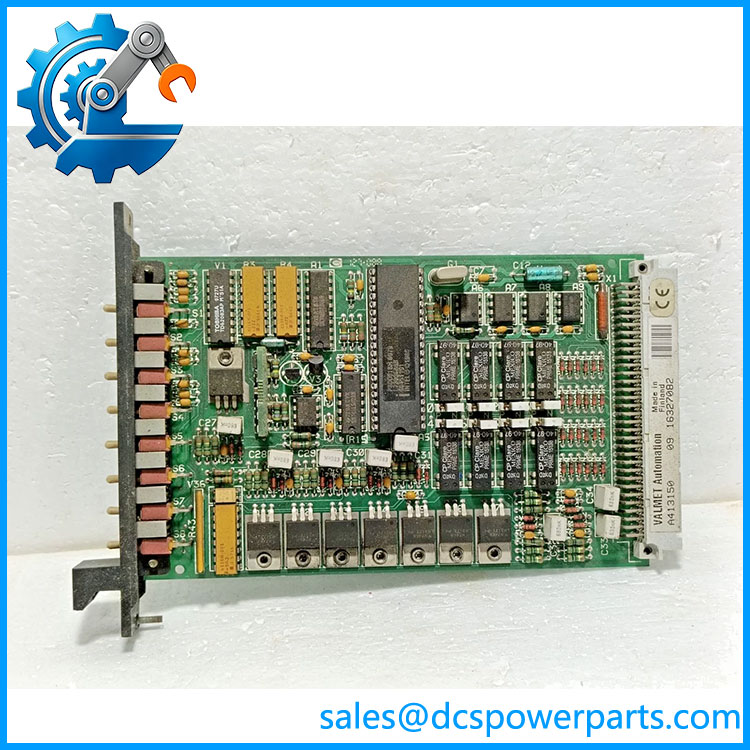
A413150
Multiple hardware revisions
Documented examples include Rev. 10, Rev. 11, Rev. 13, and Rev. 15. This is not a trivial procurement detail. If the plant’s existing engineering documentation specifies a particular revision, matching that revision is preferable to assuming every board is electrically interchangeable.
Compact board-level replacement
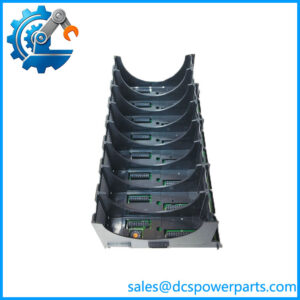
The is encountered as a PLC/I/O circuit-board assembly rather than a contemporary modular remote-I/O slice. That means the physical connector arrangement, board condition, mounting hardware, and mating backplane deserve inspection before installation.
Useful for controlled legacy replacement
For shutdown planning, an spare can be valuable when the objective is to restore the existing Valmet control architecture with minimal engineering change. The correct approach is still verification first: compare the failed board, replacement revision, host rack, and field wiring.
What should not be assumed
Do not automatically apply a generic 24 VDC digital-output rating to . Public listings establish its binary-output function but do not adequately substantiate the complete electrical specification for every revision. That distinction matters when the outputs drive solenoids, contactors, interposing relays, or other inductive loads.
Related Products
- A413141 — BIU-82 binary input module; used for binary input functions and therefore serves a different I/O role from .
- A413143 — BIU-84 binary input module; another legacy Valmet binary-input board.
- A413135 — AOU-4 analog output module; converts controller output data into analog signals rather than discrete binary outputs.
- A413125 — AIU-8 analog input module; intended for analog field measurement rather than binary output control.
- A413160 — FIU-1 binary output module; another legacy Valmet binary-output product that should not be treated as a drop-in substitute without system verification.
- — Functional family designation associated directly with .
- BIU-82 — Related binary-input family useful when distinguishing input and output board requirements.
- AIU-8 — Analog-input family used for measurement signals rather than discrete control.
FAQ
What is the Metso Automation ?
is identified as a Binary Output Module for legacy Metso/Valmet Automation PLC systems. Multiple records show the same part number with different hardware revisions.
Is an analog output module?
No. The is identified with the binary-output family. The Valmet A413135 is associated with the AOU-4 analog-output family, so the two should not be substituted simply because both are output modules.
Can I hot-swap this module?
Do not assume unrestricted hot-swapping. The safe replacement procedure depends on the specific Valmet PLC rack and the plant’s operating and maintenance procedures. For a live process, the affected outputs should be placed in the required safe condition before board removal.
Does support firmware v3.1?
There is no reliable evidence that a generic firmware-v3.1 specification applies to . The part should be evaluated as a legacy I/O board whose compatibility depends primarily on the host Valmet system, board revision, rack, and field interface.
What revisions of are available?
Documented examples include Rev. 10, Rev. 11, Rev. 13, and Rev. 15. When replacing an installed board, record the revision before ordering.
Can replace A413143?
No, not on the basis of the part number alone. A413143 is associated with the BIU-84 binary-input family, while is associated with binary outputs. Their field functions are different.
What should I verify before purchasing an ?
Check the following against the installed equipment:
- Complete part number:
- marking
- Hardware revision
- Host Valmet PLC/controller
- Rack and slot location
- Board connector and backplane arrangement
- Field termination assembly
- Output signal/load requirements
- Existing engineering configuration
- Actual board photographs and test evidence
Is a used acceptable for a shutdown spare?
It can be, but condition needs to be established rather than inferred from appearance. A legacy board should ideally be supplied with clear photographs of the actual PCB, readable part/revision markings, connector condition, and evidence that the binary outputs were function-tested. A visually clean board that has never been electrically tested is not equivalent to a documented tested spare.
Procurement Note
The Metso Automation is a legacy binary output module, and the identification is substantially more consistent than for some neighboring Valmet part numbers. Multiple independent records identify as and document several revisions.
The main procurement risk is not the basic product identity; it is revision and electrical compatibility. Before purchasing, compare the existing board revision with the proposed spare and confirm the host PLC/rack and field termination arrangement. Do not use a generic digital-output voltage or current specification unless it can be tied to the exact revision and system documentation.
For a critical plant shutdown, request photographs of the actual board, including the revision marking and connector area. If the supplier cannot establish the board revision or provide meaningful functional-test evidence, treat the spare as higher-risk inventory rather than assuming that the base number alone proves interchangeability.