Description
GE IS200TAMBH1A Acoustic Monitoring Board
Product Introduction
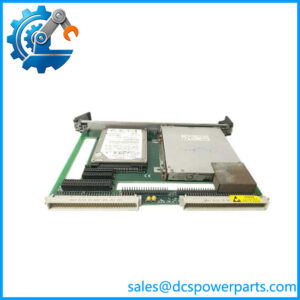
The General Electric IS200TAMBH1A is a TAMB Acoustic Monitoring Board used within GE Mark VI turbine-control systems. Its function is associated with turbine acoustic monitoring rather than conventional process I/O. GE Mark VI documentation places the GE IS200TAMBH1A in the VAMB acoustic-monitoring signal path, where acoustic pressure sensors and associated charge-amplifier instrumentation provide signals for monitoring combustion and turbine-related acoustic conditions. This makes the board a specialized measurement interface rather than a generic analog input or digital I/O terminal board.
The GE IS200TAMBH1A is documented with nine acoustic monitoring circuits. The Mark VI system guide shows the board associated with circuits 1 through 9 and illustrates connections involving low-noise sensor cabling and charge converter signal amplifiers (CCSA). Secondary technical records identify two terminal blocks with 48 total terminals and describe the board as an acoustic monitoring terminal board. These details are useful when checking field wiring because the board’s terminal arrangement should be matched against the actual Mark VI cabinet drawing rather than treated like a standard 24 VDC PLC input card.
For procurement, the complete GE IS200TAMBH1A identifier should be retained. The H1 designation and A functional revision identify a particular board configuration, while related identifiers such as IS200TAMBH1ACB represent a later modified configuration and should not automatically be assumed interchangeable. Available records also indicate that the TAMB board has limited publicly available original technical data, so unsupported voltage, accuracy, temperature, or IP specifications should not be added to a product listing. Physical connector arrangement, board revision, sensor interface, and the associated VAMB/CCSA architecture are more useful compatibility checks.
Technical Specifications
| Parameter | Specification |
|---|---|
| Product Model | IS200TAMBH1A |
| Manufacturer | General Electric |
| Product Family | Mark VI Speedtronic |
| Functional Acronym | TAMB |
| Product Type | Acoustic Monitoring Board / Terminal Board |
| Primary Application | Turbine acoustic monitoring |
| Associated System | VAMB acoustic monitoring |
| Acoustic Monitoring Circuits | 9 |
| Field Signal Interface | Acoustic sensor / charge-amplifier signal circuits |
| Terminal Blocks | 2 reported |
| Total Terminals | 48 reported |
| Hardware Group | H1 |
| Functional Revision | A |
| PCB Coating | Normal coating |
| Installation Style | System-specific Mark VI terminal/interface installation |
| VME Faceplate | Not reported as a conventional VME rack card |
| Communication Protocol | No standalone Ethernet/fieldbus interface documented |
| Processor | No standalone CPU documented |
| Operating Voltage | Not reliably established for the bare board |
| Operating Temperature | Not reliably established from primary documentation |
| Protection Rating | No standalone IP rating established |
| Primary Reference | GEH-6421 Mark VI Turbine Control System Guide |
The nine-channel/circuit configuration is supported by GE Mark VI system documentation. The 48-terminal figure comes from secondary part-specific documentation and should be checked against the physical board before publishing a wiring diagram.
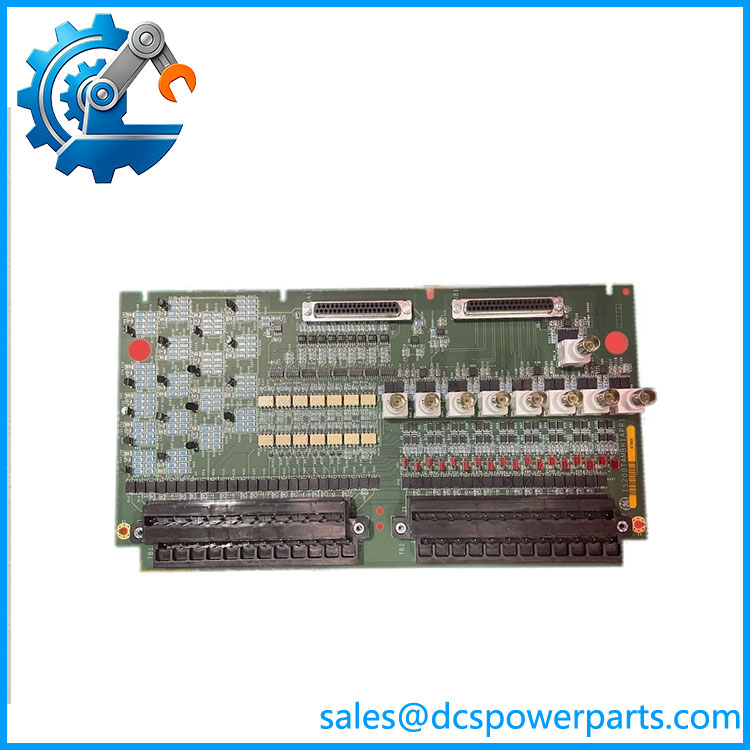
IS200TAMBH1A
Main Features and Engineering Considerations
Dedicated acoustic-monitoring interface
The most important characteristic of the is that it is an acoustic monitoring interface, not a general-purpose analog input board. The Mark VI documentation places it in the VAMB acoustic-monitoring system and shows acoustic sensor circuits routed through charge-amplifier equipment. This distinction matters when diagnosing abnormal signals because the complete sensor, cable, charge amplifier, terminal board, and control-system path must be considered.
Nine monitoring circuits
The Mark VI system documentation illustrates nine acoustic monitoring circuits associated with the TAMB board. The circuits are individually identified in the system drawings, making the original cabinet documentation particularly important when replacing a board or troubleshooting one channel.
Low-noise signal handling
Acoustic measurement circuits are more sensitive to cabling and grounding conditions than ordinary discrete contact signals. GE documentation shows low-noise cable arrangements and shield/return connections around the acoustic instrumentation. Damaged shielding, incorrect cable routing, poor termination, or grounding changes can therefore produce misleading acoustic measurements without an actual TAMB board failure.
Charge-amplifier interface
The documented architecture includes Charge Converter Signal Amplifiers (CCSA) between the pressure-sensor instrumentation and the Mark VI acoustic-monitoring interface. This means that a channel fault should not automatically be attributed to the TAMB board. The sensor and CCSA should be checked first when the signal is missing, unstable, or outside the expected range.
Terminal-board construction
Secondary inspection records describe two terminal blocks and 48 total terminals. The board does not use the typical metal faceplate associated with many Mark VI VME processor cards. Its physical form should therefore be checked before assuming it can be installed in a standard Mark VI VME rack slot.
Revision control
The supplied identifier ends in H1A. Related part numbers such as IS200TAMBH1ACB exist, but they should not be treated as automatic substitutes. A revised board may have changes affecting circuitry, artwork, or system compatibility. The original board label and Mark VI cabinet documentation should determine the acceptable replacement.
Application Scenarios
- GE Mark VI turbine control systems
- VAMB acoustic monitoring systems
- Turbine combustion monitoring
- Acoustic pressure monitoring
- Turbine diagnostic instrumentation
- Multi-channel acoustic signal acquisition
- Pressure-sensor and charge-amplifier interfaces
- Legacy Speedtronic turbine installations
Engineer’s Guide: Field Pitfalls
Do not classify as a generic analog input card.
Its documented function is specifically associated with acoustic monitoring.
Check the complete sensor chain.
A missing acoustic signal can originate from the pressure sensor, low-noise cable, charge amplifier, terminal wiring, or monitoring electronics.
Do not assume a 24 VDC input specification.
The available documentation does not establish a generic 24 VDC field-input architecture for the TAMB board.
Protect low-level signal wiring.
Acoustic instrumentation can be sensitive to shielding, grounding, cable routing, and electrical noise. Preserve the original wiring arrangement when replacing the board.
Verify the circuit number.
The Mark VI system documentation identifies nine acoustic monitoring circuits. Make sure the affected terminal/channel corresponds to the correct circuit in the cabinet drawing.
Do not substitute TAMB variants by name alone.
and IS200TAMBH1ACB share the TAMB function but have different complete identifiers and revision information.
Inspect terminal condition.
Loose or oxidized terminals can produce intermittent acoustic readings that may initially resemble an electronic board fault.
Do not publish unverified accuracy figures.
I could not establish a reliable primary-source accuracy specification for the bare TAMB board. Sensor and charge-amplifier performance should be specified separately.
Frequently Asked Questions
What is ?
is a GE Mark VI TAMB Acoustic Monitoring Board used for turbine acoustic-monitoring applications.
What does TAMB stand for?
TAMB is the functional acronym used for the Acoustic Monitoring Board/Terminal Board in the GE Mark VI documentation and part records.
How many acoustic channels does support?
GE Mark VI system documentation shows nine acoustic monitoring circuits associated with the TAMB board.
Is an analog input module?
It is an acoustic-monitoring interface, not a conventional universal analog-input module. Its signal path is associated with acoustic sensors and charge-amplifier instrumentation.
Does have Ethernet?
No standalone Ethernet interface is documented for the board. Its function is tied to the Mark VI acoustic-monitoring architecture.
How many terminals does the board have?
A secondary part-specific record reports two terminal blocks with 48 total terminals. This should be confirmed against the physical board and cabinet drawing before using it as a wiring reference.
Is a VME processor card?
No. Available records describe it as an acoustic monitoring terminal/interface board rather than a conventional Mark VI VME processor card.
What should be checked before purchasing a replacement?
Verify the complete part number, H1 group, A functional revision, terminal-block configuration, nine-channel acoustic architecture, associated VAMB/CCSA hardware, sensor wiring, and board condition.
Procurement Note
For a legacy GE Mark VI turbine installation, should be sourced as an exact acoustic-monitoring interface board, not as a generic analog I/O replacement. The most important checks are the complete part number, functional revision, terminal configuration, VAMB architecture, acoustic sensor/CCSA compatibility, and cabinet-specific wiring.
For repaired or surplus hardware, request clear photographs of the board label, terminal blocks, connector areas, and PCB condition. Incoming inspection should include terminal integrity, connector condition, visible component damage, jumper configuration, and controlled channel-level testing against the associated acoustic instrumentation.