Description
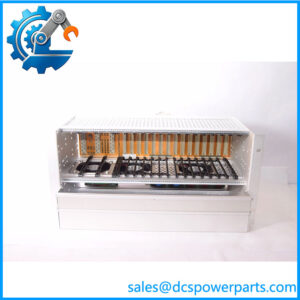
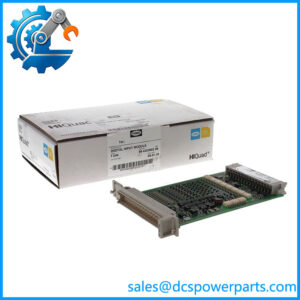
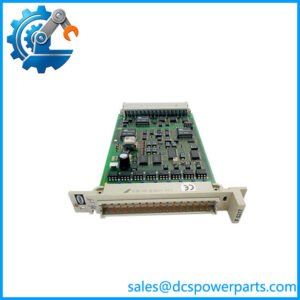
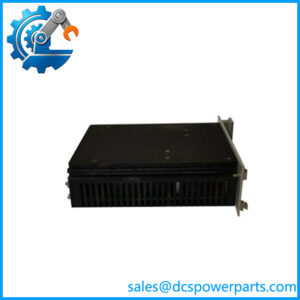
HIMA X-SB01 985210207 HIMax System Bus Module
Product Introduction
The system bus is the part of a safety controller that should not be treated as an ordinary communications accessory. In the HIMA HIMax architecture, the X-SB01 985210207 provides one of the dedicated internal system-bus paths used to connect the controller rack’s modules. HIMA-related technical references identify X-SB01 as a system bus module and specify that it is installed in the HIMax base plate’s system-bus positions.
A single X-SB01 supports mono system-bus operation, while two X-SB01 modules can be installed to establish redundant system-bus operation. The published specification identifies a 24 VDC supply and maximum input current of approximately 0.65 A. For a brownfield HIMax repair, the important point is that X-SB01 is not an analog input card, digital I/O module, or standalone safety CPU; it is infrastructure for the HIMax system bus.
Key Technical Specifications
| Parameter | HIMA X- 985210207 |
|---|---|
| Product Model | X- |
| Part Number | 985210207 |
| Manufacturer | HIMA |
| Product Type | HIMax System Bus Module |
| Platform | HIMA HIMax |
| Primary Function | Internal system-bus communication |
| Supply Voltage | 24 VDC |
| Maximum Input Current | 0.65 A |
| Bus Configuration | Mono or redundant dual-bus |
| Base-Plate Position | Slot 1 or Slot 2 |
| Protection Rating | IP20 |
| Dimensions | Approx. 230 × 29.2 × 310 mm |
| Weight | Approx. 1.2 kg |
| Installation | HIMax base-plate system-bus slot |
| Communication Role | Internal HIMax system bus |
| Condition | Verify actual inventory condition |
The 24 VDC supply, 0.65 A maximum current, IP20 classification, dimensions, and slot-1/slot-2 installation are reported consistently across several technical references. The exact mechanical dimensions should still be checked against the applicable HIMax chassis documentation before a cabinet replacement is approved.
Major Features and Advantages
Dedicated HIMax System-Bus Hardware
The X- has a specific role within the HIMax architecture: it provides a system-bus channel for communication among modules installed in the safety controller rack. It should therefore be considered part of the rack infrastructure rather than an application-level I/O point.
This distinction is important when troubleshooting. If a digital input or analog input disappears from the HIMax configuration, replacing an X- is not equivalent to replacing the I/O module itself. The bus module affects the communication path through which the rack’s modules are accessed.
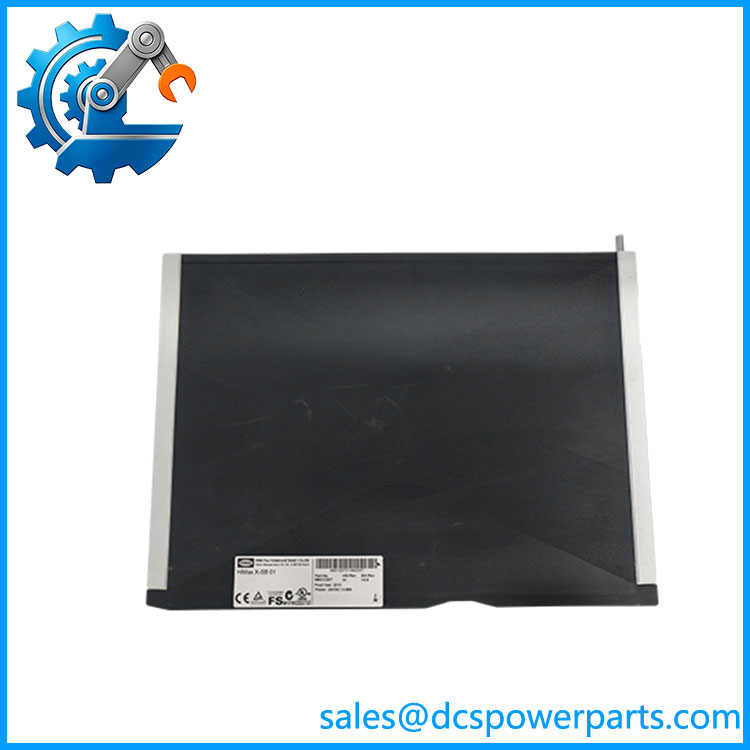
X-SB01 985210207
Single or Redundant Bus Architecture
The X- can be installed as a single system-bus module for mono operation. HIMA-oriented documentation also describes installation of two modules in the designated system-bus positions for redundant operation. In that configuration, the rack has separate system-bus paths rather than relying on one module alone.
For a safety-system maintenance team, this is one of the most important details to verify. If the original HIMax rack was designed around redundant system buses, replacing only one side without checking the complementary X- can leave the rack in a different architecture from the original design.
HIMax Base-Plate Integration
The X- is not normally installed as a free-standing DIN-rail communication device. The published references specify installation in the HIMax base plate, specifically system-bus slot 1 or slot 2.
That makes chassis compatibility critical. A visually similar HIMA module cannot automatically be substituted simply because it has the same nominal supply voltage.
24 VDC System Supply
The published maximum current input is approximately 0.65 A at a 24 VDC system supply. This value is useful when checking the rack power budget, particularly when a redundant architecture includes two system-bus modules.
Do not confuse the module’s supply requirement with an external field-device supply. X- is part of the controller infrastructure; it is not intended to power process transmitters or actuators.
Internal Safety-System Communication
The X- handles the internal HIMax system-bus function. Secondary technical references describe it as the communication backbone between HIMax controller and I/O modules, while HIMA-specific descriptions identify the module as the system-bus hardware for the HIMax programmable electronic system.
For procurement purposes, this is a much more accurate description than calling X- an “analog input module” or “CPU module,” both of which appear in some reseller catalogs.
Application Scenarios & Field Pain Points
The X- is relevant primarily to maintenance and expansion of existing HIMax safety-control racks.
- HIMax safety controller maintenance: Replacement of a failed system-bus module while preserving the existing rack architecture.
- Redundant safety racks: Two X- modules can provide the dual system-bus arrangement described for HIMax base plates.
- Brownfield SIS maintenance: Useful where the existing HIMax architecture must be maintained rather than redesigned around a newer platform.
- Rack communication troubleshooting: Appropriate when system diagnostics indicate problems associated with the internal bus rather than a particular field I/O channel.
- Planned shutdown spares: Keeping the exact 985210207 spare can reduce the risk of discovering a system-bus hardware mismatch during an outage.
A practical field warning: do not troubleshoot X- as though it were a field network switch. Its role is tied to the HIMax rack architecture. External Ethernet or plant-level communication hardware should be considered separately.
Related HIMA Products
The following HIMA references may be encountered in the same HIMax environment:
- F8650X — HIMax safety CPU family component; performs a fundamentally different role from X-.
- F8651E — HIMax central processing hardware used for safety logic functions.
- X-DI1601 985210222 — HIMax digital input hardware.
- X-DO1201 985210204 — HIMax digital output hardware.
- X-FAN1003 993201013 — HIMax rack fan assembly.
- X-BLK01 632590802 — HIMax system hardware reference.
- LM002_MAX 985020002 — HIMax rack/platform infrastructure reference.
These are related system components, not automatic substitutes for X-. In particular, an I/O module cannot replace a system-bus module simply because both occupy the same general rack environment.
Engineer’s Guide — Field Pitfalls to Avoid
1. Do not order it as an analog input module.
Several reseller databases misclassify X-. The more specific HIMax references identify it as a System Bus Module.
2. Check whether the rack uses one or two X- modules.
One module corresponds to mono operation; two modules support redundant system-bus operation. Replacing a single unit in a redundant rack requires checking which bus position it occupies.
3. Verify the base-plate slot.
X- is documented for the HIMax base-plate system-bus positions, specifically slot 1 and slot 2. It is not a generic plug-in communication card for arbitrary HIMA racks.
4. Do not confuse the system bus with plant Ethernet.
Some reseller descriptions attach generic Profinet or EtherNet/IP terminology to X-. The available evidence supports its role as a HIMax internal system-bus module; I would not specify external industrial Ethernet protocols as native X- functions without revision-specific HIMA documentation.
5. Check the complete part number.
For procurement, use X- / 985210207 together. A generic “X-” description is not sufficient when different HIMA platform generations are present at the site.
6. Verify rack diagnostics after replacement.
A successful physical installation does not prove that the system bus has returned to the intended architecture. Check module recognition, bus status, diagnostics, and the configured redundant/mono arrangement before returning the safety system to service.
7. Do not infer SIL performance from the module alone.
Some secondary sources describe X- as SIL 3-related hardware. The safety integrity of an operational SIS remains a property of the validated system architecture and application, not merely the presence of one bus module.
FAQ
What is HIMA X- 985210207?
X-, part number 985210207, is a HIMA HIMax System Bus Module. It provides a dedicated internal system-bus path within the HIMax safety controller architecture.
Is X- a CPU?
No. X- should not be treated as the safety logic CPU. Its function is associated with the HIMax system bus. Safety CPU and system-bus functions are separate hardware roles.
Where is X- installed?
Published HIMA-oriented technical references specify installation in HIMax base-plate slots 1 or 2, which are the designated system-bus positions.
Can a HIMax rack operate with one X-?
The available technical reference describes one X- as supporting mono system-bus operation. Two X- modules provide the redundant system-bus arrangement.
What is the power requirement?
Published specifications identify a 24 VDC supply and maximum current input of approximately 0.65 A.
Is X- an I/O module?
No. Some reseller databases incorrectly categorize it as an I/O or analog input module, but the more specific references identify X- as the HIMax System Bus Module.
Can another HIMA communication module replace X-?
Not automatically. X- has a specific HIMax system-bus role and a defined base-plate slot. A serial or external-network communication module has a different function and should not be considered a substitute without HIMA documentation confirming compatibility.
What should be checked before purchasing X- 985210207?
Verify the X- designation, full part number 985210207, HIMax chassis/base plate, slot position, mono versus redundant bus architecture, module revision, and actual inventory condition. For a safety-system spare, matching the installed part number is preferable to selecting by a generic “system bus” description.