Description
Product Overview
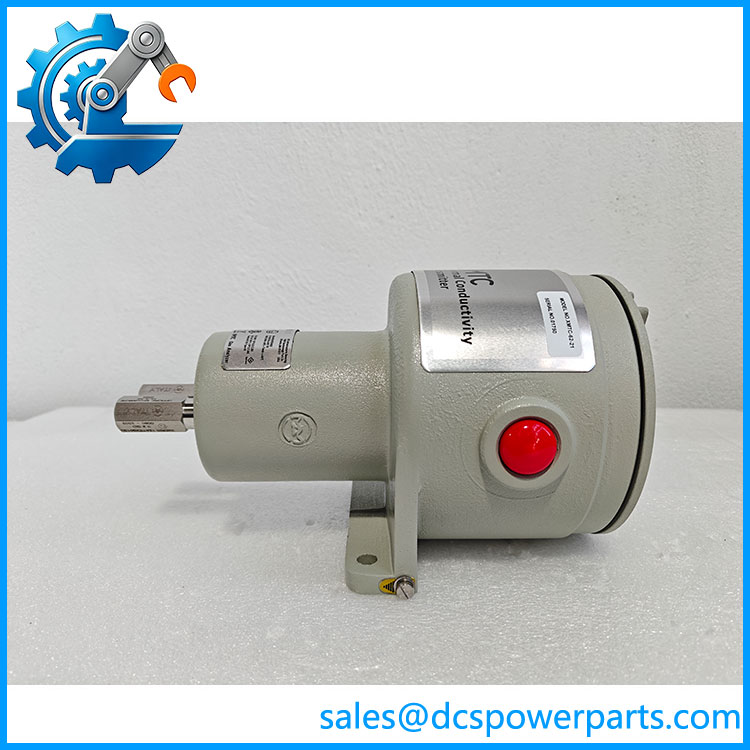
Gas composition can directly affect generator cooling, furnace atmosphere control, and industrial process safety. The GE Panametrics XMTC-62-21 is a thermal conductivity gas analyzer and transmitter designed for continuous measurement of gas concentration in binary or suitably calibrated gas mixtures. It uses thermal conductivity sensing to determine the concentration of a target gas relative to another gas, making it useful for applications involving hydrogen, carbon dioxide, helium, and other compatible gas combinations. The XMTC series is intended for online process measurement, with an analog signal that can be integrated into a PLC or DCS for monitoring and alarm functions.
At the measurement core, the analyzer uses temperature-sensitive thermistor elements to detect differences in thermal conductivity between the sample and reference gases. The XMTC series datasheet specifies an isolated 4–20 mA output, a 24 VDC supply with a ±2 V tolerance, and a maximum supply current of 1.2 A. Under the stated test conditions, the response time is approximately 20 seconds for a 90% step change. Published performance figures include accuracy of ±2% of span, linearity of ±1% of span, and repeatability of ±0.5% of span. These are series-level specifications; the actual measurement range and gas calibration must be matched to the specific XMTC-62-21 configuration.
For maintenance and procurement teams, the GE Panametrics XMTC-62-21 should be selected according to the gas pair, required measurement range, sample flow conditions, enclosure type, and output requirements. The model is listed with an explosion-proof enclosure and a T5 temperature classification, with a stated ambient-temperature limit of 65°C for that configuration.
Before replacing an installed analyzer, verify the nameplate, calibration range, gas connections, electrical terminals, and hazardous-area approval. A transmitter that powers on and produces a current signal is not necessarily calibrated for the required gas mixture. Accurate commissioning depends on the correct calibration and suitable sample conditioning.
Product Introduction (Non-Templated)
When hydrogen purity or furnace gas composition changes, operators need a measurement signal that reflects the actual gas mixture—not an assumed calibration. The GE Panametrics XMTC-62-21 uses thermal conductivity measurement for continuous binary-gas analysis and provides an isolated 4–20 mA output for process monitoring.
Its published series specifications include a 20-second response to 90% of a step change and accuracy of ±2% of span. For a legacy gas analyzer replacement, confirm the gas pair, calibration range, sample flow, and enclosure certification before installation.
Key Technical Specifications
| Parameter | Value |
|---|---|
| Product Model | XMTC-62-21 |
| Manufacturer / Brand | Panametrics, associated with GE |
| Product Type | Thermal Conductivity Gas Analyzer / Transmitter |
| Measurement Principle | Thermal conductivity using thermistor sensing elements |
| Measurement Application | Binary or suitably calibrated gas-mixture concentration measurement |
| Typical Gas Applications | H₂ in N₂, air, O₂, or CO₂; He in N₂ or air; CO₂ in N₂ or air, subject to calibration |
| Measurement Ranges | Series options include 0–2%, 0–5%, 0–10%, 0–25%, 0–50%, and 0–100%, plus selected high-concentration ranges |
| Accuracy | ±2% of span, series specification |
| Linearity | ±1% of span, series specification |
| Repeatability | ±0.5% of span, series specification |
| Response Time | Approximately 20 seconds to 90% of a step change |
| Analog Output | Isolated 4–20 mA |
| Maximum Analog Load | 800 Ω |
| Power Supply | 24 VDC ±2 VDC |
| Maximum Supply Current | 1.2 A |
| Sample Flow Rate | 0.1–4.0 SCFH; nominal 0.5 SCFH |
| Enclosure | Explosion-proof enclosure reported for this model |
| Temperature Classification | T5 label reported |
| Maximum Ambient Temperature | Up to 65°C for the listed enclosure configuration |
| Gas Connections | Verify connection sizes and arrangement against the exact unit |
| Communication Interface | Serial interface availability and pinout require confirmation from the unit’s documentation |
| Condition | New surplus; confirm calibration, packaging, and test status |
Specification note: Measurement ranges and performance figures above are from the XMTC series documentation. The exact XMTC-62-21 calibration, enclosure options, and hazardous-area approvals must be confirmed from the unit’s nameplate and associated documentation.
XMTC-62-21
Related Products
The following models are relevant to the Panametrics XMTC gas-analysis family. Their measurement ranges, gas connections, materials, and enclosure options may differ, so direct substitution must be verified.
- XMTC-42-21 — A related XMTC thermal conductivity gas transmitter. Check its measurement configuration, enclosure, and gas connection options against the installed before considering replacement.
- XMTC-52-11 — Another XMTC-series gas analyzer designation. Published listings identify it as a thermal conductivity gas analyzer; confirm its specific calibration range and supply requirements before substitution.
- XMTC-62-11 — A related XMTC model that may be relevant when sourcing legacy analyzer hardware. Compare the complete suffix, calibration range, and enclosure configuration before ordering.
- XMTC Series Sample Cell — The sample cell is part of the gas measurement path. Material compatibility, pressure limits, and the specified gas composition must be checked for the process application.
- XMTC Series Reference Gas Assembly — Relevant where the selected measurement configuration requires a reference-gas supply. Verify the required gas composition, flow rate, and connection arrangement.
- XMTC Series Sample Conditioning Assembly — Helps control sample flow and protect the measurement cell from unsuitable process conditions. Required filtration, pressure reduction, and moisture control depend on the gas and installation.
- 24 VDC Instrument Power Supply — Supplies the analyzer’s electrical power. Select a supply that meets the documented voltage tolerance and maximum current demand.
- PLC/DCS Analog Input Module — Receives the analyzer’s 4–20 mA signal. Verify the input type, isolation, loop wiring, and configured engineering-unit scaling.
- XMTC Series Calibration Gas Set — Used to verify or adjust analyzer response against a known gas concentration. Select the gas composition and concentration appropriate to the installed measurement range.
Frequently Asked Questions (FAQ)
1. What is the GE Panametrics used for?
The measures gas concentration using differences in thermal conductivity. Typical XMTC applications include hydrogen monitoring in generator cooling systems and concentration measurement in compatible industrial gas mixtures.
The correct gas pair and measurement range must be specified. The analyzer cannot be assumed to measure every gas mixture accurately without the appropriate calibration.
2. Does the support a 4–20 mA output to a PLC or DCS?
Yes. The XMTC series datasheet specifies an isolated 4–20 mA analog output with a maximum load of 800 Ω.
For integration, confirm the receiving analog input’s resistance, isolation, loop wiring, and engineering-unit scaling. If the total loop resistance exceeds the permitted load, the current signal may not remain within specification.
3. Does the support firmware version 3.1?
A verified firmware compatibility matrix for this specific model was not established. Do not assume that version 3.1 applies to the analyzer.
Check the unit’s identification label, configuration documentation, and any applicable service records. For a replacement, the calibration range, output configuration, and gas application are usually more important to verify than a firmware number alone.
4. Can I hot-swap the while the process is running?
Do not assume that live replacement is safe. Removing the analyzer may interrupt the concentration signal used by process alarms, permissives, or control logic.
Before replacement, determine how the receiving control system handles signal loss, establish the site’s approved bypass or maintenance procedure where applicable, and follow the electrical and hazardous-area requirements for the installation. Never open an enclosure in a hazardous area unless the required safe conditions have been established.
5. How do I verify the measurement accuracy?
The XMTC series datasheet specifies accuracy of ±2% of span, linearity of ±1% of span, and repeatability of ±0.5% of span. These are series-level figures, not proof that an individual unit currently meets them.
A suitable verification procedure should include:
- Confirming the intended gas pair and calibration range.
- Checking sample flow and gas connections.
- Applying appropriate certified reference gas concentrations.
- Recording the measured output at the required test points.
- Comparing results with the applicable acceptance limits.
For a surplus unit, request recent calibration records or agree on a calibration test before installation.
6. Will replacing the require changes to my DCS configuration?
Possibly. If the replacement uses the same configured 4–20 mA range and electrical interface, major changes may not be necessary. However, a different calibration range can change the relationship between current output and displayed concentration.
Before replacement, record the existing scaling, alarm thresholds, and signal-failure handling. Verify the output against known gas concentrations after installation and update the DCS scaling only when the documented configuration requires it.
7. What warranty and testing should I request when purchasing a new-surplus ?
Request a written condition statement, warranty period, return terms, and a clear description of the tests performed.
For this analyzer, the most useful evidence includes:
- Confirmation of the full model number and enclosure configuration.
- Inspection of the gas ports, seals, terminals, and enclosure.
- Verification of the 4–20 mA output.
- Calibration or functional test results using the specified gas mixture.
- Confirmation of the required hazardous-area markings and ambient-temperature limits.
A power-on check alone does not establish measurement accuracy or prove that the unit is suitable for the intended hazardous area.