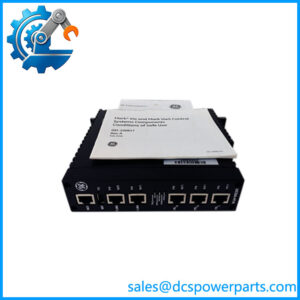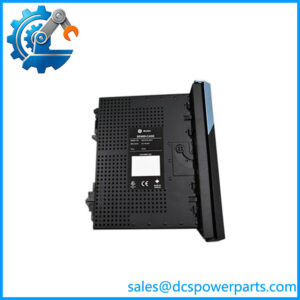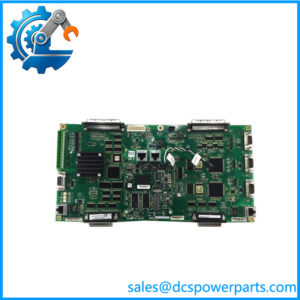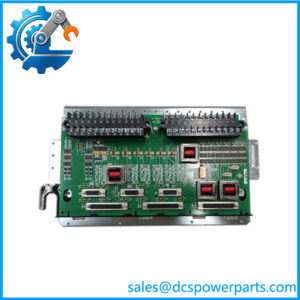
Description
Product Overview
The GE RV33-1 is the regulation card used in the GE AV-300i variable-speed drive architecture. It is not a general-purpose PLC I/O module; its job is tied directly to drive regulation, including processing speed feedback, receiving control information, and coordinating the drive’s internal regulation functions. GE’s AV-300i documentation specifically identifies RV33-1 as the regulation card, while the 6KCV301DGF documentation shows the regulation card connected to the DGF control board through the drive’s internal architecture.
Within an AV-300i installation, GE RV33-1 handles a particularly important part of the motor-control loop. The documentation shows selectable speed-feedback sources, including an internal standard encoder input, with encoder configuration parameters such as digital or sinusoidal operation and encoder pulse count. The related DGF controller communicates with the regulation card through an RS-485 S-LINK3 interface, while optional DeviceNet functionality can be added through the DGF architecture.
For maintenance teams, GE RV33-1 should be treated as a drive-specific replacement board. Physical fit alone is not enough. Available equipment records show RV33-1 boards with different revisions, including Rev. C and Rev. D, and some assemblies include an ISBUS-S board. The exact revision, encoder configuration, drive size, and installed option cards should therefore be checked before replacement. Public listings that describe RV33-1 as a generic “power board” are less precise than the GE AV-300i documentation, which identifies it as the regulation card.
Product Introduction
A speed-feedback problem on an AV-300i can originate from the encoder, wiring, configuration, or regulation hardware itself. sits directly in this control path, providing the regulation-card functions and encoder-interface configuration used by the drive.
For an AV-300i legacy replacement, match the board revision and option-card configuration, not just the designation. Rev. C and Rev. D examples are documented in the field, so the suffix matters during procurement.
Key Technical Specifications
| Parameter | Value |
|---|---|
| Manufacturer | GE |
| Model | |
| Product Type | Drive Regulation Card |
| Drive Family | AV-300i |
| Application | Variable-speed AC drive / motor control |
| Primary Function | Drive regulation and control |
| Encoder Interface | Standard encoder input |
| Encoder Modes | Digital encoder / sinusoidal encoder configuration supported |
| Default Encoder Pulses | 1024 ppr reported as factory default in AV-300i documentation |
| Communication Interface | RS-485 |
| Internal Protocol | S-LINK3 |
| Associated Controller | 6KCV301DGF |
| Optional Network | DeviceNet through compatible DGF configuration |
| Board Revision | Examples include Rev. C and Rev. D |
| ISBUS-S Option | Found on some assemblies |
| External Power | Supplied as part of the drive architecture; not treated as a standalone power supply |
| Firmware | Drive/application dependent |
| Condition | New Surplus, subject to inspection and functional testing |
GE’s AV-300i manual identifies as the regulation card and documents encoder configuration, including standard encoder selection, digital/sinusoidal modes, and a 1024-ppr factory default. The DGF documentation identifies RS-485 with S-LINK3 and the connection between the DGF and .
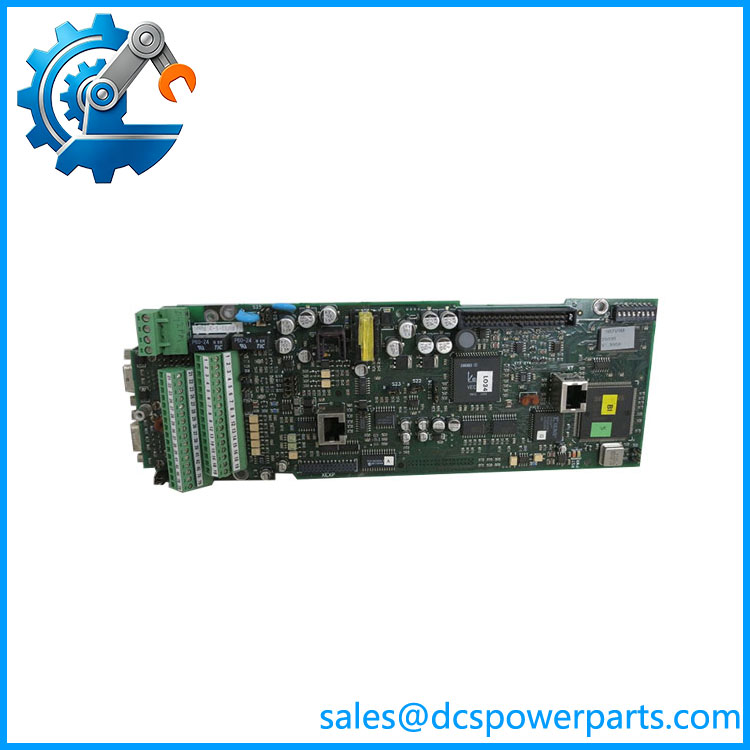
RV33-1
Related Products
- 6KCV301DGF — Digital General Function Card used with the AV-300i regulation architecture. It contains the embedded processor and communicates with through the internal S-LINK3 interface.
- 6KCV301ENC — Optional encoder interface card for expanded encoder applications. It becomes relevant when the standard encoder input on is insufficient for the installed configuration.
- 6KCV301D14A4F — Another optional encoder interface referenced by the AV-300i documentation. It supports expanded speed-feedback arrangements rather than replacing the regulation card itself.
- ISBUS-S — Communication/interface option found installed with some assemblies. Verify whether the replacement board includes the same option hardware.
- — Earlier documented hardware revision. It may be suitable for a specific AV-300i configuration, but revision compatibility should be verified.
- — Later documented revision example. Do not assume it is a universal substitute for every earlier configuration.
- PV33 series power cards — These belong to the AV-300i power section and should be distinguished from , which is the regulation card. The AV-300i documentation lists PV33 power-card variants separately.
- 6KCV301DGF with DeviceNet option — A related controller configuration supporting optional DeviceNet communication. The network interface is associated with the DGF rather than being the primary function of .
Frequently Asked Questions
What is GE used for?
GE is the regulation card for the AV-300i variable-speed drive. It participates in drive regulation and speed-feedback processing rather than performing ordinary PLC I/O functions. The AV-300i documentation specifically identifies as the regulation card.
Does handle encoder feedback?
Yes. The AV-300i documentation provides encoder configuration parameters associated with the regulation card, including selection of the standard encoder input, digital or sinusoidal encoder operation, and encoder pulses per revolution. The documented factory default for the standard encoder pulse setting is 1024 ppr.
The actual setting must match the motor’s installed encoder.
Can I hot-swap the GE ?
Do not assume that it is hot-swappable.
is part of the drive regulation architecture and interfaces with the drive’s control electronics. The fact that it is a plug-in control board does not establish live replacement capability.
For maintenance, isolate the drive, wait for the DC-link discharge procedure to complete, and follow the applicable AV-300i service procedure before removing the card.
Is Rev. C interchangeable with Rev. D?
Not automatically.
Field listings document both and assemblies. Before using one revision in place of another, compare:
- Drive model and power rating.
- Board revision.
- Connector arrangement.
- Encoder configuration.
- ISBUS-S or other installed options.
- Existing drive software and parameters.
A later revision may be electrically compatible in a particular drive configuration, but that should be verified rather than assumed.
Does use RS-485 communication?
The related 6KCV301DGF controller uses an RS-485 serial link with S-LINK3 protocol to communicate with the regulation card. The DGF documentation explicitly shows the connection in this architecture.
This is an internal drive-control communication path, not evidence that is a standalone RS-485 PLC communication module.
Will replacing erase my drive parameters?
The board replacement itself should not be treated as equivalent to replacing the drive’s engineering workstation or external configuration archive. However, the regulation card participates directly in drive control, so configuration must be preserved before replacement.
Record at minimum:
- Motor data
- Encoder type
- Encoder pulses per revolution
- Speed-feedback source
- Drive tuning parameters
- Control mode
- Option-card configuration
- Fault and alarm settings
The encoder configuration deserves particular attention. An incorrect feedback setting can produce speed instability or a drive fault even when the replacement board is electrically healthy.
How should I verify a New Surplus GE ?
For this board, I would inspect the actual assembly rather than relying on the generic model number.
Verify:
- marking
- Hardware revision, such as Rev. C or Rev. D
- GE identification/serial marking
- Connector condition
- ISBUS-S option, if required
- PCB component condition
- Evidence of previous repair
- Power-up and functional test results
- Compatibility with the target AV-300i drive