Description
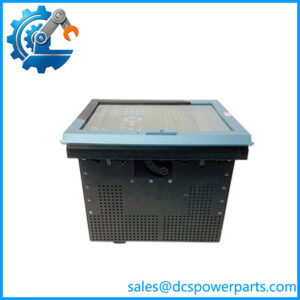
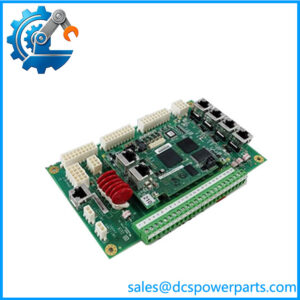
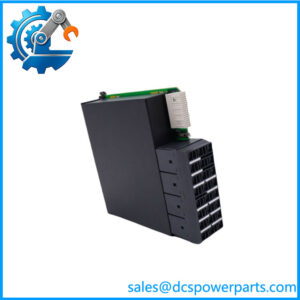
GE IS430SSUAH1A — Mark VIeS Universal Analog I/O Module
Product Introduction
A conventional I/O cabinet often forces engineers to decide the signal type before hardware is installed. That becomes inconvenient during turbine upgrades, balance-of-plant modifications, and safety-system migrations where the field instrumentation can change from one project phase to another. GE IS430SSUAH1A addresses that problem through the Mark VIeS YUAA universal I/O architecture, allowing its 16 channels to be configured for several analog, discrete, temperature, and pulse-input functions.
The GE IS430SSUAH1A is a complete assembled simplex module rather than just a terminal board. GE defines it as one IS420YUAAS1A I/O pack mounted to one IS410SUAAS1A terminal board, including the mounting hardware and cover. That distinction matters when sourcing a replacement: purchasing only the terminal board or only the I/O pack does not provide the same assembly as the complete IS430SSUAH1A.
Key Technical Specifications
| Parameter | Specification |
|---|---|
| Product Model | IS430SSUAH1A |
| Manufacturer | General Electric |
| Platform | Mark VIeS Functional Safety System |
| Product Family | YUAA Universal I/O |
| Product Type | Universal Analog I/O Module |
| I/O Architecture | Simplex |
| Number of Channels | 16 |
| I/O Pack | IS420YUAAS1A |
| Terminal Board | IS410SUAAS1A |
| Thermocouple Input | Supported |
| RTD Input | Supported |
| Current Input | 4–20 mA |
| Voltage Input | ±5 VDC or ±10 VDC |
| Current Output | 0–20 mA |
| Digital Input | Supported, including configurable wetting arrangements |
| Digital Output | Supported through mA-output mode / external interfacing |
| Pulse Accumulator | 16-bit, 0–500 Hz |
| A/D Resolution | 16-bit |
| Measurement Accuracy | Better than 0.1% full scale over -40 to +70°C |
| I/O Scan Rates | 10, 40, 80, or 160 ms |
| Control Power | 28 VDC |
| Quiescent I/O Pack Power | 8.1 W |
| Mounting | DIN rail |
| Safety Compliance | IEC 61508 |
| Hazardous Location Capability | Class 1 Div. 2 / Class 2 Zone 2 / ATEX, subject to applicable certification |
| Operating Temperature | -40 to +70°C |
| Storage Temperature | -40 to +85°C |
| Construction | Aluminum I/O pack enclosure |
| Protection | IP20 |
| Status Indication | Visual status LEDs |
GE specifies 4–20 mA input accuracy of 0.1%, ±5/±10 V inputs at 0.1% accuracy, 16-bit conversion, and measurement accuracy better than 0.1% full scale across the stated temperature range. The module supports several signal types through software configuration rather than requiring a dedicated hardware module for each signal class.
Channel-Level Flexibility
The universal architecture is the main reason this module is useful in Mark VIeS projects. A channel can be configured for thermocouple, RTD, voltage, current, discrete, output, or pulse-related functions as supported by the system configuration. GE also documents sensor-line monitoring, configurable sensor and system limits, and power-up self-testing.
For current inputs, GE specifies a nominal 4–20 mA range with allowance for 0–24 mA to accommodate NAMUR fault conditions. HART support is available for applicable current-input and current-output configurations.
Application Scenarios & Pain Points
Mark VIeS Functional Safety Systems
The primary application is the GE Mark VIeS safety control platform, where the YUAA module provides configurable field I/O within a safety-rated architecture. GE describes Mark VIeS as a functional safety system for process-control and turbomachinery applications.
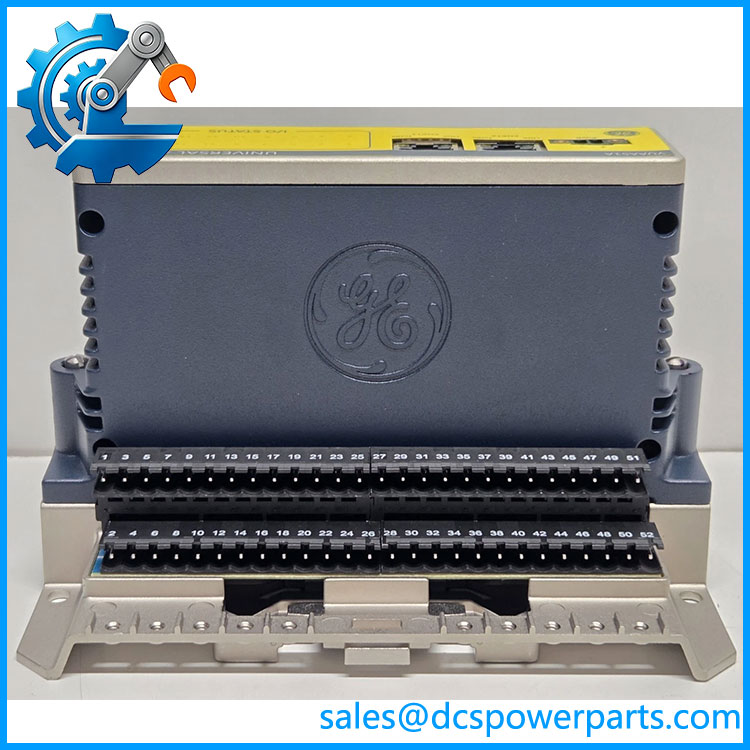
IS430SSUAH1A
Turbine Balance-of-Plant I/O
The module is also intended for distributed control and balance-of-plant applications. Its universal channels are useful where a single cabinet needs to handle a mixture of transmitter signals, temperature sensors, discrete contacts, and pulse inputs.
Turbine Instrumentation
Temperature measurements, process transmitters, valve-related signals, switches, and speed/pulse signals can be accommodated within the YUAA architecture. The exact channel assignment is determined by the Mark VIeS application configuration.
Safety-System Expansion
The 16-channel format can simplify expansion when the new field instrumentation does not all use the same signal type. Instead of reserving a separate card for every signal class, the universal architecture permits software-defined channel assignments within its supported modes.
Maintenance and Commissioning
GE’s terminal-board design allows individual channel wiring sections to be wired before insertion into the header. GE documentation specifically describes this as a way to improve termination and commissioning efficiency.
Related Products
- GE IS420YUAAS1A — YUAA Universal I/O Pack used inside the complete IS430SSUAH1A assembly.
- GE IS410SUAAS1A — Simplex terminal board mounted on a DIN-rail base.
- GE IS400SUAAS1A — Simplex terminal board only; not the complete IS430 assembly.
- GE IS430SNUAH1A — Related Mark VIeS I/O assembly with a different signal function; do not treat it as a direct substitute.
- GE Mark VIeS Controller — Provides the higher-level control/safety processing associated with the I/O network.
- GE Mark VIeS IONet equipment — Network infrastructure connecting distributed I/O modules with the controller architecture.
The distinction between , IS420YUAAS1A, and IS410SUAAS1A is important during procurement. GE’s system guide explicitly identifies the first as the complete assembled module and the latter two as component-level assemblies.
Engineer’s Guide — Field Pitfalls to Avoid
1. Do not order only the YUAA I/O pack when the project requires the complete assembly
GE identifies as a complete assembled module consisting of the IS420YUAAS1A pack, IS410SUAAS1A terminal board, base, mounting hardware, and cover. A bare I/O pack is therefore not equivalent to the complete orderable assembly.
2. Universal does not mean unrestricted
The 16 channels are flexible, but each signal type has defined electrical limits and configuration rules. A thermocouple channel cannot simply be treated as a 4–20 mA input because the terminal physically accepts the same field wiring arrangement.
3. Check the safety configuration
This is Mark VIeS, not simply a conventional Mark VIe universal I/O module. GE specifies IEC 61508 compliance and hazardous-location capabilities for the applicable system configuration. The safety application configuration, controller version, I/O network arrangement, and approved hardware combination should therefore be checked before substitution.
4. Verify the channel configuration before removal
A replacement module can power up normally while individual channels remain incorrectly configured. Record the original ControlST configuration, signal type, scaling, alarm limits, sensor diagnostics, and channel assignment before replacing the hardware.
5. Pay attention to current-output power consumption
GE lists significantly different channel power contributions depending on configuration. Internal-fed mA inputs and mA outputs can consume considerably more than thermocouple, RTD, voltage, or externally fed mA configurations. Cabinet power calculations should therefore use the actual channel configuration.
6. Check the field wiring range
GE specifies 24 AWG minimum through 12 AWG maximum field wiring. This matters during retrofit work where existing terminal wiring may have been selected for a different terminal system.
7. Do not confuse simplex hardware with a redundant I/O architecture
The itself is specified as simplex I/O pack redundancy. System-level Mark VIeS architectures can employ different redundancy arrangements, but that does not make this particular assembly a TMR I/O pack.
FAQ
What is GE ?
GE is a 16-channel Universal Analog I/O module for the Mark VIeS Functional Safety System. It is the complete YUAA assembly consisting of an IS420YUAAS1A I/O pack and IS410SUAAS1A terminal board/base.
How many channels does have?
It provides 16 configurable channels. Depending on the selected operating mode and system configuration, these channels can support thermocouples, RTDs, 4–20 mA, ±5/±10 V, mA outputs, discrete inputs/outputs, and pulse accumulation.
Is a safety-rated module?
Yes. GE specifies the as safety rated and compliant with IEC 61508 within the Mark VIeS Functional Safety System. Applicable hazardous-location certifications are also documented.
What is the difference between and ?
The , while is the complete assembled module incorporating the I/O pack, terminal board, mounting hardware, base, and cover. GE’s orderable-part table makes this distinction explicit.
What power supply does use?
The YUAA I/O pack uses 28 VDC control power. GE specifies 8.1 W quiescent consumption plus additional channel-dependent power consumption. The actual cabinet power requirement therefore depends on how the 16 channels are configured.
What is the operating temperature?
GE specifies an operating range of -40°C to +70°C and a storage range of -40°C to +85°C for the universal analog I/O module.
Can replace another Mark VIe analog I/O module?
Not automatically. The signal architecture, safety certification, terminal board, I/O pack revision, ControlST configuration, and Mark VIeS system design must all be checked. A similar 16-channel count does not establish functional interchangeability.
What should I verify when purchasing a replacement?
Verify the complete part number, hardware revision, pack, terminal assembly, firmware/configuration compatibility, safety-system revision, and physical condition. For used or refurbished equipment, verify actual inventory condition and test documentation rather than relying only on a generic “universal I/O” description.