Description
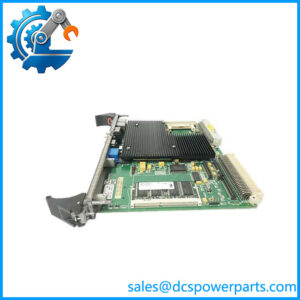
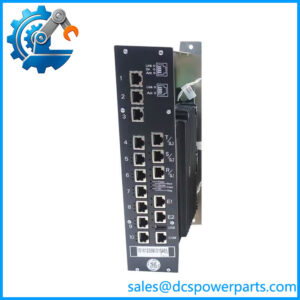
GE IS220PAICH2B
Product Overview
The GE IS220PAICH2B is a Mark VIe PAIC analog I/O pack designed to interface field analog signals with the GE turbine control system. It provides 10 analog inputs and 2 analog outputs, combining voltage and current-loop signal acquisition with current-loop output capability. GE’s Mark VIe documentation specifies inputs 1–8 as configurable for ±5 VDC, ±10 VDC, or 4–20 mA, while inputs 9–10 support 4–20 mA or ±1 mA.
The important distinction between the PAICH2 and the lower-capability PAICH1 family is the output hardware. The GE IS220PAICH2B supports 0–200 mA on analog output 1, while the second analog output remains a 0–20 mA output. GE’s system guide states that the PAICH2 includes additional hardware for this higher-current output, and the terminal-board jumper must correspond to the selected 20 mA or 200 mA operating mode.
Within the Mark VIe architecture, the I/O pack provides the distributed interface between the controller’s I/O Ethernet network and the associated analog terminal board. The pack uses a DC-37 field-side connection and dual Ethernet interfaces. For procurement, this means the IS220PAICH2B cannot be evaluated independently from its terminal board and ControlST configuration. GE’s lifecycle documentation identifies H2B as the updated technology replacement for H2A, making revision identification particularly important when maintaining an older turbine-control installation.
Product Introduction
The IS220PAICH2B is intended for Mark VIe applications where ordinary 0–20 mA analog output capability is not enough. Its PAICH2 hardware adds a 0–200 mA first-output mode, allowing the same I/O pack family to interface with higher-current field devices such as certain valve actuator circuits.
For a Mark VIe turbine-control upgrade or legacy replacement, the critical checks are the H2B hardware revision, terminal-board version, output-current jumper configuration, I/O pack firmware, and ControlST compatibility. A PAICH1B may look similar but does not provide the PAICH2’s 200 mA first-output capability.
Key Technical Specifications
| Parameter | Specification |
|---|---|
| Manufacturer | GE |
| Model | IS220PAICH2B |
| Product Family | Mark VIe |
| Functional Designation | PAICH2 |
| Product Type | Analog Input/Output I/O Pack |
| Analog Inputs | 10 |
| Analog Outputs | 2 |
| Inputs 1–8 | ±5 VDC, ±10 VDC, or 4–20 mA |
| Inputs 9–10 | ±1 mA or 4–20 mA |
| Input Resolution | 16-bit A/D |
| Normal Scan Time | 5 ms / 200 Hz |
| Input Accuracy | ±0.1% of full scale with TBAI/STAI over full operating range |
| AC Common-Mode Rejection | 60 dB at 60 Hz |
| DC Common-Mode Rejection | 80 dB |
| Analog Output 1 | 0–20 mA or 0–200 mA |
| Analog Output 2 | 0–20 mA |
| 200 mA Output Compliance | Up to 9 V |
| Output D/A Resolution | 14-bit |
| Ethernet | Dual RJ-45 I/O Ethernet |
| Field/Terminal Interface | DC-37 |
| Power Connection | 3-pin external DC input |
| Associated Terminal Boards | TBAIH1C / compatible STAI configurations |
| Predecessor | IS220PAICH2A |
| Firmware | Mark VIe / ControlST dependent |
GE’s system guide provides the core PAIC specifications, including 10 AI/2 AO capacity, input ranges, 16-bit conversion, 5 ms scan time, input accuracy, common-mode rejection, and the PAICH2-specific 0–200 mA first-output capability.
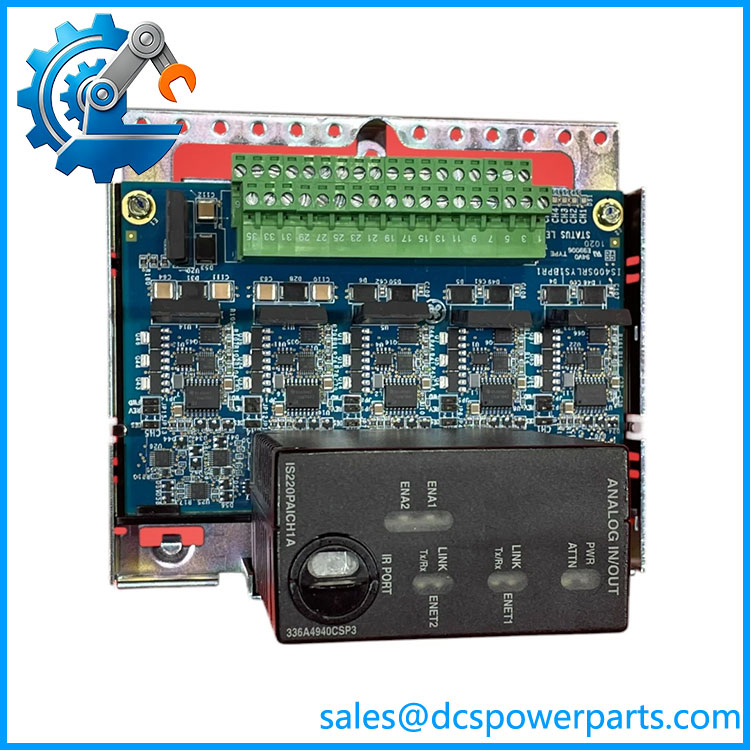
IS220PAICH2B
Major Features / Practical Advantages
10-channel analog acquisition
The PAICH2B provides ten analog inputs in a single Mark VIe I/O pack. Inputs 1–8 can be configured for voltage or current-loop operation, while inputs 9–10 support 4–20 mA or ±1 mA. That arrangement covers a useful combination of process transmitters, electrical measurements, and turbine instrumentation without requiring separate voltage and current input packs.
0–200 mA first analog output
This is the defining feature of the family.
The first analog output can be configured for either 0–20 mA or 0–200 mA. GE documents an additional daughterboard/hardware arrangement for the higher-current mode, with approximately 9 V compliance. The terminal-board jumper must match the selected output-current configuration.
That configuration detail is easy to overlook during replacement. If the application expects 200 mA but the terminal-board jumper remains configured for the 20 mA mode, the hardware and software settings will not agree.
16-bit analog input conversion
The analog inputs use a 16-bit analog-to-digital converter. GE specifies a normal scan time of 5 ms, equivalent to 200 Hz at the I/O-pack level, while noting that the controller frame rate is typically limited to 100 Hz.
This distinction matters when evaluating actual control-loop performance. A 5 ms I/O scan should not automatically be interpreted as a 5 ms closed-loop controller execution rate.
Dual I/O Ethernet interface
The PAIC architecture connects the I/O pack to one or two Mark VIe I/O Ethernet networks through dual RJ-45 ports. The distributed I/O architecture separates field termination from controller processing and allows the pack to communicate with the Mark VIe control system over IONet.
Terminal-board dependent configuration
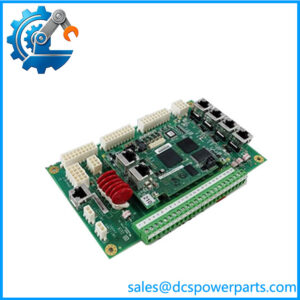
The PAICH2B attaches directly to its associated analog terminal board through the DC-37 connection. The terminal board contains important field-side circuitry, including current-loop burden resistors and configuration hardware. Consequently, replacing only the I/O pack without checking the terminal-board revision can create compatibility problems.
H2B hardware revision
GE’s lifecycle notice identifies as the updated technology replacement for IS220PAICH2A. The notice also states that the updated Mark VIe I/O technology was backward-compatible with earlier technology, including TMR systems.
For a field replacement, however, “backward-compatible” should not be interpreted as “ignore the software.” The actual ControlST release, I/O pack firmware, terminal board, and application configuration still need to be checked.
Related Products
- IS220PAICH1B — Mark VIe PAIC analog I/O pack with 10 analog inputs and 2 analog outputs but without the ‘s 200 mA first-output capability.
- IS220PAICH2A — earlier hardware revision; GE lifecycle documentation identifies as its updated replacement.
- IS220PAOCH1B — dedicated Mark VIe analog-output pack providing eight 0–20 mA outputs.
- IS220PHRAH1B — Mark VIe HART analog I/O pack with 10 analog inputs and 2 analog outputs.
- IS220PTCCH1B — Mark VIe thermocouple input pack for combustion-related temperature measurement.
- IS220PRTDH1B — Mark VIe RTD input pack for resistance-temperature measurement.
- IS220PCLAH1B — Mark VIe core analog I/O pack for aero-derivative turbine applications.
- IS200TBAIH1C — associated Mark VIe analog terminal-board family used with PAIC I/O packs.
- IS200STAIH1A / STAI family — simplex analog terminal-board architecture compatible with applicable PAIC configurations.
FAQ
What is the GE ?
The is a GE Mark VIe PAIC analog input/output I/O pack providing 10 analog inputs and 2 analog outputs. Its distinguishing feature is the ability to configure analog output 1 for up to 0–200 mA.
How many analog inputs and outputs does it have?
It provides 10 analog inputs and 2 analog outputs per terminal-board connection. Inputs 1–8 support ±5 V, ±10 V, or 4–20 mA; inputs 9–10 support ±1 mA or 4–20 mA.
What is special about PAICH2B compared with PAICH1B?
The hardware adds support for 0–200 mA on analog output 1. PAICH1 is limited to the normal 0–20 mA output range. GE’s lifecycle documentation explicitly distinguishes the PAICH2B as “Analog In/Out with 200 mA Out.”
Can I configure both analog outputs for 200 mA?
No. The documented configuration provides 0–200 mA capability on the first output only. The second output remains a 0–20 mA output.
Which terminal board should I use?
The PAIC family is documented with compatible analog terminal-board configurations including TBAIH1C and STAI variants. GE certification documentation also identifies the Mark VIe analog I/O pack family with the corresponding STAI/TBAI terminal-board architecture. Verify the exact terminal-board catalog number before installation.
Can I hot-swap the ?
Do not treat it like an ordinary PLC plug-in module. Although the Mark VIe distributed I/O architecture supports modular replacement practices, the PAICH2B may be connected to live analog circuits and turbine control loops. Follow the approved GE/plant maintenance procedure and confirm the process consequence before removing the pack.
Does PAICH2B require a specific ControlST version?
Yes, software/hardware compatibility needs to be checked. Public technical references identify the H2B/BPPC generation with newer ControlST requirements, but the exact minimum release should be matched to the installed Mark VIe system and firmware rather than inferred from the catalog number alone.
Does support 4–20 mA inputs?
Yes. Inputs 1–8 can be configured for 4–20 mA, while inputs 9–10 can also be configured for 4–20 mA.
What happens if the 200 mA output configuration is wrong?
The PAIC system monitors the analog-output configuration and terminal-board jumper arrangement. GE documentation specifically describes a diagnostic condition when a commanded output configuration does not match the hardware jumper setting. For a 200 mA application, the terminal-board configuration must therefore agree with the software configuration.
Is a direct replacement for IS220PAICH2A?
GE lifecycle documentation identifies as the updated available technology replacing IS220PAICH2A. Even so, verify the terminal board, firmware, ControlST release, and application configuration before replacing an installed H2A.
What should I verify when purchasing New Surplus ?
Request photographs showing the complete catalog number, H2B revision, serial number, connectors, and physical condition. Confirm whether the unit has been tested, verify the associated terminal board, and check the installed Mark VIe software/firmware environment. A listing that simply says “PAIC analog I/O” is not enough because PAICH1 and have materially different output capabilities.
Procurement Note
The is one of those Mark VIe parts where the suffix has real engineering significance. The H2B revision identifies the updated hardware, and the designation identifies the 0–200 mA first analog-output capability. GE documentation confirms both points.
Before releasing a purchase order, verify:
- Exact catalog number: .
- H2B hardware revision.
- rather than PAICH1 architecture.
- Required analog input signal ranges.
- Whether analog output 1 requires 0–20 mA or 0–200 mA.
- Terminal-board jumper configuration.
- Exact TBAI/STAI terminal-board revision.
- ControlST software release.
- I/O pack firmware compatibility.
- IONet Ethernet arrangement.
- Actual test status and condition.
- Existing application configuration and output fail-state settings.
One field issue deserves particular attention: do not replace a with a PAICH1B merely because both provide 10 AI and 2 AO. If the application uses the 200 mA first-output circuit, the PAICH1 hardware does not provide that capability. GE’s own Mark VIe documentation makes this distinction explicit.
For legacy turbine-control procurement, the correct comparison is therefore + compatible terminal board + software/firmware environment, not simply “12-channel analog I/O pack.”