Description
Key Technical Specifications
| Parameter | Specification |
|---|---|
| Product Model | IS200TSVCH1ADC |
| Full Identification | IS200TSVCH1ADC S1CX01H |
| Manufacturer | General Electric |
| Product Family | IS200 |
| System | Mark VI / Mark VIe turbine control |
| Functional Designation | TSVC |
| Product Type | Servo Valve Terminal Board |
| Primary Function | Servo-valve field interface |
| Feedback Interface | LVDT valve-position feedback |
| Pulse Inputs | 2 pulse-rate inputs are reported |
| Servo Channels | Two servo-control channels are reported for the TSVC architecture |
| Associated I/O Architecture | PSVO servo I/O pack in applicable Mark VIe configurations |
| Field Connection | Terminal-board field wiring interface |
| Board Treatment | Conformal-coated PCB reported |
| Application | Gas turbine, steam turbine, and combined-cycle turbine control |
The TSVC designation is associated with turbine servo-valve interfacing rather than ordinary general-purpose analog I/O. Available technical references describe the board as an interface for electro-hydraulic servo valves and LVDT feedback, while the exact S1CX01H configuration is treated as an application-specific hardware variant.
Product Introduction
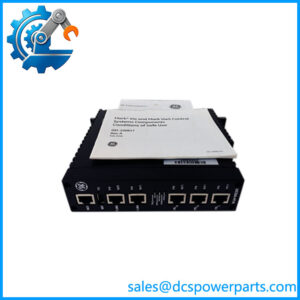
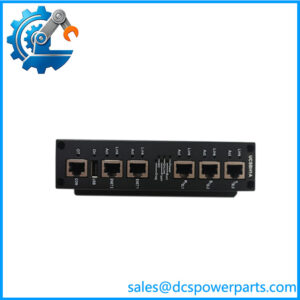
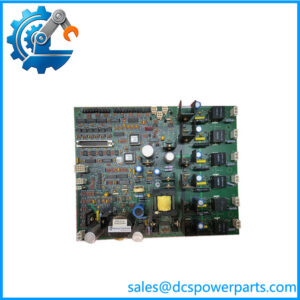
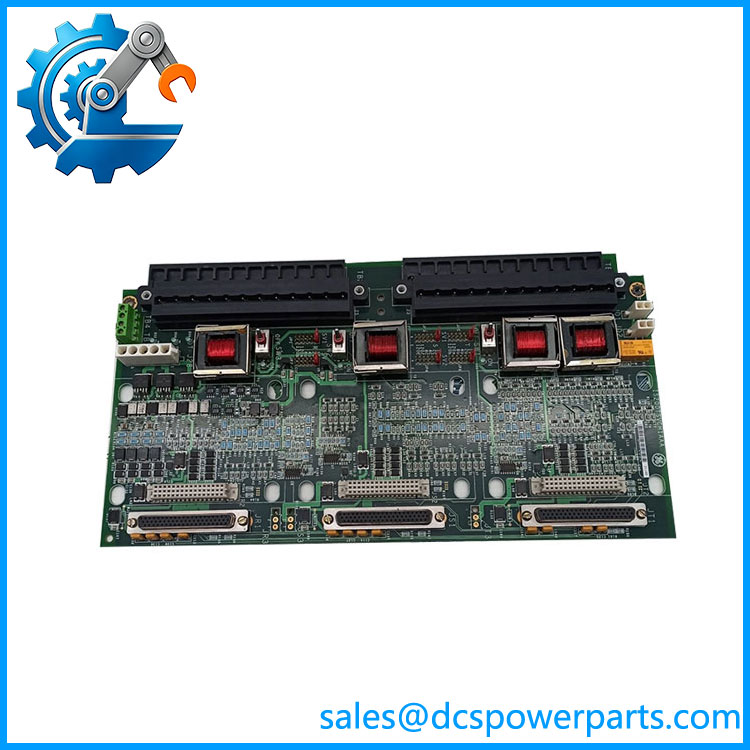
The GE IS200TSVCH1ADC S1CX01H is a TSVC servo valve terminal board used within GE Mark VI/Mark VIe turbine control architectures. It provides the field-side connection between turbine-control electronics and electro-hydraulic servo valves, while supporting valve-position feedback through LVDT circuitry. This makes it relevant to closed-loop control of fuel, steam, and inlet-guide-vane actuator systems.
For plant maintenance, the full identification matters more than the basic TSVC designation. The S1CX01H configuration should be matched against the existing turbine cabinet, I/O pack arrangement, field wiring, and control-system documentation. A similar-looking TSVC board with another suffix should not automatically be considered interchangeable.
IS200TSVCH1A
Application Scenarios & Field Pitfalls
Engineering Pain Point
Servo-loop faults are often difficult to isolate because several components participate in the same control loop: the controller, I/O pack, terminal board, servo output circuit, hydraulic actuator, LVDT, and field wiring.
A failed IS200TSVCH1ADC can therefore produce symptoms that resemble a defective servo valve or inaccurate LVDT. Before replacing the terminal board, maintenance personnel should determine whether the problem follows the command path, feedback path, or field device.
Typical Applications
- Gas turbine fuel control — servo interface for fuel-control valve positioning.
- Inlet guide vane control — closed-loop actuator control where valve or vane position is monitored through LVDT feedback.
- Steam turbine governing — servo-controlled steam valves and associated position feedback.
- Combined-cycle power plants — legacy GE turbine control cabinets requiring replacement terminal hardware.
- Turbine control retrofits — maintaining existing Mark VI/Mark VIe installations when original board-level hardware is no longer readily available.
Technical Pitfalls to Avoid
- Do not classify it as a generic analog I/O board.
The TSVC designation is tied to turbine servo-valve interfacing. Generic descriptions claiming broad analog/digital I/O capability should not be used as the basis for a substitution decision. - Match S1CX01H exactly where the existing installation specifies it.
The base number alone does not provide enough information for a reliable replacement decision. Check the complete board label, revision markings, cabinet drawings, and I/O database. - Verify the associated I/O pack.
In Mark VIe configurations, the TSVC field interface is associated with the servo I/O architecture and PSVO pack. A replacement board should therefore be evaluated as part of the complete channel rather than in isolation. - Check the LVDT circuit before condemning the board.
A position-feedback alarm may originate from the sensor, excitation circuit, field cable, terminal connection, I/O pack, or terminal-board circuitry. Replacing the board without isolating those possibilities can produce an unnecessary outage expense. - Treat published specifications cautiously.
Secondary sources disagree on several electrical parameters for this part. I would not use an unverified voltage, isolation rating, or temperature figure for engineering approval. The original GE documentation for the installed Mark VI/Mark VIe configuration should be the controlling reference.
Related Products
- IS200TSVCH1A — base TSVC terminal-board version; related to the same servo-valve interface family but should not automatically replace the S1CX01H configuration.
- IS200TSVCH1AED — closely related TSVC variant used for turbine servo-valve interfacing; suffix differences require verification before substitution.
- IS200TSVCH1AJE — another TSVC variant within the same GE terminal-board family; application and revision should be compared with the installed unit.
- IS200TSVCH2ADC MRP061873 — TSVC-2 variant; related servo-terminal hardware with a different configuration, not a presumed drop-in replacement.
- IS200TSVOH1A — related servo termination hardware serving a different configuration within the GE turbine-control architecture.
- IS200TSVOH1B — later TSVO-family variant; useful for architecture comparison but not automatically interchangeable.
- IS220PSVOH1A — PSVO I/O-pack hardware associated with servo-valve control in Mark VIe systems; it should be evaluated together with the applicable terminal-board arrangement.
- IS200TVIBH1B — related Mark VI feedback/interface hardware used in turbine instrumentation applications, with a different primary function.
- IS200TRPAH2A — Mark VI turbine protection terminal hardware; related to the overall turbine-control platform but not a servo-valve terminal substitute.
Procurement check: For IS200TSVCH1ADC , I would require a match on the complete part number, configuration, board revision, cabinet position, associated I/O pack, and field-terminal arrangement before approving a replacement. The available public descriptions are inconsistent enough that a generic “IS200TSVCH1ADC” match alone is not sufficient for a critical turbine-control application.