Description
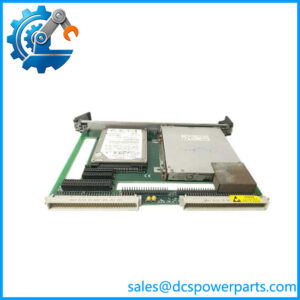
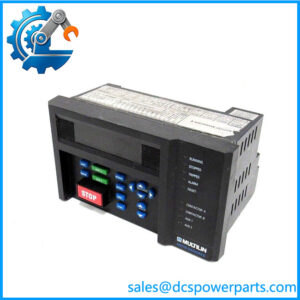
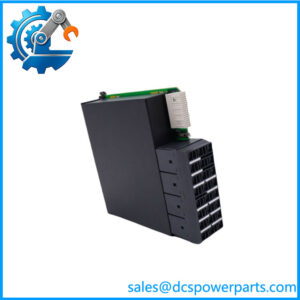
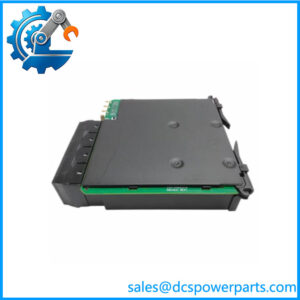
GE IS200JPDDG1AAA | DC Power Distribution Board | Mark VIe Turbine Control
Key Technical Specifications
| Parameter | Specification |
|---|---|
| Manufacturer | General Electric |
| Model | IS200JPDDG1AAA |
| Functional Acronym | JPDD |
| Product Type | DC Power Distribution Board |
| System | GE Mark VIe |
| Primary Function | DC load distribution and branch protection |
| Supported DC Input Class | 24 / 48 / 125 VDC |
| Fuse Type | 15 A, 250 V |
| Fuse Quantity | 12 |
| Switched Outputs | 6 load branches |
| Local Indication | LED power indication |
| Branch Control | Manual toggle switches |
| Power Isolation | Branch-level isolation/protection |
| I/O Pack Power | Not intended for direct I/O-pack power distribution |
| Mounting | DIN-rail-oriented installation assembly |
| PCB Coating | Normal coating |
| Functional Revision | A |
| Functional Revision 2 | A |
| Artwork Revision | A |
The belongs to the JPDD family of DC power distribution boards used in GE turbine-control cabinets. Available documentation identifies the board as providing DC power distribution, voltage isolation, and branch-circuit protection for loads such as DC relays and solenoid-control circuits. The G1A configuration uses 15 A, 250 V fuses, with 12 output fuses and six switched output branches.
The supported DC source can be 24, 48, or 125 VDC, depending on the installed system configuration. This does not mean the board automatically converts one voltage to another; the distributed output follows the applicable DC supply arrangement. Multiple JPDD boards can also be supplied from a main power-distribution branch where the cabinet architecture requires additional protected load circuits.
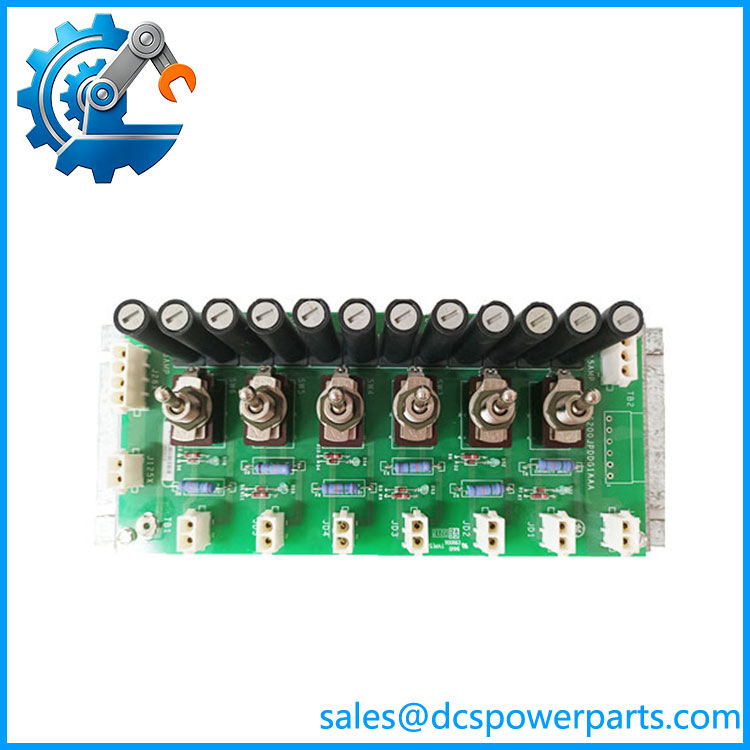
IS200JPDDG1AAA
Product Introduction
The is a JPDD DC Power Distribution Board designed for GE Mark VIe turbine-control cabinets. Rather than processing PLC logic or serving as an I/O pack, it performs a simpler but important cabinet-level function: taking an available DC power source and distributing it through individually protected load circuits. Typical loads include DC relays, solenoid-control circuits, and contact-wetting applications.
For plant maintenance, the is a power-distribution component rather than a control processor. This distinction is important when diagnosing a Mark VIe cabinet because a blown JPDD fuse or failed branch can remove power from a field device without indicating a failure of the associated control logic. The board is also specifically not intended to provide power directly to Mark VIe I/O packs.
Application Scenarios & Field Pitfalls — The Engineer’s Perspective
Engineering Pain Point
When several relays or solenoids suddenly lose power, technicians sometimes start troubleshooting the I/O pack or controller. With a JPDD circuit, the first question should be much simpler: Is the required DC voltage reaching the correct protected branch? A blown fuse, open switch, poor terminal connection, or upstream DC supply problem can interrupt the field load while the controller itself remains healthy.
Typical Applications
1. DC relay power distribution
The JPDD can distribute protected DC power to relay circuits used within turbine-control and auxiliary-control systems.
2. Solenoid control power
Protected branches can supply compatible DC solenoid-control loads, including circuits associated with turbine auxiliary equipment.
3. Contact wetting
The board can provide DC power for contact-wetting applications where external contact circuits require a defined DC source.
4. Distributed cabinet load protection
Multiple JPDD boards can be used where a cabinet requires several protected DC distribution branches supplied from an upstream main power-distribution system.
Technical Pitfalls
1. Do not confuse JPDD with an I/O board.
The does not execute control logic and is not an analog or discrete I/O processor. It distributes DC power. This distinction is critical when ordering a replacement.
2. Do not use the board to power I/O packs.
Available technical descriptions specifically state that JPDD is not intended for I/O-pack power distribution. A cabinet requiring dedicated I/O-pack power should use the appropriate Mark VIe power-distribution hardware instead.
3. Verify the actual cabinet voltage.
JPDD configurations are associated with 24, 48, and 125 VDC applications. Confirm the voltage marked on the installed board and cabinet drawings before replacing fuses or connecting field loads.
4. Check every fuse individually.
The G1A configuration uses multiple branch fuses. A single open fuse can remove one load group while leaving the rest of the board apparently normal. Do not condemn the entire board because one output circuit is dead.
5. Check the branch switch.
Each applicable output branch includes a manual switch for maintenance isolation. A field circuit with no voltage may simply have been intentionally isolated during previous maintenance.
6. Investigate repeated fuse failures.
A replacement fuse that opens again is usually telling you something useful. Check the downstream relay coil, solenoid, field wiring, polarity, and load current before repeatedly replacing fuses.
7. Match the exact revision.
The full procurement number is , with the G1A functional designation and A-rated revision information. GE Mark VIe boards can have revision differences, so a visually similar JPDD board should not automatically be treated as an interchangeable replacement.
8. Do not confuse JPDD with JPDF or JPDH.
These JP-series boards have different power-distribution roles. JPDD is associated with general DC load distribution, while other members of the family address different cabinet power requirements. Physical similarity is not sufficient evidence of interchangeability.
Related Products
- GE IS200JPDDG1A — base JPDD G1A DC power-distribution designation associated with the assembly.
- GE IS200JPDDG3A — related JPDD DC distribution configuration with different fuse-holder arrangements.
- GE IS200JPDFG1ACC — different DC power-distribution architecture; associated with control/I/O power rather than the general-load JPDD function.
- GE IS200JPDHG1A — related DC distribution hardware for a different Mark VIe power requirement.
- GE IS200JPDBG1A — related JP-series power-distribution hardware for a different power-distribution function.
- GE IS200JPDMG1A — related Mark VIe power-distribution board family.
- GE IS200JPDAG1A — related GE power-distribution hardware; verify exact cabinet application before substitution.
- GE IS200EPSMG2A — Mark VIe power-system monitoring hardware serving a different function.
- GE IS200EPCTH1A — related Mark VIe power/control interface hardware, not a direct JPDD replacement.
- GE Mark VIe Power Distribution Assembly — cabinet-level power-distribution architecture in which JPDD boards may be installed.
Procurement Note
When sourcing , identify it by its complete part number, not simply as an “IS200 power board.” Confirm the installed DC voltage, fuse arrangement, number of active load branches, connector configuration, revision, and cabinet wiring before accepting a substitute.
For surplus or refurbished inventory, inspect the fuse holders, switches, terminal connections, LEDs, PCB traces, connector pins, mounting hardware, and signs of overheating. Pay particular attention to boards that have experienced repeated downstream short circuits; a fuse may have protected the load circuit while the associated terminal or PCB conductor still sustained thermal damage.
Also verify whether the replacement is supplied as the IS200 PCB itself or the complete installed assembly. The physical mounting arrangement and cabinet wiring should be compared with the existing unit before installation.
Most importantly, the should not be marketed as a turbine protection processor, digital-output controller, or I/O pack. Its technically defensible classification is GE Mark VIe JPDD DC Power Distribution Board, used to distribute and protect DC power for compatible control and field loads.
Engineering classification: GE — Mark VIe JPDD DC Power Distribution Board for protected 24/48/125 VDC relay, solenoid, and contact-wetting load circuits.