Description
GE IS200ESYSH1A EX2100e System Interface Board
Product Overview
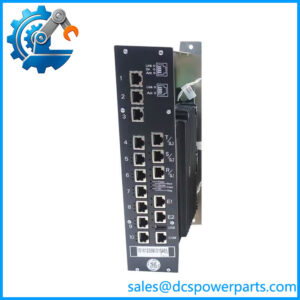
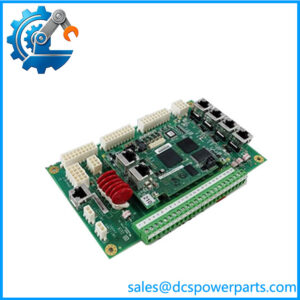
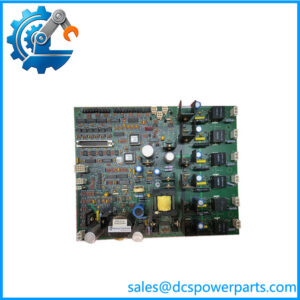
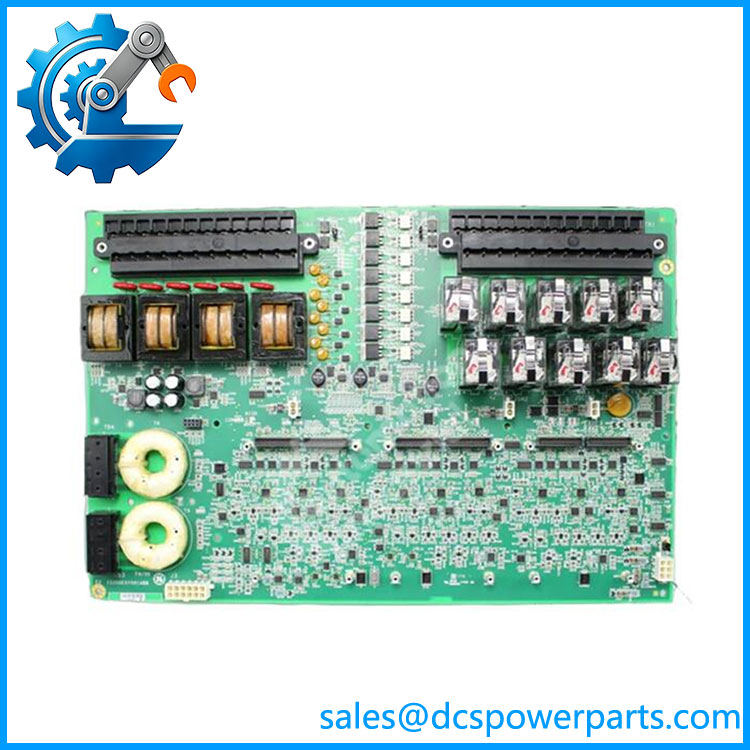
The GE IS200ESYSH1A is the ESYS system interface board used in GE’s EX2100e excitation-control architecture. ESYS stands for EX2100e System Interface Board for Customer I/O. Its job is to bridge external excitation-system signals and the control system, handling interfaces such as generator PT voltage, CT current, analog signals, excitation contacts, and customer trip outputs. The board incorporates isolation transformers for the generator voltage and current measurement interfaces and works with associated HSSL/HSLA interface hardware.
The IS200ESYSH1A is specifically identified in available technical records as a TMR system I/O board, with two three-phase PT voltage input sets and two CT inputs. It also supports 4–20 mA or ±10 V analog signals and provides two trip-relay outputs associated with the customer lockout interface. That makes the board considerably more specialized than a generic GE Mark VI I/O card. It belongs to the excitation-control signal path, where the correct terminal-board and control-section configuration matters during replacement.
One procurement issue deserves emphasis: public listings sometimes call the IS200ESYSH1A an “RTD terminal board” or attach generic Mark VIe specifications to it. Those descriptions conflict with the better-supported ESYS identification. The board should be treated as an EX2100e System Interface Board for Customer I/O, not as a general-purpose RTD module.
Product Introduction
Generator excitation systems depend on clean separation between measurement, control, and external protection circuits. The GE IS200ESYSH1A sits directly in that interface layer, accepting PT/CT and customer I/O signals while passing the required information into the EX2100e control architecture.
For an EX2100e excitation system upgrade or legacy replacement, the TMR configuration and associated HSSL/HSLA hardware must be verified together. A visually similar IS200 board is not sufficient evidence of compatibility.
Key Technical Specifications
| Parameter | Specification |
|---|---|
| Product Model | IS200ESYSH1A |
| Manufacturer | GE / General Electric Industrial Systems |
| Product Family | EX2100 / EX2100e Excitation Control |
| Functional Abbreviation | ESYS |
| Product Type | EX2100e System Interface Board for Customer I/O |
| Hardware Group | H1 |
| Redundancy | TMR |
| PT Voltage Inputs | 2 sets |
| PT Configuration | Three-phase generator voltage inputs |
| CT Inputs | 2 |
| Analog Input Types | 4–20 mA / ±10 V |
| Digital Interface | Excitation/customer digital I/O |
| Trip Relay Outputs | 2 |
| Signal Isolation | Isolation transformers incorporated for voltage/current measurement interfaces |
| Control-System Interface | HSSL/HSLA daughter-board architecture |
| Application | EX2100e excitation control and customer I/O interface |
| Firmware | Application-dependent; exact firmware not established from the board number alone |
| Mounting / Mechanical Details | Verify installed chassis and associated terminal hardware |
The available sources consistently support the ESYS function, PT/CT interfaces, analog I/O, excitation contact I/O, and trip-relay role. Exact standalone supply voltage, channel-by-channel current ratings, dielectric withstand values, operating temperature, and dimensions are not sufficiently established from authoritative model-specific documentation available here, so they are intentionally not presented as fixed specifications.
IS200ESYSH1A
Major Features / Practical Advantages
EX2100e customer I/O interface
The is fundamentally an interface board. It connects customer-side excitation signals with the EX2100e control system rather than acting as the primary excitation regulator CPU.
That distinction matters when troubleshooting. A problem on ESYS can affect voltage/current measurement, external command interfaces, or trip signaling while the higher-level excitation controller remains operational.
Generator PT voltage interface
The board can handle two three-phase PT voltage input sets. Isolation transformers are incorporated into the board’s measurement interface. This allows generator voltage information to be brought into the excitation-control system while maintaining the electrical isolation required by the system architecture.
The PT wiring should be checked against the original EX2100e drawings before replacement. Do not infer the exact PT connection from the board number alone.
CT interface
The ESYS board also provides two CT input interfaces. These are part of the generator/excitation measurement path and are not equivalent to ordinary low-level PLC analog-current inputs.
For maintenance work, CT circuit handling is particularly important. Never open a live CT secondary without the approved protection procedure and shorting arrangement.
Analog signal handling
Available documentation identifies support for 4–20 mA and ±10 V analog signals. These interfaces allow customer reference, feedback, or other analog excitation-related signals to enter the control architecture.
The exact allocation of each channel depends on the EX2100e system configuration. Do not assume that two boards with the same base part number have identical customer wiring without checking the associated terminal documentation.
Excitation contact I/O
The ESYS architecture also handles excitation-system contact inputs and other customer digital I/O. These signals can include external permissives, status contacts, commands, or interlocks depending on the installed system configuration.
This is one reason the board should be evaluated together with its terminal hardware and application drawings rather than as an isolated PCB.
Dedicated trip relay interface
The board provides two trip relay outputs used to drive a customer lockout interface.
That function gives the ESYS board a direct relationship with external protection circuitry. Replacement work therefore requires more than checking whether the board communicates with the controller; relay operation and external trip wiring must also be verified.
TMR architecture
The H1A version is identified as a TMR system I/O board in available technical records. One secondary technical listing specifically identifies the board as TMR and describes hardware voting as part of the associated configuration.
TMR should not be interpreted as meaning that every external signal is independently triplicated on the PCB. The complete EX2100e architecture determines how signals are distributed and voted.
HSSL / HSLA interface
The ESYS board connects toward the control system through the EX2100e high-speed serial architecture. Available descriptions identify HSSL/HSLA daughter-board hardware associated with the board.
This is a critical replacement point. The ESYS board, daughter board, terminal interface, and controller section form a system. Mixing hardware from different revisions without checking the system documentation can create difficult-to-diagnose communication or I/O problems.
Related Products
- IS200ESYSH1AAA — Extended GE identification/reference used for the board; confirm whether the installed documentation uses the shorter or extended identification.
- IS200ESYSH3A — ESYS module associated with a different/simplex configuration; not automatically interchangeable with the H1A TMR board.
- IS200HSLAH1A — High-speed serial interface hardware associated with EX2100/EX2100e I/O architecture.
- IS200EXHSG2A — EX2100 high-speed relay-driver board used in related excitation-control architectures.
- IS200ERGTH1A — EX2100 exciter ground/detector-related board.
- IS200MVRCH1A — Motor voltage relay board found in GE Mark VI-related equipment; different function from ESYS.
- IS200PSCDG1A — GE power-supply/control distribution board; power architecture rather than customer signal interface.
- EX2100e Excitation Controller — Complete excitation-control platform in which the ESYS board performs the customer-I/O interface function.
- EX2100 Regulator — Related GE excitation platform; configuration compatibility must be established rather than assumed from family naming.
FAQ
What is the GE ?
The is an EX2100e System Interface Board for Customer I/O, commonly designated ESYS. It interfaces generator PT/CT signals, analog signals, excitation contacts, and customer trip outputs with the EX2100e excitation-control system.
Is a Mark VIe RTD board?
No. Some secondary listings incorrectly describe it that way. The better-supported identification is an EX2100e ESYS system interface board with PT, CT, analog, digital, and trip-relay interfaces.
How many PT inputs does it have?
Available technical documentation identifies two three-phase PT voltage input sets.
Does have CT inputs?
Yes. The board is documented with two CT inputs used within the excitation-system measurement architecture.
Does it support 4–20 mA signals?
Yes. The ESYS board supports analog signal interfaces including 4–20 mA and ±10 V. The exact channel assignment depends on the EX2100e system configuration.
Does it have trip relay outputs?
Yes. Available model-specific documentation identifies two trip relay outputs that interface with a customer lockout device.
Is a TMR board?
Yes. Available technical records identify the H1A configuration as a TMR system I/O board.
Can I hot-swap ?
Do not assume hot-swap capability from the IS200 designation. The ESYS board is connected to generator PT/CT circuits, customer I/O, and trip circuitry. Follow the applicable EX2100e maintenance procedure and isolate the relevant electrical and protection circuits before removing it.
Does contain firmware?
The board participates in a controller-based EX2100e architecture, but the board number alone does not establish a specific user firmware version. Do not specify “firmware v3.1” or another version unless it has been confirmed from the installed system.
Can be used as a generic Mark VI I/O board?
No. Its interfaces and architecture are specifically associated with the EX2100/EX2100e excitation system. It should not be selected as a generic PT/CT or analog I/O replacement.
What should I verify before purchasing a replacement?
Verify the complete board identification, hardware revision, TMR/simplex architecture, associated HSSL/HSLA hardware, terminal-board configuration, controller section, PT/CT wiring, analog channel assignment, trip-relay wiring, and the existing EX2100e application configuration.
Procurement Note
The should be procured as an EX2100e ESYS system interface board, not as a generic Mark VI I/O card.
The strongest model-specific evidence identifies it as:
GE — EX2100e System Interface Board for Customer I/O — TMR configuration.
Before replacing an installed board, document:
- Complete board number and revision.
- TMR system arrangement.
- Associated HSLA/HSSL daughter board.
- Terminal-board type.
- PT input wiring.
- CT input wiring and ratios.
- Analog input/output assignments.
- Digital excitation-contact assignments.
- Trip-relay wiring.
- Controller-section configuration.
- Existing application and calibration data.
The CT circuits deserve particular attention. Do not disconnect or open energized CT secondary circuits simply to remove the board.
For New Surplus inventory, inspect isolation transformers, connectors, daughter-board interfaces, terminal interfaces, relay components, and PCB condition. Functional qualification should include the relevant PT/CT simulation, analog I/O, digital contacts, serial communication, and trip-relay checks under an approved EX2100e test procedure.
A replacement board that powers up is not necessarily a qualified replacement. The ESYS board sits directly between the excitation controller and several customer/protection interfaces, so configuration and wiring verification are part of the replacement job.
Bottom line: GE is an EX2100e TMR System Interface Board for Customer I/O, handling generator PT/CT measurement, analog and digital customer interfaces, and trip-relay outputs. Do not confuse it with an RTD board or generic Mark VI I/O module, and do not substitute another IS200 board solely because the physical format appears similar.