Description
GE IS200EAUXH1AAA — EX2100e Exciter Auxiliary I/O Interface Board
Product Overview
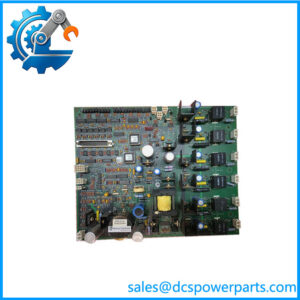
The GE IS200EAUXH1AAA is an auxiliary I/O interface board designed for the EX2100e excitation control system. Identified by the EAUX functional acronym, the board supports auxiliary functions within the excitation-control architecture rather than serving as the main controller or a power-conversion assembly. Component documentation associates the board with excitation functions that include de-excitation and field-voltage and field-current feedback. These functions are important when maintaining generator excitation equipment because the control system must coordinate excitation commands with feedback and protective responses.
The H1 designation is associated with a triple-modular-redundant (TMR) configuration in available component references. In a redundant control architecture, the correct hardware variant matters: a board that looks similar may have different system interfaces or redundancy requirements. The IS200EAUXH1AAA also carries the conformal coating identified in supplier documentation. That coating is a construction detail, not proof that the board can tolerate any particular humidity, contamination, or environmental exposure. Exact electrical ratings, channel counts, and terminal assignments should be taken from the applicable GE manual and drawings rather than inferred from the model number.
For maintenance and procurement teams, the GE IS200EAUXH1AAA is most relevant when servicing an existing EX2100e installation that specifies this exact assembly. Before replacement, compare the full part number and revision markings, inspect the connector and jumper arrangement, and verify compatibility with the installed controller and related interface boards. If the original unit has failed, retain its configuration information and record the associated system alarms before removing it. These checks help distinguish a board fault from a problem in field wiring, feedback circuits, or connected control hardware. The GE IS200EAUXH1AAA should not be assumed compatible with Mark VI or Mark VIe hardware simply because those platforms also belong to GE’s turbine-control portfolio.
Product Introduction (Non-Templated)
An excitation-system fault does not always originate in the main controller. Auxiliary feedback, de-excitation circuitry, or an interface-board problem can also affect generator operation. The GE IS200EAUXH1AAA is an EX2100e auxiliary I/O board associated with these supporting excitation functions.
Its H1/TMR designation makes exact configuration matching especially important. Confirm the installed revision, controller arrangement, and associated interface hardware before commissioning a replacement; the part number alone does not establish suitability for every EX2100e installation.
Key Technical Specifications
| Parameter | Specification |
|---|---|
| Manufacturer | General Electric (GE) |
| Model | |
| Functional Acronym | EAUX |
| Product Type | Exciter auxiliary I/O interface board |
| System Family | EX2100e excitation control |
| Redundancy Variant | H1, identified as TMR in component references |
| Associated Functions | Auxiliary excitation I/O; de-excitation and field-feedback functions are referenced in related documentation |
| PCB Coating | Conformal coating |
| Functional Revision 1 | A |
| Functional Revision 2 | A |
| Artwork Revision | A |
| Controller Compatibility | Must be confirmed against the installed EX2100e configuration |
| Related Hardware | HSLA, EBAC, EDEX, EXAM, and EDFF are identified in component references as associated interface boards |
| Supply Voltage | Not independently verified for this exact assembly |
| I/O Channel Count | Not independently verified |
| Communication Protocol | No standalone protocol specification verified |
| Operating Temperature | Confirm from the applicable GE manual; published secondary listings differ |
| Installation Method | Compatible EX2100e assembly; confirm the mounting and connector arrangement |
| Condition | Verify unit-specific condition and test status |
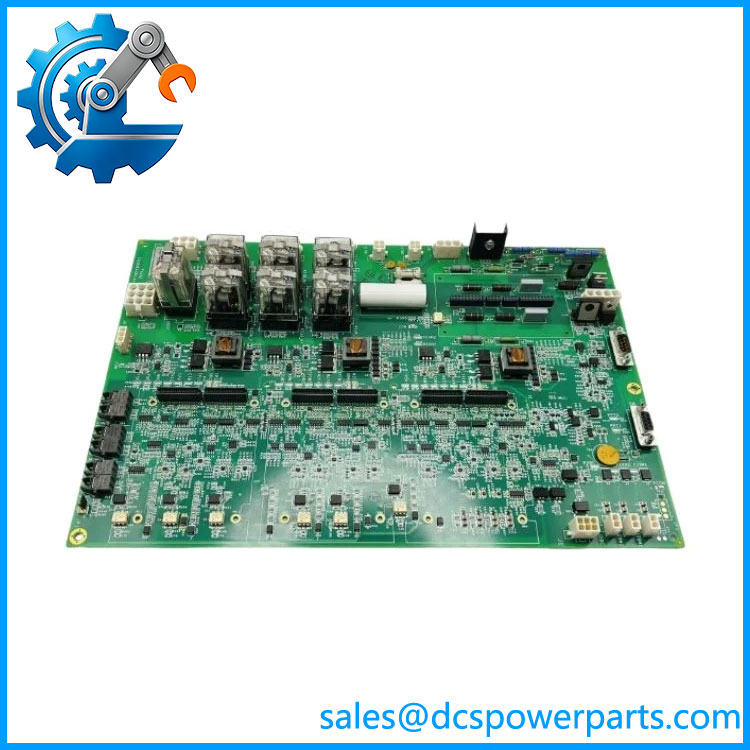
IS200EAUXH1AAA
Related Products
The following components are identified in EX2100/EX2100e component references as related hardware. They have different roles and should not be treated as direct replacements for the EAUX board without an approved parts cross-reference.
- IS200EAUDH1A — An EAUD daughterboard is listed as compatible with the IS200EAUXH1A family in component references. Confirm the exact suffix and installation requirement before ordering.
- HSLA Board — Identified as part of the connection arrangement between the EAUX board and the C, M1, and M2 controllers. Check the system drawing for the installed variant.
- EBAC Board — Listed among boards that interface with the EAUX assembly. Verify its role in the specific excitation cabinet before replacing or troubleshooting it.
- EDEX Board — Identified as related EX2100e hardware. Confirm the function and revision in the equipment documentation.
- EXAM Board — Listed as an associated interface component. It is a separate assembly, not an equivalent EAUX board.
- EDFF Board — Another board identified in related interface references. Confirm the correct part number and system relationship before procurement.
- IS200EAUXH1A — The parent or base model designation associated with the variant. Check all suffixes and revision details before using it as a replacement candidate.
- GEH-6781 — A manual reference cited by a component supplier for the IS200EAUXH1A family. Verify the document title and applicability against the installed equipment before relying on it for commissioning.
Frequently Asked Questions
Q1. What does the GE do?
It is an auxiliary I/O interface board for the EX2100e excitation control system. Related documentation associates the EAUX board with auxiliary excitation functions, including field-feedback and de-excitation functions. Confirm the precise signal assignments from the approved system drawings.
Q2. Does support TMR operation?
The H1 variant is identified as TMR in component references. That does not mean every EX2100e system uses the same redundancy arrangement. Confirm the controller configuration and approved board variant before installation.
Q3. Can I use this board in a Mark VI or Mark VIe system?
Do not assume compatibility. The is identified with the EX2100e excitation-control family. Mark VI and Mark VIe systems use their own hardware configurations; any cross-platform substitution requires explicit documentation and engineering approval.
Q4. Can I hot-swap the ?
Do not hot-swap the board unless the applicable GE procedure explicitly authorizes it for the installed configuration. Follow the excitation system’s shutdown or isolation instructions and the site’s electrical safety and lockout/tagout procedures. TMR architecture does not, by itself, prove that a specific board can be removed under power.
Q5. Does the require firmware version 3.1?
A firmware requirement tied specifically to version 3.1 has not been verified. Compatibility may depend on the EX2100e control hardware, application configuration, and related board revisions. Check the installed system’s approved bill of materials and software documentation rather than applying a generic firmware assumption.
Q6. How should I verify a replacement board before installation?
Compare the full number, revision labels, PCB layout, connectors, and jumper positions with the removed board. Check the equipment BOM and associated wiring drawings, and request functional-test evidence from the supplier. Do not change jumper settings or controller configuration based solely on a visual match.
Q7. What should I confirm when buying new-surplus or refurbished stock?
Ask for photographs of the actual unit’s labels and PCB, confirmation of its condition, and a description of the tests performed. For refurbished stock, request details of any repairs and the warranty terms. A clean board and conformal coating are not proof of functional condition; critical excitation hardware should be accepted against defined inspection and test criteria.