Description
GE DS200TCQAG1BHF | Mark V TCQA Analog I/O Board
Key Technical Specifications
| Parameter | Specification |
|---|---|
| Manufacturer | General Electric |
| Series | Mark V / Speedtronic |
| Model | DS200TCQAG1BHF |
| Functional Acronym | TCQA |
| Product Type | Analog I/O Board |
| Primary Role | Analog signal scaling and conditioning |
| Core Architecture | R / S / T I/O cores |
| Related Signal Types | Thermocouple, 4–20 mA, LVDT, vibration, pulse, voltage, generator/line signals |
| Data Bus | 3PL |
| Power Distribution Path | 2PL |
| Thermocouple Interface | JA |
| 4–20 mA Interface | JB |
| Generator / Pulse / Related Signals | JE |
| LVDT / LVDR Interface | JF |
| Vibration / ±10 V Inputs | JG |
| Status Indicators | 6 LEDs |
| Configuration | 6 jumpers reported |
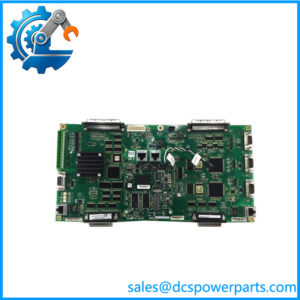
| Connector Arrangement | 4 × 34-pin plus 2 × 40-pin reported for BHF configuration |
| Firmware | Verify against installed Mark V configuration |
| Operating Voltage | Verify against system documentation and board records |
| Operating Temperature | Verify against GE documentation for the installed cabinet |
| Mounting | Mark V cabinet/rack installation; verify chassis position |
| Coating | Verify from physical board marking |
| Exact Hardware Revision | BHF suffix must be matched |
The TCQA board is documented as handling a broad group of Mark V analog functions rather than acting as a simple analog input card. The architecture includes thermocouple processing, 4–20 mA input/output circuitry, LVDT position signals, vibration inputs, pulse-rate signals, and generator/line-related signals.
Published reseller specifications for voltage, current, dimensions, and environmental limits are inconsistent, and some listings incorrectly associate the board with Mark VIe. Those values should therefore not be treated as commissioning limits for DS200TCQAG1BHF without checking the installed system documentation and physical board identification.
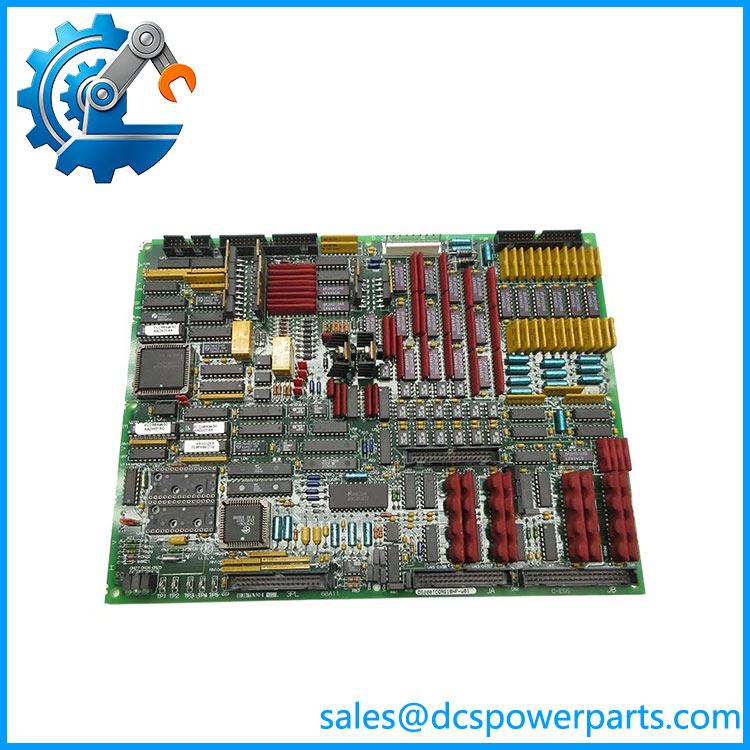
DS200TCQAG1BHF
Product Introduction
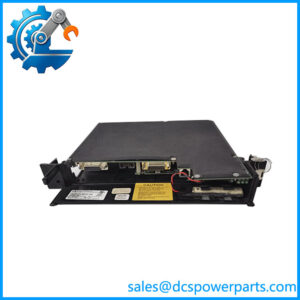
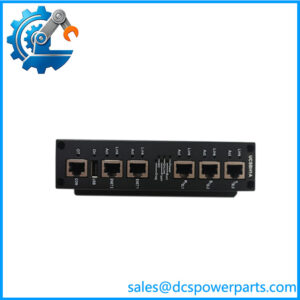
The GE DS200TCQAG1BHF is a TCQA Analog I/O Board used within the GE Mark V Speedtronic turbine control architecture. Its job is considerably broader than simple analog acquisition: the TCQA scales and conditions signals arriving from Mark V terminal boards and passes processed information into the control-system data path. Documented signal groups include thermocouples, 4–20 mA inputs and outputs, LVDT/LVDR position signals, vibration, pulse-rate, voltage, and generator/line signals.
For maintenance engineers, the important point is that the TCQA sits inside a larger signal-processing chain. The board works with terminal boards and neighboring Mark V boards through dedicated connectors such as 3PL, JA, JB, JE, JF, and JG. A replacement therefore needs to match the complete hardware designation and the existing cabinet configuration rather than simply matching the TCQA functional acronym.
Engineering Pain Point
A failed TCQA can produce symptoms that initially look like sensor, terminal-board, wiring, or controller problems because many different signal classes pass through its processing architecture. Randomly replacing field transmitters is a poor troubleshooting strategy when several unrelated channels show abnormal readings at the same time. Check the affected signal path, terminal-board connection, TCQA connector, jumper configuration, and the corresponding Mark V I/O configuration before concluding that the field instrument is defective.
Typical Applications
- Mark V turbine control: Analog signal processing within R, S, and T control cores.
- Temperature monitoring: Thermocouple acquisition and cold-junction-related processing through the associated terminal-board architecture.
- Process instrumentation: Scaling and conditioning of 4–20 mA signals such as fuel-flow and compressor-related measurements.
- Position and vibration monitoring: Processing of LVDT/LVDR, vibration, pulse, and related turbine feedback signals.
Technical Pitfalls to Avoid
- Do not treat DS200TCQAG1BHF as a generic analog input card. Its signal architecture includes several specialized Mark V functions.
- Match the complete part number. The shorter DS200TCQAG1B designation identifies the TCQA family, but the complete suffix identifies the particular board configuration being purchased.
- Document every ribbon-cable connection before removal. The board contains multiple connectors, and incorrect cable placement can create multiple secondary faults after replacement. Field guidance specifically recommends recording cable locations before disconnecting the board.
- Check terminal-board compatibility. TCQA signal paths depend on associated terminal boards such as TBQA, TBQC, and TBQB. A correct TCQA board cannot compensate for an incompatible or incorrectly configured terminal board.
- Review jumper settings. The TCQA architecture uses hardware jumpers for functions including mA output configuration and test-related circuitry. Do not assume the replacement board should retain factory-default positions.
- Do not rely on reseller voltage specifications. Public listings disagree on electrical ratings, while the available technical descriptions focus more heavily on signal architecture. Use the installed Mark V documentation, board schematic, and cabinet records for commissioning values.
Related Products
- DS200TCQAG1B — The closely related TCQA analog I/O board designation. The shorter designation should not automatically be treated as an interchangeable replacement for the complete DS200TCQAG1BHF configuration.
- DS200TCQAG1 — Earlier TCQA board version referenced in Mark V documentation; verify hardware revision and application before substitution.
- DS200TCQCG1A — TCQC analog I/O companion board used when the I/O architecture requires additional analog capacity.
- DS200TCQCG1ADB — Another TCQC configuration; exact system compatibility must be checked.
- STCA — Associated Mark V board in the TCQA/STCA/TCQE data path; 3PL provides the relevant board-to-board data connection.
- TCQE — Related Mark V I/O board in the same signal-processing chain.
- TBQA — Terminal-board interface associated with TCQA thermocouple inputs and cold-junction circuitry.
- TBQC — Terminal-board interface associated with TCQA 4–20 mA and other analog signal paths.
- TBQB — Associated terminal-board path for vibration and related voltage inputs.
Procurement and Replacement Note
For , procurement should be based on the complete board number, physical board photographs, connector arrangement, revision markings, jumper positions, and the Mark V core location. Before installation, record the existing cable positions and configuration settings. Confirm the associated terminal boards and Mark V I/O configuration as well.
Do not substitute a DS200TCQA-family board solely because the first portion of the part number matches. The safest replacement decision requires comparison of the complete GE part number, hardware revision, connector population, installed terminal-board architecture, and the specific turbine control application.