Description
Product Overview
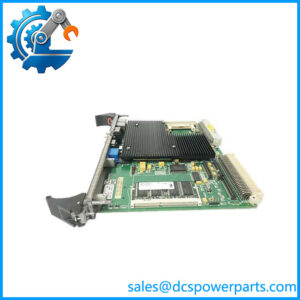
The GE DS200SIOBH1ABA is a SC2000 VME I/O board, commonly identified by the functional acronym SIOB, within the GE Mark V control-system family. Its primary purpose is to add I/O capability to a compatible UC2000V controller through the VME architecture. The board connects to the standard VME P1 backplane connector and occupies one complete VME slot. Its front-panel I/O connections provide the interface toward external terminal-board assemblies. Available technical references specify 16-bit data transfers and standard I/O address-modifier operation.
For GE DS200SIOBH1ABA, configuration hardware deserves more attention than a generic product listing might suggest. The board carries 20 jumpers, three six-position switch blocks for 18 switches total, one diagnostic LED, and a 40-pin connector. The jumpers are factory configured, although certain positions can be changed according to the system requirements. GE replacement practice calls for comparing the old board and setting the replacement accordingly before installation.
In a Mark V turbine control cabinet, GE DS200SIOBH1ABA sits between the VME controller architecture and the external I/O termination hardware. The board is not the main turbine controller and should not be treated as a generic analog-input card. The more specific SC2000/SIOB documentation identifies the external interface as J1/J2 connections to TBA/TBB terminal-board assemblies, with the board’s LED indicating VME access. This distinction matters when selecting a replacement because a board with the same physical format but a different functional revision may not provide the expected interface.
Product Introduction
When a legacy Mark V cabinet develops an I/O communication fault, replacing the terminal hardware alone may not restore the VME data path. GE DS200SIOBH1ABA provides the SIOB interface used to expand compatible UC2000V-based systems.
The board occupies one VME slot, supports 16-bit data transfers, and provides connections toward the TBA/TBB terminal assemblies. For a Mark V legacy replacement, preserve the original jumper and switch configuration before removing the failed board.
Key Technical Specifications
| Parameter | Value |
|---|---|
| Manufacturer | General Electric (GE) |
| Model | DS200SIOBH1ABA |
| Functional Acronym | SIOB |
| Product Family | Mark V / DS200 |
| Functional Description | SC2000 VME I/O Board |
| Product Type | VME Stand I/O Board |
| Controller Association | UC2000V |
| Bus Interface | VME |
| Backplane Connector | VME P1 |
| VME Slot Occupancy | 1 full slot |
| Data Transfer | 16-bit |
| I/O Addressing | Standard I/O address modifier type |
| Front-Panel I/O | J1 and J2 |
| External Terminal Boards | TBA / TBB via dedicated cables |
| Jumpers | 20 |
| Switch Blocks | 3 |
| Switches | 18 total, 6 per block |
| Diagnostic Indicator | 1 LED |
| Onboard Connector | 40-pin |
| PCB Construction | Conformal-coated board reported |
| Mark V Group | Group 1 |
| Assembly Type | Normal assembly |
| Condition | New Surplus, subject to inspection and testing |
The VME architecture, UC2000V association, 16-bit transfer capability, P1 connection, J1/J2 interface, and TBA/TBB connection are described in available SIOB documentation. The 20-jumper, 18-switch, LED, and 40-pin configuration is independently reported in multiple technical references.
Engineering caution: I would not publish unsupported channel counts, input/output voltage ranges, power consumption, or Ethernet/serial specifications for this board. Several online listings incorrectly classify the DS200SIOBH1ABA as a power-supply or generic analog/digital I/O module. The documented SIOB architecture is much more specific.
Related Products
- DS200SIOBH1AAA — Closely related SIOB board from the same Mark V family. The final
AAArevision differs fromABA; compare PCB revision and configuration before substitution. - DS200SIOBH1ACA — Another SIOB variant in the same H1 family. It shares the general VME I/O architecture but should not be assumed to have identical configuration or revision characteristics.
- DS200SIOBH1A — Parent SIOB board designation. Useful for family-level identification, but insufficient by itself for procurement of an exact replacement.
- UC2000V — Compatible controller referenced in the SIOB documentation. The SIOB adds I/O capability to the controller rather than replacing its control-processing function.
- TBA Terminal Board — External terminal-board hardware connected to the SIOB through dedicated cabling. It provides field termination rather than VME processing.
- TBB Terminal Board — Companion terminal-board assembly used with the SIOB’s external I/O connections.
- DS200SDCCG1AFD — GE Mark V control board serving a different control-processing role. It may exist in the same broader system but is not a direct SIOB replacement.
- DS200DCFBG1BLC — GE Mark V interface/power-related board with a different function from the SIOB.
- DS200TCCAG1BAA — Mark V control/interface board used elsewhere in the system architecture; it should not be substituted for the SIOB.
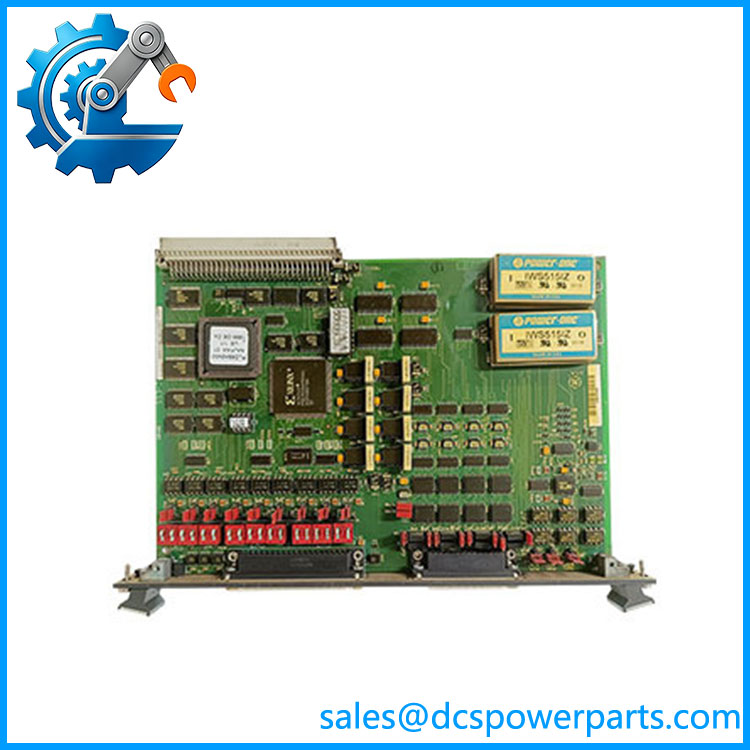
DS200SIOBH1ABA
Frequently Asked Questions
What is GE used for?
The designed to provide additional I/O capability for compatible UC2000V systems. It communicates through the VME P1 backplane and interfaces externally through dedicated I/O connections.
It is therefore an I/O interface board, not the primary Mark V turbine controller.
Does support 16-bit VME data transfers?
Yes. Available SIOB technical documentation specifies 16-bit data transfers and standard I/O address-modifier operation.
This is one reason the VME backplane and correct board revision matter when evaluating replacement hardware.
What are the J1 and J2 connectors used for?
The SIOB front panel provides J1 and J2 I/O connectors. Dedicated cables connect these interfaces to the TBA/TBB terminal-board assembly, providing the external I/O path.
Before removing an existing board, label both cables rather than relying on their physical routing.
Can I hot-swap the ?
Do not assume that it is hot-swappable.
The board occupies a VME slot and participates directly in the control-system I/O architecture. Removing it while the rack is energized can interrupt the VME data path and associated I/O.
Unless the specific Mark V installation documentation and plant maintenance procedure authorize live replacement, perform the replacement with the equipment safely isolated.
Do I need to copy the jumper and switch settings from the old board?
Yes.
The contains 20 jumpers and 18 switches across three switch blocks.
Before replacement:
- Photograph the complete board.
- Record all jumper positions.
- Record every switch position.
- Record the VME rack and slot.
- Identify the J1/J2 cables.
- Compare the replacement PCB revision.
- Transfer the required configuration.
- Verify I/O operation after installation.
Some jumpers have only one supported position, so do not move every jumper simply to make the boards look identical.
Is interchangeable with DS200SIOBH1AAA?
Not automatically.
They are closely related SIOB boards, but the complete part numbers differ. The AAA and ABA suffixes identify different board revisions/configurations. The safest replacement is the exact number.
If an AAA board is being considered as a substitute, compare the GE documentation, PCB artwork revision, jumper/switch arrangement, terminal-board connections, and system application first.
Will replacing erase the Mark V control logic?
No, not in the way replacing a controller’s application memory would.
The SIOB is an I/O interface board. The main concern during replacement is not loss of turbine logic but incorrect hardware configuration, wrong board revision, incorrect VME slot assignment, or incorrect TBA/TBB cabling.
How should I verify a New Surplus ?
A meaningful inspection should include:
- Exact part number
- PCB revision and artwork identification
- VME P1 connector condition
- J1/J2 connector condition
- 40-pin connector inspection
- All 20 jumper positions
- All 18 switch positions
- Diagnostic LED operation
- Conformal-coating condition
- Evidence of corrosion, contamination, or overheating
- Correct TBA/TBB cable compatibility
- Controlled VME access test
- Representative I/O communication test
One important quality-control point: generic listings sometimes describe this part as a DC input power supply or assign unsupported analog/digital specifications. The more defensible identification is GE Mark V SC2000 VME SIOB, with one VME slot, 16-bit data transfers, J1/J2 external I/O connections, 20 jumpers, and 18 switches.