Description
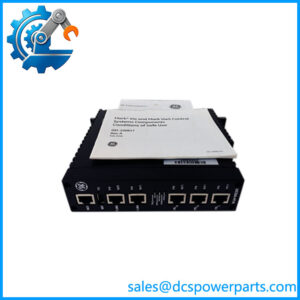
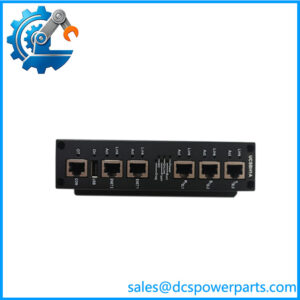
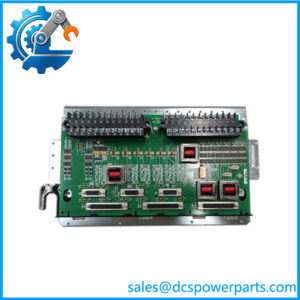
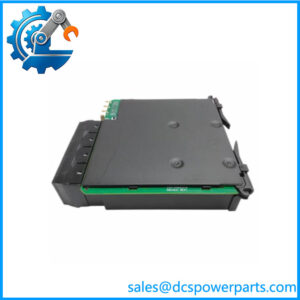
GE DS200SDCCG5AHD Drive Control Board
Key Technical Specifications
| Parameter | Specification |
|---|---|
| Manufacturer | General Electric |
| Model / Part Number | DS200SDCCG5AHD |
| Functional Abbreviation | SDCC |
| Product Type | Drive Control Board |
| Control Platform | Mark V Speedtronic |
| Mark V Group | Group 5 |
| Assembly Type | Normal Assembly |
| Processing | Three microprocessor-based processing sections |
| Interface | Board-level connectors to associated Mark V drive/control hardware |
| Auxiliary Expansion | Standoffs provided for compatible daughterboards |
| Configuration Hardware | Jumper switches, DIP switches, reset circuitry |
| PCB Components | Xilinx devices and associated control/interface circuitry |
| Revision | AHD revision designation |
| Application | Compatible Mark V drive and exciter systems |
The is identified as a Group 5 SDCC drive control board within the Mark V Speedtronic family. The SDCC provides the principal control circuitry for compatible drive or exciter configurations and contains processing resources for drive-control, motor-control, and co-motor functions.
Product Introduction
The is a legacy Mark V Speedtronic Drive Control Board used in compatible GE drive and exciter architectures. Its job is considerably more specific than that of a general PLC processor: the SDCC handles drive-control processing and exchanges signals with other boards that make up the complete drive system. The board contains multiple processing sections, interface circuitry, memory, programmable logic devices, connectors, configuration switches, and provisions for compatible auxiliary boards.
For plant maintenance teams, the should be treated as an application-specific legacy control component rather than a generic replacement PCB. The complete ordering number matters because the Mark V SDCC family includes different group configurations and revisions. Public technical references also identify the DS215SDCC as a later replacement family, but substitution should not be assumed to be plug-compatible simply because the functional abbreviation is the same.
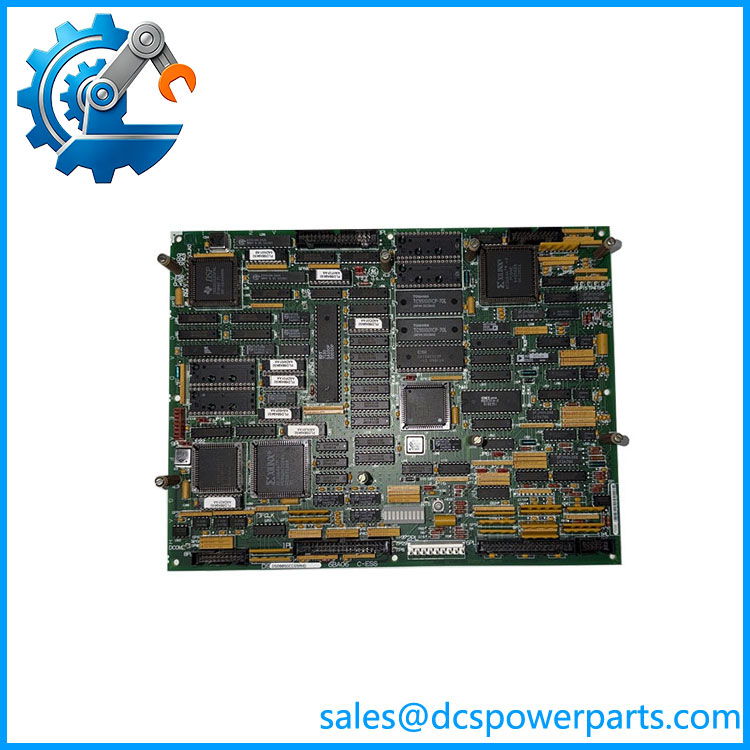
DS200SDCCG5AHD
Application Scenarios & Field Pitfalls — The Engineer’s Perspective
Engineering Pain Point
A common problem with aging Mark V drive cabinets is that a failed control board is only one part of the diagnosis. Replacing an SDCC without checking the board group, revision, installed daughterboards, configuration hardware, and surrounding interface cards can turn a straightforward repair into a second fault. The therefore needs to be matched against the actual cabinet configuration rather than purchased solely by the “SDCC” designation.
Typical Applications
- GE Mark V drive systems — Used as the main control board in applicable drive-control configurations.
- Exciter control — The SDCC architecture can provide control circuitry and processing for compatible exciter applications.
- Industrial motor-drive maintenance — Relevant to legacy GE drive equipment where the original Mark V architecture remains in service.
- Legacy turbine auxiliary systems — Applicable where Mark V drive packages are integrated into turbine plant auxiliary equipment.
Technical Pitfalls
1. Do not confuse the SDCC with a generic DSP card.
The board does contain digital processing capability, but its practical role is tied to the Mark V drive/exciter architecture and its associated boards. Calling it simply a “signal processor” misses the system-level function.
2. Group identification matters.
The DS200SDCC family exists in different functional groups. References identify G1, G3, G4, and G5 versions, with no G2 production version. The G5 designation should therefore be retained when matching a replacement.
3. Revision suffix should not be ignored.
The final AHD designation is part of the complete procurement identity. When replacing an installed board, compare the full board label rather than matching only DS200SDCCG5A.
4. Check daughterboards before installation.
The SDCC has standoffs and board-level connectors intended for associated hardware. A replacement PCB may require transfer of compatible auxiliary boards or configuration hardware, depending on the original installation.
5. Do not assume DS215SDCC is a direct plug-in replacement.
Secondary technical references specifically caution that the DS215SDCC introduced additional components and should not be treated as backward-compatible merely because it belongs to the same SDCC family. Verify the applicable Mark V documentation and cabinet configuration before substitution.
6. Preserve configuration information during board replacement.
Before removing a functioning SDCC, document switch positions, jumper settings, installed auxiliary boards, connectors, board identification, and any application-specific configuration. On a legacy controller, this information can be more valuable than the bare PCB itself.
Related Products
- GE DS200SDCCG1A — SDCC drive control board associated with other Mark V drive applications; group identification differs from G5.
- GE DS200SDCCG3A — SDCC variant associated with DC1000 applications and reduced functionality.
- GE DS200SDCCG4A — SDCC variant associated with TC2000 rack applications.
- GE DS215SDCC — Later SDCC board family; substitution requires application and hardware verification.
- GE DS200IMCP — Associated I/O power/interface board family used with applicable SDCC architectures.
- GE DS200STBA — Simple driver terminal board used in compatible drive configurations.
- GE DS200SPCB — Multi-bridge signal processing board used in applicable Mark V drive architectures.
- GE DS215SLCC — LAN communication card family associated with Mark V control architectures.
- GE 531X305NTB — I/O driver terminal board used with certain SDCC configurations.
- GE 531X309SPC — I/O signal processor card used in compatible drive systems.
Procurement Note
For a replacement, request clear photographs of the board label and component side when practical. Verify the complete part number, group designation, revision, connector condition, daughterboard configuration, and installed cabinet hardware before accepting a substitute. For used or surplus legacy boards, functional testing under an equivalent configuration is preferable to relying only on visual inspection. Because Mark V is a legacy platform, maintaining an exact spare can also reduce downtime when an application-specific board revision is difficult to source.