Description
Key Technical Specifications
| Parameter | Specification |
|---|---|
| Model | 239-RTD-AN |
| Manufacturer | GE Multilin |
| Relay series | 239 Motor Protection Relay |
| Controlled equipment | Three-phase AC motors |
| RTD inputs | Up to 3 programmable inputs |
| RTD sensor types | Platinum, nickel, or copper |
| RTD applications | Motor stator and bearing temperature monitoring |
| RTD wiring | Three-wire lead-resistance compensation is documented |
| Analog output | One isolated, programmable output |
| Analog output ranges | 0–1 mA, 0–20 mA, or 4–20 mA |
| Analog output assignments | Configurable parameters include thermal capacity, percent full-load current, phase current, and RTD temperature |
| Serial communication | RS-485 |
| Protocol | Modbus RTU |
| AC control-power input | 70–265 VAC, 50/60 Hz |
| DC control-power input | 90–300 VDC |
| Phase-current transformer inputs | 1 A or 5 A secondary |
| Mounting | Panel mounting |
| Manual reference | GEK-106613C; also referenced as 1601-0067-DC |
| Protection and accuracy | Consult the applicable manual and configuration; do not infer values from the model code alone |
Specifications are based on the GE Multilin 239 instruction-manual information and supporting model references. Verify the actual unit label and manual revision before commissioning.
Major Features and Advantages
Motor electrical protection: The 239 relay provides protection functions for three-phase AC motors, including current-based protection and configurable responses to abnormal operating conditions. The exact settings should be selected for the motor nameplate, current-transformer ratios, starting method, and driven load.
Temperature supervision: The RTD option supports up to three temperature sensors. Depending on the installation, these can monitor stator windings or bearings to help detect excessive heating before it contributes to insulation damage or mechanical failure. The relay must be configured for the installed sensor type and application.
Programmable analog reporting: The isolated analog output can be assigned to selected operating values, including thermal capacity, full-load current percentage, phase current, or an RTD temperature. Select the correct output range and receiving-device scaling when connecting the relay to a PLC, DCS, or monitoring instrument.
Serial monitoring: RS-485 communication with Modbus RTU can support integration into a supervisory monitoring system. Confirm device addressing, serial settings, register mapping, and the host system’s communication configuration before connecting it to an existing network.
Configuration-dependent replacement: The suffix RTD-AN identifies installed options rather than a universal hardware configuration. A base 239 relay or a 239 variant with only one of these options may not provide the same functionality. Check the rear label and configuration details before approving a substitute.
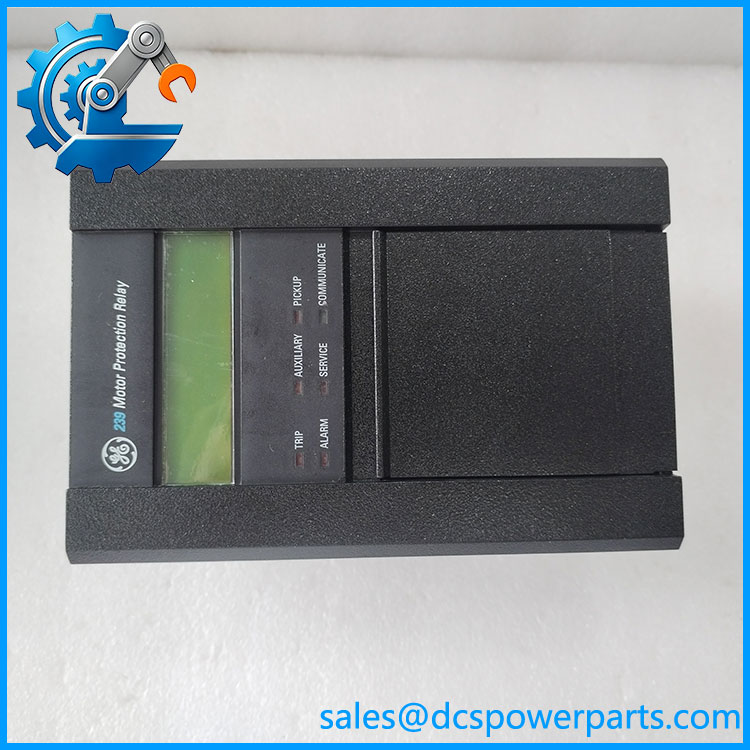
239-RTD-AN
Application Scenarios and Common Pain Points
The GE Multilin 239-RTD-AN is relevant to motor-control installations where electrical protection and temperature monitoring need to be coordinated.
- Pumps and process motors: Detect overload or abnormal current conditions and monitor bearing or stator temperature where RTD sensors are installed.
- Fans, compressors, and rotating machinery: Use configured protection functions to respond to motor operating conditions that could lead to equipment damage.
- PLC/DCS supervisory systems: Transmit selected measurements through the analog output or serial interface, subject to correct configuration.
- Maintenance of existing motor-control panels: Replace a failed relay while retaining the installed protection settings, sensor configuration, and communication requirements.
Field consideration: An RTD temperature alarm is useful only when the sensor wiring, sensor type, alarm threshold, and application assignment are configured correctly. Confirm these settings during commissioning.
Related Products and Variants
| Model | Key distinction |
|---|---|
| GE Multilin 239 | Base motor protection relay configuration |
| GE Multilin 239-AN | Variant with analog output option |
| GE Multilin 239-RTD | Variant with RTD temperature-monitoring option |
| GE Multilin 239-RTD-AN | RTD and analog output options |
| GE Multilin 239-RTD-AN-H | Variant with RTD, analog output, and harsh-environment conformal coating option |
These variants share the 239 family, but their installed options differ. The H suffix indicates a conformal-coating option; it should not be assumed to represent a specific enclosure IP rating.
Engineer’s Guide: Before Ordering or Installation
1. Match the order code. Confirm that the existing unit is specifically 239-RTD-AN. Record the modification number, serial number, hardware revision, and firmware version where available.
2. Check motor and sensor configuration. Verify current-transformer ratios, RTD sensor types, sensor assignments, trip and alarm thresholds, and the analog output range. Do not copy settings without checking the replacement’s configuration.
3. Validate system integration. Confirm the control-power supply, RS-485 wiring, Modbus RTU settings, and analog input scaling at the PLC or DCS. Test the protection and trip circuits according to the plant’s approved commissioning procedure.
Important: Preserve the existing protection settings before removing the original relay. Do not assume that a replacement unit has the same firmware, modification options, or programmed parameters.
Frequently Asked Questions
What is the GE Multilin 239-RTD-AN used for?
It protects three-phase AC motors and supports temperature monitoring through RTD sensors. Its analog output can report selected operating values to an external monitoring or control system.
How many RTD sensors can the 239-RTD-AN support?
The relay supports up to three programmable RTD inputs. Supported sensor types include platinum, nickel, and copper. The selected sensor type must match the actual installed sensors and relay configuration.
Does the 239-RTD-AN have an analog output?
Yes. The AN option identifies a single isolated, programmable analog output. The documented selectable ranges are 0–1 mA, 0–20 mA, and 4–20 mA. The selected range must match the receiving device’s configuration.
What power supply does the relay require?
The documented control-power range is 70–265 VAC at 50/60 Hz or 90–300 VDC. Check the installed unit’s label and wiring instructions before energizing it.
Can the 239-RTD-AN communicate with a PLC or DCS?
The 239 family supports RS-485 serial communication with Modbus RTU. Integration requires the correct serial settings, device address, register mapping, and host configuration. Verify these details against the applicable manual and system design.
Can a standard 239 relay replace the 239-RTD-AN?
Not as an assumed direct replacement. The base model may lack the RTD and analog-output options. Select a replacement with the required installed options and confirm the full configuration before installation.
What should buyers confirm when sourcing this relay?
Verify the complete model code, modification number, hardware revision, firmware information, physical condition, and testing documentation. For used or surplus equipment, request confirmation of the tested protection functions, RTD inputs, analog output, and communication interface.
Recommended product listing title: GE Multilin 239-RTD-AN Motor Protection Relay with RTD Inputs and Analog Output