Description
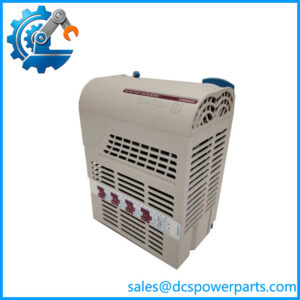
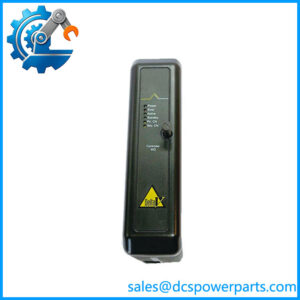
EPRO MMS 6312 Dual-Channel Rotational Speed Monitor
Product Overview
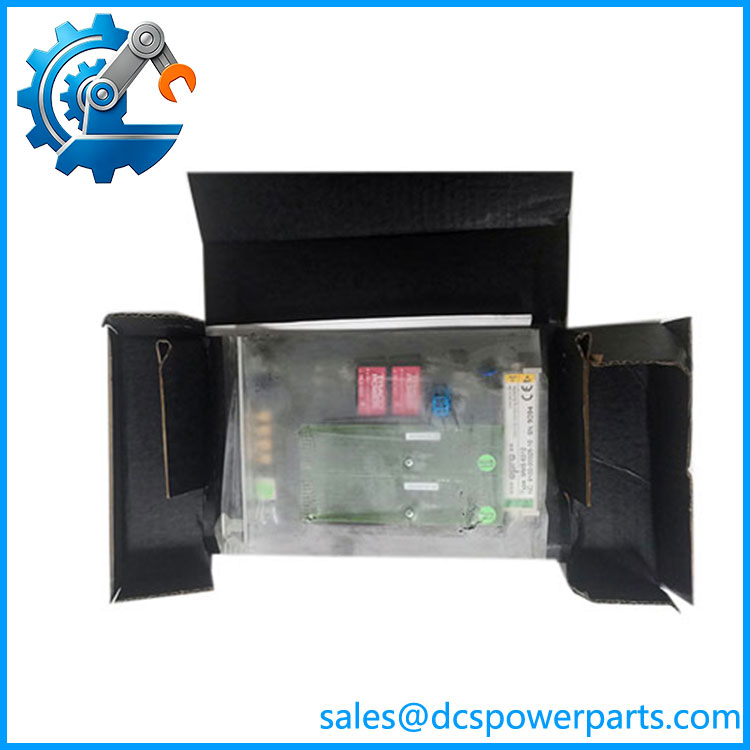
The EPRO MMS 6312 is a dual-channel rotational speed monitor from the MMS 6000 machinery protection platform. Its job is specific: acquire pulse signals from speed or key-pulse sensors, determine rotational speed, and provide monitoring and protection signals to the surrounding machinery-control system. EPRO documentation identifies two independent differential sensor inputs and supports measurement of rotational speed as well as key-pulse signals. The module is intended for rotating machinery applications where speed is a critical operating or protection parameter.
For field integration, the EPRO MMS 6312 supports compatible EPRO sensor arrangements including PR 642x eddy-current sensors with appropriate converters, while the documented frequency range extends to 20 kHz. The module provides relay outputs, analog/current outputs, test and reset connections, and an RS-485 bus for system communication. Local configuration is available through the module’s RS-232 interface, while the RS-485 bus can be used for configuration and communication with the broader MMS system.
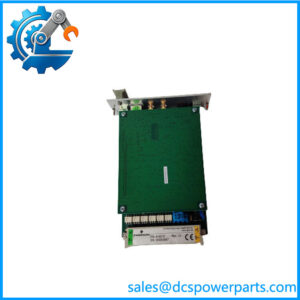
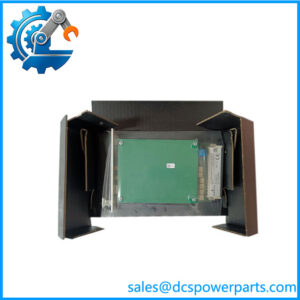
Physically, this is an older Eurocard-style monitoring module rather than a modern PLC I/O slice. The documented dimensions are 30 mm wide (6 TE), 128.4 mm high (3 HE), and 160 mm deep, with a net weight of approximately 320 g. Up to 14 modules, representing 28 monitoring channels, can occupy a 19-inch rack according to the published documentation. That rack architecture is important during a legacy machinery-protection replacement because the MMS 6312 should be matched to the installed MMS 6000 rack, wiring, sensor type, and configuration method—not simply substituted because the application requires an RPM signal.
Product Introduction
When rotational speed needs to be monitored independently of the main PLC/DCS scan, the MMS 6312 provides a dedicated machinery-monitoring path. Two independent pulse-sensor inputs can be used for speed or key-pulse measurement, with a measurement bandwidth extending to 20 kHz.
For legacy turbine and rotating-equipment systems, the important compatibility checks are the sensor family, pulse amplitude, rack position, relay wiring, analog-output configuration, and MMS 6000 communication architecture. The order number associated with the documented MMS 6312 is 9100-00025.
Key Technical Specifications
| Parameter | Value |
|---|---|
| Product Model | MMS 6312 |
| Ordering Number | 9100-00025 |
| Manufacturer / Brand | EPRO |
| Product Family | MMS 6000 |
| Product Type | Dual-Channel Rotational Speed Monitor |
| Measurement Modes | Rotational speed; key pulse |
| Number of Sensor Channels | 2 |
| Input Configuration | Independent differential pulse inputs |
| Frequency Range | 0–20 kHz |
| Minimum Input Level for Automatic Tracing | 2 V |
| Input Voltage | 0 to -27.3 VDC specified operating range |
| Maximum Permissible Input Voltage | Up to 30 V / ±26.75 VDC, depending on input condition |
| Compatible Sensors | EPRO PR 642x + CON arrangements and compatible pulse sensors |
| Local Configuration Interface | RS-232 |
| System Communication | RS-485 bus |
| Output Types | Analog/current and relay outputs |
| Module Format | DIN 41494 Eurocard |
| Width | 30.0 mm / 6 TE |
| Height | 128.4 mm / 3 HE |
| Length | 160 mm |
| Net Weight | Approx. 320 g |
| Module Protection | IP00 |
| Front-Panel Protection | IP21 |
| Operating Temperature | 0°C to +65°C |
| Storage/Transport Temperature | -30°C to +85°C |
| Relative Humidity | 5–95%, non-condensing |
| 19-Inch Rack Capacity | Up to 14 modules / 28 channels |
The published EPRO documentation should take precedence over conflicting commercial descriptions.
Major Features / Practical Advantages
Dual-channel speed monitoring
The MMS 6312 provides two independent differential pulse inputs. This allows two speed-related measurements to be processed within one module rather than requiring two separate single-channel monitors. The documentation identifies both rotational-speed and key-pulse measurement modes.
For turbine and other rotating machinery, that distinction matters. A speed signal may be used for continuous RPM monitoring, while a key pulse can provide a once-per-revolution reference for machinery analysis or synchronization.
MMS6312
Wide pulse-frequency range
The documented measurement range extends from 0 to 20 kHz. A 20 kHz upper limit is substantially beyond the frequency required by many conventional rotating-equipment speed measurements, although the actual usable RPM depends on the number of pulses generated per revolution.
For example, a one-pulse-per-revolution sensor at 20 kHz would theoretically correspond to 1.2 million RPM. That mathematical conversion is not a claim about the module’s practical machinery-RPM application; actual configured speed limits depend on the sensor arrangement and system configuration.
EPRO sensor compatibility
The MMS 6312 is documented for use with EPRO sensor arrangements including PR 642x eddy-current sensors with suitable converters. The module also supports compatible pulse-sensor systems when the electrical signal meets its input requirements.
Do not assume that any proximity probe can be connected simply because it produces a pulse. Sensor supply, signal polarity, amplitude, converter type, cable arrangement, and termination all need to match the installed system.
RS-232 configuration
The module provides an RS-232 interface for local configuration. This is particularly relevant for legacy maintenance because configuration work may depend on older EPRO software and PC interfaces rather than modern Ethernet-based engineering tools. The published documentation references historical PC requirements including RS-232 and legacy Windows/DOS operating environments.
That is not merely a software detail. When purchasing an old MMS 6312 as a spare, confirm that the plant still has an approved method to retrieve, edit, and restore the module configuration.
RS-485 system bus
An RS-485 bus provides communication with the MMS 6000 system and can also be used for configuration. The original connection documentation explicitly shows the RS-485 bus alongside the sensor inputs, relay outputs, test/reset lines, and module power connections.
Relay outputs for machinery monitoring
The connection diagram identifies relay outputs associated with the two channels, including relay contacts configured for quiescent-current operation. This gives the module a direct interface for alarm/protection logic rather than requiring every speed condition to pass through a PLC first.
The exact relay setpoint and logic configuration should be verified from the installed module configuration rather than inferred from the model number.
Compact Eurocard construction
At only 30 mm wide, the MMS 6312 occupies 6 TE in the MMS 6000 rack. The published documentation specifies a 3 HE × 6 TE Eurocard format and indicates that 14 modules can fit in a 19-inch rack.
This is useful when planning spare capacity or replacing an existing card, but it also means the mechanical rack and connector arrangement must be preserved.
Dedicated machinery-monitoring function
The MMS 6312 is not a general-purpose PLC speed-input card. It belongs to a dedicated machinery-monitoring family that also includes relative rotor vibration, bearing vibration, thrust position, eccentricity, and other monitoring functions. The MMS 6000 product documentation lists these modules as parts of the same monitoring system.
That dedicated architecture is one reason it should be treated as a machinery-protection component during replacement engineering.
Related Products
- MMS 6310 — Key-pulse monitor in the same MMS 6000 family. It is focused on key-pulse measurement rather than the dual rotational-speed/key-pulse function of the MMS 6312.
- MMS 6110 — Relative rotor vibration monitor for machinery vibration measurements. It serves a different measurement function from the speed monitor.
- MMS 6120 — Bearing vibration monitor for electrodynamic sensors. Used for bearing vibration rather than rotational-speed measurement.
- MMS 6125 — Bearing vibration monitor designed for piezoelectric sensors. Its sensor technology and measurement task differ from the MMS 6312.
- MMS 6140 — Absolute rotor vibration monitor for absolute rotor-vibration measurement.
- MMS 6210 — Thrust-position monitor used for axial-position measurements.
- MMS 6220 — Eccentricity monitor for monitoring rotor eccentricity.
- MMS 6824 — Modbus interface module for the MMS 6000 system. It handles system communication rather than direct speed measurement.
- MMS 6825 — Ethernet TCP/IP interface for MMS 6000 integration. It provides a network interface rather than the sensor measurement function of the MMS 6312.
- MMS 6910 W — Configuration/operating accessory package associated with the MMS 6312 documentation, including software, manual, and connection cables.
FAQ
What exactly does the MMS 6312 measure?
It is a dual-channel rotational-speed and key-pulse monitor. Each channel accepts a pulse-type sensor signal and can be configured for the documented speed/key-pulse measurement functions.
Can I replace the MMS 6312 with a standard PLC high-speed counter?
Not as a drop-in replacement. A PLC high-speed counter may measure frequency, but it does not automatically reproduce the MMS 6312’s sensor interface, relay protection outputs, configuration, rack integration, or machinery-monitoring architecture.
For a protection application, functional equivalence has to be demonstrated at the complete system level.
Can I hot-swap the MMS 6312?
Do not assume unrestricted hot swapping. The module is a rack-mounted MMS 6000 Eurocard, and the published documentation does not justify treating every installation as hot-swappable. Follow the site’s approved maintenance procedure and the specific MMS 6000 rack procedure before removing a live module.
What sensors can be connected?
The EPRO documentation identifies PR 642x eddy-current sensor arrangements with appropriate converters and other compatible pulse sensors. The actual sensor must meet the module’s electrical input requirements.
Does the MMS 6312 provide RS-485?
Yes. The module includes an RS-485 system bus interface. The documentation also shows RS-232 for local configuration.
What is the maximum input frequency?
The documented frequency range extends to 20 kHz. The practical rotational-speed limit depends on the number of sensor pulses generated per revolution.
Does the MMS 6312 directly provide a 4–20 mA speed output?
The published documentation and connection diagrams identify current-output circuitry, but the exact configured output scaling should not be inferred solely from the model number. Verify the module configuration and original engineering documentation before treating a particular output terminal as a 4–20 mA RPM signal.
Does it support firmware v3.1?
The model number MMS 6312 does not establish a firmware revision. This is legacy EPRO hardware, and compatibility should be checked against the installed MMS 6000 configuration and available configuration software rather than assumed from a firmware number.
Is MMS 6312 the same as a temperature monitor?
No. This is an important procurement correction. The EPRO documentation identifies MMS 6312 as a dual-channel rotational speed monitor, order number 9100-00025. Some current commercial pages incorrectly describe an MMS 6312 as a universal temperature monitor with RTD/thermocouple inputs. Those specifications conflict with the original EPRO documentation and should not be used for identification.
Procurement Note
When sourcing an EPRO MMS 6312, the most important identification point is the complete order information. The original documentation specifies MMS 6312 — 9100-00025 as the dual-channel rotational speed monitor. The F48M mating connector is ordered separately according to the required wiring technology.
Before installing a replacement, verify the existing sensor type, sensor converter, input polarity and amplitude, rack position, RS-485 arrangement, relay wiring, analog-output configuration, and stored module parameters. For a turbine or other critical rotating machine, simply confirming that the front label says “MMS 6312” is not enough.
For legacy inventory, distinguish new surplus, refurbished, and previously installed units. Ask for a clear photograph of the nameplate and front connector, and where practical confirm that the unit can communicate with the installed configuration software. The historical documentation references the MMS 6910 W operating/configuration accessory package, so software and interface availability can become a real maintenance issue on older installations.
The technical evidence is unusually clear on this model: the MMS 6312 is a dual-channel speed/key-pulse monitor, not a general analog I/O card and not the temperature-monitor product described by some third-party listings. That distinction should drive the replacement specification.