Description
Product Overview
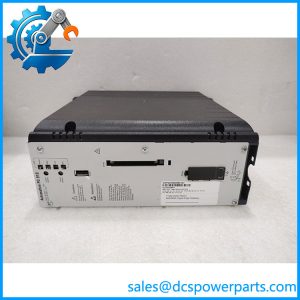
The B&R 3CP380.60-1 is the main processing module in a System 2005 control installation. It executes the machine’s automation application, manages controller data, and exchanges information with rack I/O and connected devices through its configured interfaces. B&R specifies a Pentium III 500 MHz processor, 64 MB of DRAM, and 512 kB of SRAM, making this a legacy CPU intended for the original System 2005 architecture rather than a generic computer replacement.
The CPU includes one aPCI slot for an application-specific interface module. That slot can be important to the machine’s communications architecture: the installed card may connect fieldbus equipment, remote I/O, drives, or other devices. The integrated Ethernet, RS-232, and USB interfaces also have project-specific uses, so matching the connectors alone does not establish that a replacement is configured correctly. B&R also specifies support for ACOPOS and visualization components.
One procurement detail deserves particular attention: the application CompactFlash is ordered separately. A replacement CPU supplied without the original application media may not restore the machine to operation. Before purchasing, identify the CompactFlash card, fitted aPCI module, controller revision, and software/runtime version. Back up accessible application data and document existing network settings before a planned changeover. After installation, validate I/O mapping, communications, retained data, motion functions, and safety-related interlocks according to the machine’s approved commissioning procedure.
Product Introduction
The B&R 3CP380.60-1 provides central processing for System 2005 PLC and machine-control applications. Its removable CompactFlash storage and aPCI expansion slot allow the CPU to be configured for the specific machine application. The double-width format and designated System 2005 rack position are important mechanical compatibility considerations.
For maintenance and spare-parts purchasing, verify the complete material number and hardware revision. Confirm whether the original CompactFlash and interface card are being reused or supplied separately, and establish how the application will be restored and validated. A mechanically compatible CPU without the correct project and interface configuration should not be considered a proven replacement.
Key Technical Specifications
| Specification | Details |
|---|---|
| Manufacturer | B&R Industrial Automation |
| Model | 3CP380.60-1 |
| Alternative designation | CP380 / 3CP380601 |
| Product type | CPU module |
| Platform | System 2005 |
| Processor | Pentium III, 500 MHz |
| DRAM | 64 MB |
| SRAM | 512 kB |
| L2 cache | 256 kB |
| Application memory | Removable CompactFlash; ordered separately |
| Expansion slot | 1 × aPCI interface-module slot |
| Serial interface | 1 × RS-232 |
| Ethernet | 1 × 100BASE-T |
| USB | 1 × USB interface |
| Power consumption | 3 W at 24 VDC and 13 W at 5 VDC; 16 W total without CompactFlash and interface module |
| Mechanical format | System 2005 double-width |
| Base-unit position | Slots 3 + 4 |
| Status indicators | CPU function, battery, CompactFlash, Ethernet |
| Battery | Backup battery included according to B&R documentation |
| Operating temperature | Confirm from the applicable hardware documentation |
| Protection rating | Not independently verified |
| Product condition | Confirm actual condition with supplier |
Specifications are based on B&R’s published product information.
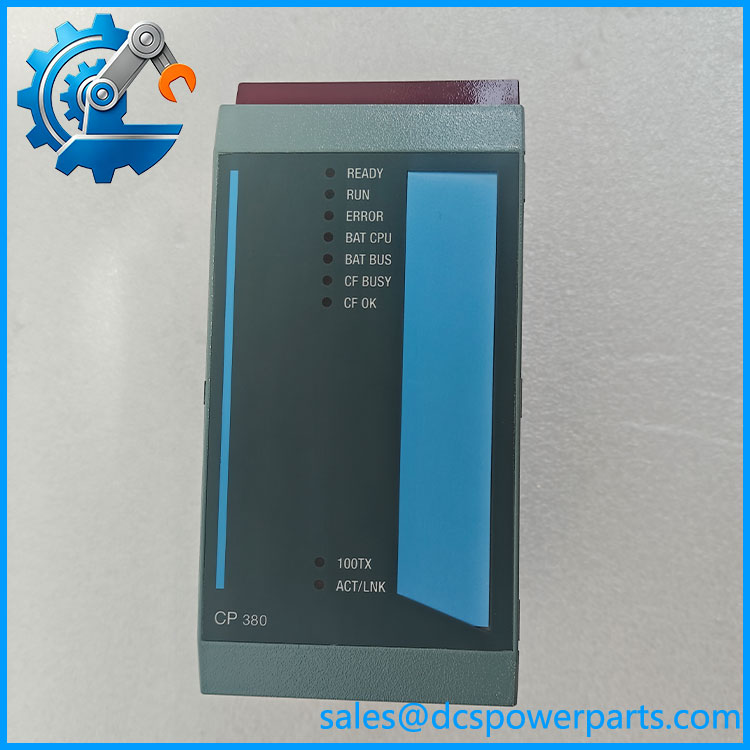
3CP380.60-1
Related Products
| Model | Description |
|---|---|
| 3CP382.60-1 | System 2005 CPU variant with three aPCI interface slots and a different mechanical width |
| 3CP360.60-1 | Related System 2005 CPU variant; verify processor and hardware differences |
| 3CP340.60-1 | Related System 2005 CPU variant; confirm performance and application compatibility |
| 0CFCRD.8192E.02 | 8 GB extended-temperature CompactFlash card listed as compatible accessory |
| 4A0006.00-000 | 3 V, 950 mAh lithium backup battery listed in B&R accessory documentation |
The 3CP382.60-1 has a different expansion-slot count and mechanical format, so it is not an automatic drop-in replacement for the 3CP380.60-1. Confirm the required accessories and controller configuration against the machine’s bill of materials.
Frequently Asked Questions
Q1: What is the B&R 3CP380.60-1 used for?
It is the central CPU module for B&R System 2005 automation systems. It runs the machine-control application and coordinates communication with connected I/O and other configured devices.
Q2: Does the CPU include application memory?
The module has a removable CompactFlash slot, but B&R specifies that the application memory must be ordered separately. Verify whether the original card is available and contains the correct machine application before planning a replacement.
Q3: Which communication interfaces are built in?
The CPU provides one RS-232 interface, one 100BASE-T Ethernet interface, and one USB interface. It also has one slot for an aPCI interface module.
Q4: Can the 3CP382.60-1 replace the 3CP380.60-1?
Not without an engineering compatibility review. B&R lists three aPCI slots and a different mechanical width for the 3CP382.60-1, compared with one aPCI slot on the 3CP380.60-1. Check rack dimensions, installed interface cards, software support, and application requirements before considering a substitution.
Q5: What power consumption should be allowed for?
B&R lists 3 W on the 24 VDC rail and 13 W on the 5 VDC rail, totaling 16 W without the CompactFlash card or interface module. Allow for the additional load of the installed accessories when checking the system power budget.
Q6: What should be checked before ordering a replacement?
Confirm the complete part number, hardware revision, System 2005 rack position, installed aPCI module, CompactFlash card and application, and software/runtime version. Request clear label photographs and test documentation for used or refurbished stock.
Q7: Can the CPU be replaced while the machine is running?
Do not assume that online replacement is supported. Follow B&R’s applicable service instructions and the machine owner’s change-control procedure. Plan for possible control interruption, back up available application data, and validate communications, I/O, motion functions, and interlocks before returning the machine to production.