Description
Key Technical Specifications
| Parameter | Specification |
|---|---|
| Manufacturer | Basler Electric |
| Model | DECS-200N-C1 |
| Product Type | Digital Excitation Control System |
| Series | DECS-200N |
| Excitation Type | Negative Forcing |
| Excitation Output Voltage | 63 VDC / 125 VDC |
| Continuous Excitation Current | Up to 20 ADC |
| Maximum Forcing Current | 40 ADC, subject to operating conditions |
| Rectifier Configuration | Built-in Six-SCR Controlled Bridge |
| Voltage Sensing | Single-phase or three-phase True RMS |
| Voltage Regulation Accuracy | ±0.25% |
| Current Regulation Accuracy | ±1.0% in FCR mode |
| Communication Interface | RS-485 |
| Communication Protocol | Modbus RTU |
| Serial Interface | RS-232 |
| Control Modes | AVR, FCR, VAR, Power Factor |
| Protection Functions | Overexcitation, Underexcitation, Stator Current Limiting |
| Monitoring Functions | Oscillography and Sequence of Events Recording |
| Configuration Software | BESTCOMS |
| Mounting | Panel / Control Cabinet Installation |
Technical verification note: The excitation output ratings are specific to the DECS-200N family. Confirm the actual control-power and bridge-power input requirements from the DECS-200N-C1 nameplate and original wiring documentation before installation.
Product Introduction
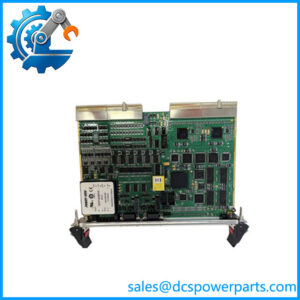
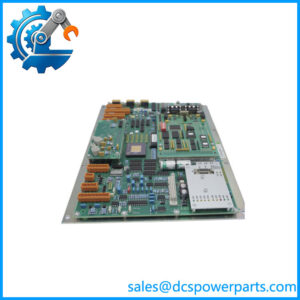
Basler Electric DECS-200N-C1 Digital Excitation Controller
The Basler Electric DECS-200N-C1 is a negative-forcing digital excitation control system designed for synchronous generators. It combines automatic voltage regulation, field current regulation, reactive power control, and power factor control in one unit. Its integrated six-SCR power bridge supports 63 VDC and 125 VDC excitation applications with continuous field current up to 20 ADC.
The controller provides ±0.25% voltage regulation accuracy and supports Modbus communication through RS-485. Its negative-forcing capability helps reduce generator field excitation during specific operating disturbances, making it relevant to generator installations requiring fast excitation response and power system stabilization.
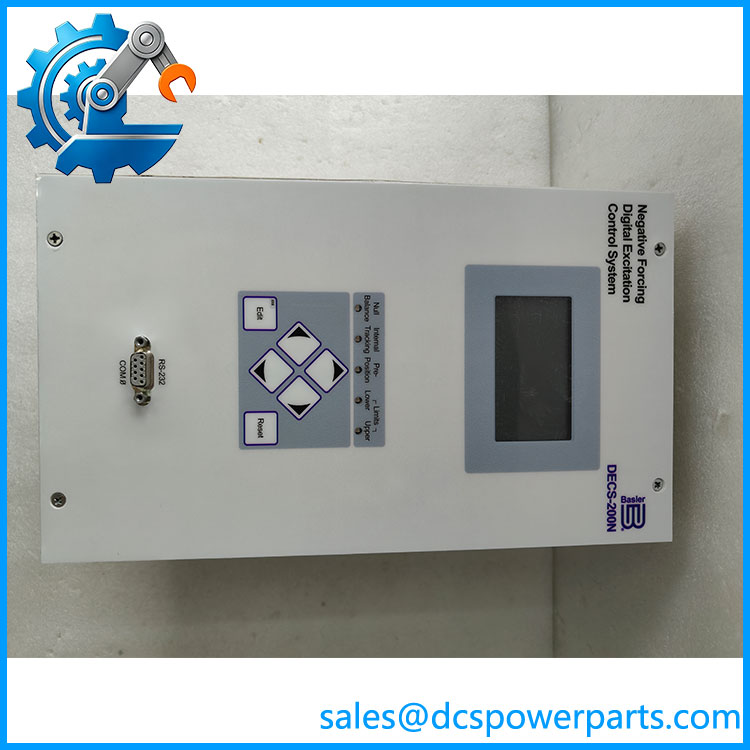
DECS-200N-C1
Application Scenarios & Field Pitfalls
Engineering Pain Point
A generator can experience terminal voltage instability following a sudden load change, particularly when large motors start or reactive power demand shifts rapidly. If the excitation controller responds incorrectly, the result can include voltage fluctuations, poor reactive power sharing, or protective trips.
The -C1 addresses these requirements through digital excitation regulation, programmable limiters, and negative-forcing control. However, replacing an existing excitation controller is not simply a matter of matching the model number. Generator field characteristics, sensing transformer ratios, excitation wiring, and protection settings must all be checked.
Typical Applications
- Thermal Power Plants: Excitation regulation and reactive power management for synchronous turbine generators.
- Hydroelectric Power Stations: Generator terminal voltage control and excitation response during changing grid conditions.
- Industrial Power Generation: AVR control for captive power plants and large industrial synchronous generators.
- Marine Power Systems: Generator excitation regulation and voltage stability in shipboard electrical networks.
Technical Pitfalls to Avoid
1. Excitation Output Compatibility
The supports 63 VDC and 125 VDC excitation applications, with continuous current up to 20 ADC. Do not assume that every generator field winding is compatible with both configurations.
Before commissioning, verify:
- Generator rated field voltage.
- Normal and maximum field current.
- Field winding resistance.
- Positive and negative forcing requirements.
- Excitation transformer and rectifier ratings.
Incorrect field configuration can damage the excitation equipment or generator field circuit.
2. PT/CT Sensing Configuration
Voltage and current feedback signals determine how the regulates generator output. Incorrect PT ratios, CT polarity, or phase connections can cause inaccurate voltage regulation and improper reactive power control.
Check sensing polarity and phase relationships before enabling automatic voltage regulation.
3. Negative Forcing and Protection Coordination
Negative forcing affects how quickly excitation is reduced during certain operating conditions. Its settings must coordinate with generator protection, overexcitation limiting, underexcitation limiting, and the excitation system’s electrical characteristics.
Do not copy parameter settings from another generator without checking its rating and field response.
4. Communication and Configuration Backup
The supports Modbus communication through RS-485. Verify baud rate, parity, device addressing, and register mapping before connecting it to a PLC or SCADA network.
Back up the existing BESTCOMS configuration before replacing or reprogramming a controller.
Field recommendation: Keep the original parameter file, terminal connection drawings, and commissioning records with the replacement unit. A physically compatible controller with incorrect excitation settings is not a safe replacement.
Related Products
The following models and accessories belong to the Basler excitation-control product family or support related generator control applications. They are not automatically interchangeable.
- Another negative-forcing excitation controller configuration. Compare ordering codes, control-power requirements, and communication options before considering it as an alternative to the C1.
- DECS-200-2C
A DECS-200 digital excitation controller configuration. Intended for generator excitation applications with different field-output requirements from the family. - DECS-200-2L
A DECS-200 family configuration with a different ordering designation. Suitable for evaluating alternative excitation-control arrangements, subject to I/O and output compatibility. - DECS-250
A digital excitation control system from Basler’s DECS-250 family. Relevant when evaluating excitation-system upgrades or replacement architectures. - DECS-250N
A negative-forcing excitation-control product family. Worth evaluating for generator installations requiring negative-forcing functionality, although its electrical and mechanical interfaces must be checked independently. - DECS-400
A digital excitation control system for larger generator-control applications. Provides an alternative architecture for projects involving excitation-system modernization. - BE1-25A
Basler synchronism-check relay. Supports generator synchronization by checking voltage, frequency, and phase-angle conditions before breaker closing. - BE1-11g
Generator protection relay used for monitoring and protection functions. It complements an excitation controller but does not replace AVR functionality. - IDP-800
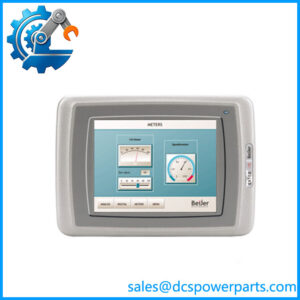
Interactive Display Panel accessory associated with Basler excitation-control applications. Used for operator interaction and system monitoring where supported by the installed configuration.
Procurement and Replacement Advisory
The Basler Electric -C1 is a specialized generator excitation controller, not a standard PLC or DCS I/O module.
Before purchasing a replacement, verify these four items:
- Complete model desi.
- Original manufacturer part number and hardware revision.
- Excitation voltage and continuous field-current requirements.
- Existing configuration backup and terminal wiring compatibility.
Technical References:
Important: The manufacturer documentation should take precedence over third-party specification summaries when approving a replacement or commissioning an excitation system.