Description
Alstom COP232.1 029.210 156 Control Module
Product Introduction
A processor or central control board in an older Alstom cabinet is not a component to replace by family name alone. The Alstom COP232.1 029.210 156 is specifically listed as a COP232.1 assembly with part number 029.210 156, placing it within the Alstom 232 control hardware family.
The available public record confirms the exact model and catalog number, but does not provide enough authoritative information to safely publish detailed CPU, memory, power-consumption, bus, or environmental ratings for this exact configuration. For legacy-system procurement, that limitation is worth stating explicitly: the board marking and original system documentation should take precedence over specifications copied from another COP232 variant.
Key Technical Specifications
| Parameter | Specification |
|---|---|
| Manufacturer | Alstom |
| Product Model | COP232.1 |
| Exact Part Number | 029.210 156 |
| Product Type | Control module / control unit |
| Product Family | Alstom 232 |
| Primary Function | Control-system processing |
| System Application | Industrial control / converter-control architecture |
| Processor Type | Not independently verified |
| Memory Capacity | Not independently verified |
| Communication Interfaces | Not independently verified |
| Working Voltage | Not independently verified |
| Operating Temperature | Not independently verified |
| Installation Method | Verify against the original Alstom rack/system |
| Protection Rating | Not independently verified |
| Physical Dimensions | Not independently verified |
| Condition | Verify actual inventory condition |
The exact 029.210 156 / COP232.1 identification appears in industrial parts references. The sources reviewed do not provide sufficiently reliable primary documentation for the remaining detailed specifications, so those values are intentionally left unconfirmed.
Major Features / Advantages
Exact .1 Identification
The most defensible technical characteristic of this assembly is its exact identification. Industrial references list 029.210 156 .1 under Alstom, providing a direct link between the model designation and catalog number.
That distinction matters in the Alstom 232 family because several modules use similar three-letter designations. A procurement request containing only “” leaves too much room for a wrong revision or related assembly to be supplied.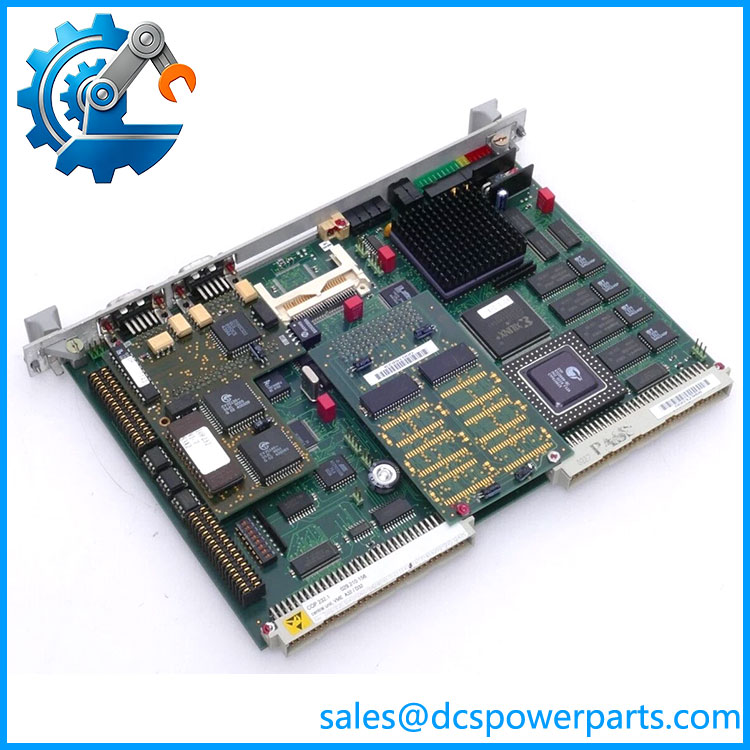
Central Control-System Role
The .1 should be treated as control-system hardware rather than as a generic field I/O module. Its position within the 232 family makes it relevant to the processing and coordination side of the installed control architecture.
This also means replacement should be approached differently from replacing a simple digital input card. Before removing an existing board, maintenance personnel should document the installed assembly, connector positions, configuration markings, and any system-specific settings.
Legacy Equipment Support
The .1 is particularly relevant to maintenance of installed Alstom equipment where the original 232 architecture remains in service. In these situations, retaining the existing architecture may require sourcing an exact board rather than attempting an undocumented substitution.
For procurement teams, the complete number 029.210 156 should remain attached to the item throughout quotation, inspection, testing, and receiving. Do not shorten the request to “.1.”
Documentation Discipline
Public information for this exact part is limited. That is not a reason to manufacture specifications from another series board. Processor type, memory, bus structure, supply requirements, and environmental limits should be confirmed from the original technical file or the physical assembly.
That approach is particularly important when the module is being considered for a production-critical control cabinet.
Physical Identification Matters
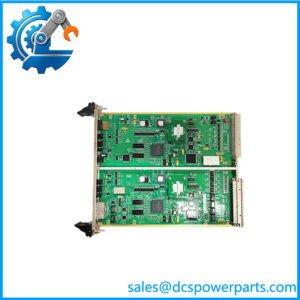
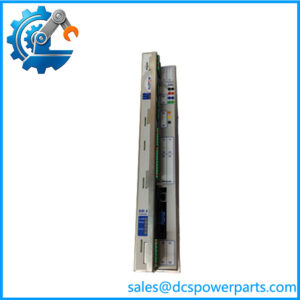
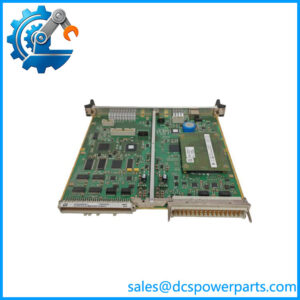
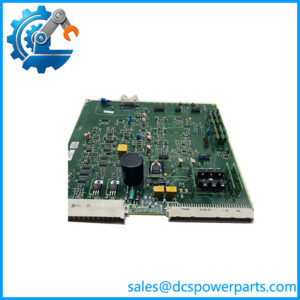
When purchasing legacy electronic assemblies, the actual board should be photographed before shipment whenever possible. The label, part number, revision marking, connector arrangement, and PCB condition provide information that a generic catalog entry cannot.
Application Scenarios & Pain Points
- Legacy Alstom control-system maintenance: Replacement of an existing .1 assembly while retaining the installed 232 architecture.
- Converter-control equipment: Relevant to industrial control systems using Alstom 232-family hardware.
- Planned shutdown maintenance: Useful as a pre-positioned spare where failure of a central control assembly could extend troubleshooting time.
- Control cabinet refurbishment: Applicable when older control hardware must remain operational while a longer-term modernization plan is evaluated.
The practical pain point is identification. A supplier may correctly recognize “.1” while supplying a unit with a different catalog number. For this component, 029.210 156 should therefore be treated as part of the product identity, not merely an optional ordering detail.
Related Products
The following Alstom 232-family references are useful when mapping the surrounding control architecture. They are related components, not automatic substitutes.
- DAP232 — 590.043150: Unit processor reference in the Alstom 232 family.
- DEP232 — 590.043152: Digital input module; functionally different from .1.
- DAU232 — 590.043151: Digital-to-analog conversion module.
- DIZ232.1 — 029.223 004: Counter / counting input module.
- BIO232 — 029.209 132: Binary input/output module.
- SRE232.1 — 029.228 675: Drive control module.
- CAN232.2 — 029.356 519: CAN bus communication-board reference.
- VCM232.2 — 029.359 088: VME configuration-manager master reference.
The surrounding part-number structure is useful when reconstructing an older 232 cabinet, but functional compatibility must be established from the original system documentation.
Engineer’s Guide: Field Pitfalls to Avoid
1. Do not order by model family alone
Specify:
Alstom .1 — 029.210 156
The complete catalog number is the critical procurement identifier.
2. Do not substitute another 232 processor without documentation
The 232 family contains multiple processing and interface assemblies. A visually similar board does not establish electrical or firmware compatibility.
3. Verify the physical board marking
Before accepting a replacement, compare the actual label against 029.210 156. Photograph both sides of the assembly and record any revision, modification, or repair markings.
4. Do not assume processor or memory specifications
Public sources establish the .1 / 029.210 156 identification, but they do not adequately establish the exact CPU, RAM, ROM, clock rate, or firmware arrangement for this part. Those parameters should come from Alstom documentation or controlled engineering records.
5. Check the host rack and interfaces
Before installation, verify the rack position, backplane/interface arrangement, mating connectors, adjacent modules, and system configuration. A correct part number does not by itself prove that an arbitrary cabinet architecture is compatible.
6. Check firmware and configuration dependencies
If the board contains application-specific configuration or firmware, record the installed version before removing the original unit. A hardware replacement can still fail to restore service if the configuration expected by the surrounding system is not reproduced.
7. Inspect actual inventory condition
For legacy control hardware, condition should be established from the actual unit. Check connectors, PCB contamination, corrosion, repaired areas, component discoloration, labels, and evidence of unauthorized modification. “In stock” is not the same as installation-ready.
FAQ
What is Alstom .1 029.210 156?
It is an Alstom .1 control-system assembly, identified by part number 029.210 156, within the Alstom 232 family. The exact model/part-number pairing is documented in industrial parts references.
What is the exact part number?
The exact ordering identification is 029.210 156. For procurement, specify the model and number together: .1 / 029.210 156.
Is .1 a digital input module?
It should not be classified as a general-purpose digital input card. The available references identify it specifically as , while separate 232-family references identify DEP232 as the digital input module.
Is .1 interchangeable with DAP232?
No interchangeability should be assumed. DAP232 and .1 have different model designations and part numbers. They should be evaluated against the original system architecture rather than treated as generic processor replacements.
Can the CPU and memory specifications be confirmed?
Not reliably from the public sources reviewed for the exact 029.210 156 configuration. Publishing CPU speed, RAM, ROM, or firmware specifications without primary documentation would create an unnecessary procurement risk.
What should be checked before replacement?
Verify the complete part number, physical revision markings, rack position, connectors, surrounding modules, firmware/configuration information, and the condition of the replacement board. If the application is production-critical, compare the replacement against the original equipment documentation before energization.
What should procurement request from a supplier?
Request photographs of the actual .1 / 029.210 156 assembly, including the identification label and PCB markings. For used or refurbished hardware, request the available functional-test record and disclose whether the unit has been previously installed or repaired.