Description
Product overview
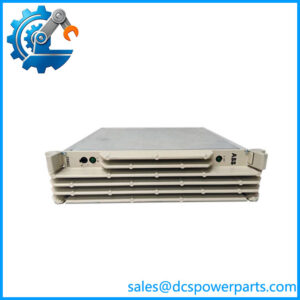
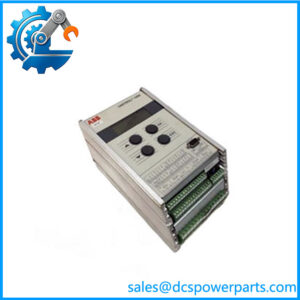
The ABB REF610C11HCNR01 feeder protection relay belongs to ABB’s REF610 protection relay family, designed to protect electrical feeders in industrial power distribution systems. The REF610 monitors current signals from instrument transformers and evaluates them against configured protection settings. Depending on the installed version and settings, it can detect overcurrent and earth-fault conditions and initiate circuit-breaker tripping through its output contacts. It is intended for electrical protection applications, rather than general-purpose PLC control or process I/O.
REF610 relays are used where feeders need dedicated protection, fault indication, and integration with an electrical control or monitoring system. The product family supports different phase-current and earth-fault input ratings, auxiliary power supplies, digital input/output arrangements, and communication options. These options are encoded in the complete order number, making accurate identification essential when replacing an installed relay. ABB’s technical documentation also describes the relay’s local human-machine interface, event and fault indications, and configurable protection functions.
For the ABB REF610C11HCNR01, the supplied code appears to indicate 1 A phase-current inputs, 1 A earth-fault current input, and an H-type auxiliary supply. However, the complete suffix should be verified before procurement because the provided string does not map cleanly to every option in the published ordering key. Confirm the communication module, digital I/O configuration, and language set from the installed relay label or configuration records. This is particularly important when replacing a relay in an operating switchgear lineup, where incorrect current-input or trip-output arrangements can affect protection coordination.
Product introduction
The REF610 is an electronic feeder protection relay used to monitor electrical currents and respond to configured fault conditions. Its protection logic works with the connected current transformers and circuit-breaker trip circuit. Correct operation therefore depends on suitable CT ratios, correct secondary wiring, appropriate protection settings, and verification of the output contacts and trip path. Replacing the relay without checking these interfaces can leave the feeder incorrectly protected even if the replacement powers up normally.
Before installing a replacement, record the complete type code, serial number, CT input ratings, auxiliary supply, communication interface, and protection settings. Compare the settings with the approved coordination study and commissioning records. After installation, perform the applicable secondary-injection tests, binary-input/output checks, and circuit-breaker trip-circuit verification under the site’s electrical safety procedures. Do not assume that a relay with the same REF610 family designation contains identical hardware options or settings.
Key technical specifications
| Parameter | Specification |
|---|---|
| Manufacturer | ABB |
| Model supplied | REF610C11HCNR01 |
| Product family | REF610 |
| Product type | Feeder protection relay |
| Primary application | Electrical feeder protection |
| Protection functions | Overcurrent and earth-fault protection, subject to relay configuration |
| Phase-current input | Appears to be 1 A; confirm against nameplate |
| Earth-fault current input | Appears to be 1 A; confirm against nameplate |
| Auxiliary supply | H-type option is associated with 100–240 VAC / 110–250 VDC |
| Digital inputs | Configuration-dependent |
| Output contacts | Configuration-dependent |
| Communication interface | Not confirmed for the complete supplied code |
| Communication protocols | Depends on the installed communication module and configuration |
| Display and local operation | Local HMI provided on the relay family |
| Mounting | Verify case and panel arrangement on the installed unit |
| Firmware / configuration | Confirm compatibility with the existing application and settings |
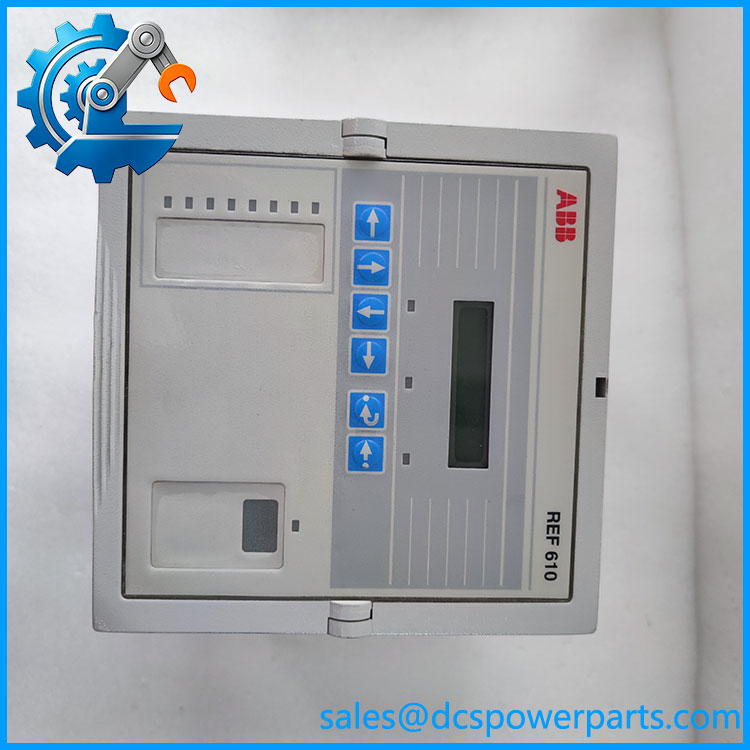
REF610C11HCNR01
Technical note: The family manual describes multiple hardware configurations. The table above distinguishes family-level features from code details that still require confirmation. Do not use the apparent current-input and supply-code interpretation as a substitute for checking the complete relay label and wiring diagram.
Related products
- ABB series: Other variants with different current-input ratings, auxiliary supplies, and communication options.
- ABB REF611: A related feeder protection and control relay family, but with a different product architecture and ordering scheme.
- ABB REJ610: A related feeder protection relay designation; verify application and hardware compatibility before considering it.
- ABB REA101: An arc-protection unit that can be used in suitable protection arrangements; it is not a replacement for the .
- Current transformers (CTs): Must match the relay’s current-input rating and the feeder protection design.
- Circuit-breaker trip circuit and auxiliary contacts: Must be checked as part of the complete protection system.
These are related devices or system components, not confirmed drop-in replacements. A substitute relay must be checked for protection functions, current-input ratings, supply voltage, trip-output arrangement, communication interface, and settings compatibility.
Frequently asked questions
Q1: What is the ABB REF610C11HCNR01?
It is identified as an ABB -series feeder protection relay by its model designation. The family is designed for feeder protection, including overcurrent and earth-fault protection functions depending on configuration.
Q2: What does the relay protect against?
Its configured protection functions can detect overcurrent and earth-fault conditions and initiate a trip response. The actual functions and settings must be confirmed from the installed relay configuration and protection study.
Q3: Does the code indicate 1 A current inputs?
The 11 segment appears consistent with the ordering scheme for 1 A phase-current inputs and 1 A earth-fault current input. Confirm this interpretation against the full order-code label before wiring or commissioning.
Q4: What auxiliary supply does this version use?
The H supply designation in ABB’s ordering documentation corresponds to 100–240 VAC or 110–250 VDC. Confirm that the complete code and installed relay match this configuration before applying power.
Q5: Does REF610C11HCNR01 support RS-485 communication?
The letter R is associated with an RS-485 communication option in the ordering scheme. Because the complete code supplied does not align unambiguously with the published option sequence, verify the communication module from the relay label or hardware documentation before planning a connection.
Q6: Can another model replace it?
Not automatically. Different versions can have different current-input ratings, supply arrangements, I/O options, and communication modules. The full ordering code and application settings must be compared before substitution.
Q7: What should be checked before purchasing a replacement?
Confirm the complete order number and serial number, current-input ratings, auxiliary supply, communication and I/O configuration, physical case arrangement, and availability of the existing relay settings. Ask the supplier for photographs of the actual unit and any available test records.
Procurement recommendation
When sourcing the ABB REF610C11HCNR01, request a clear photograph of the complete type label and verify the full ordering code against ABB’s documentation. The key checks are the current-transformer input ratings, auxiliary supply, communication interface, and output-contact arrangement.
Before ordering, ask the supplier to confirm:
- The exact model and hardware configuration.
- The unit’s condition: new, unused surplus, refurbished, or used.
- Whether functional testing was performed and what records are available.
- Whether the original relay settings and configuration can be retained or restored.
- Stock status, dispatch estimate, warranty terms, and return conditions.
For a feeder protection application, do not approve the replacement solely because it belongs to the family. Confirm the hardware configuration, restore the approved protection settings, and validate the trip path before returning the feeder to service.