Description
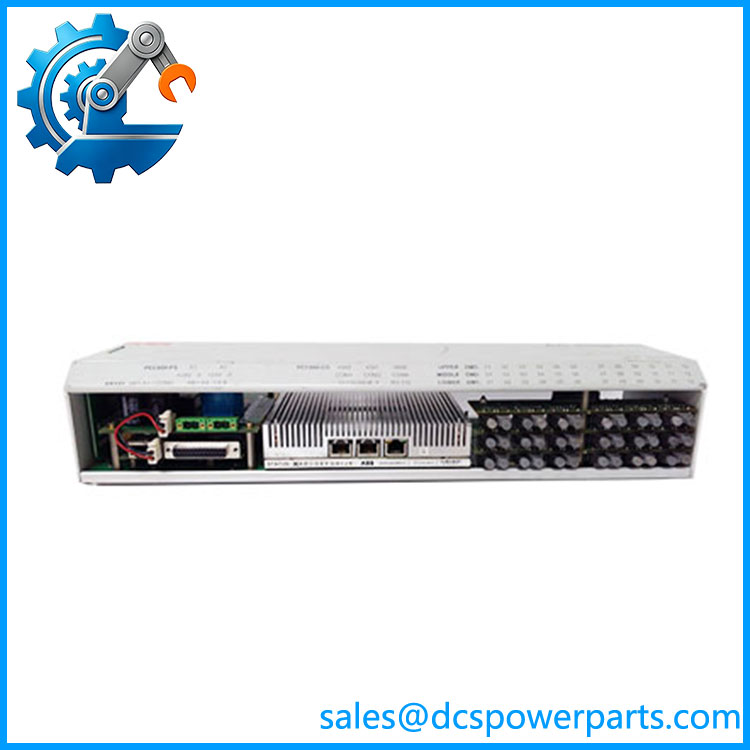
ABB PPD103B101 | 3BHE020455R0101 | AC 800PEC Excitation Controller
Key Technical Specifications
| Parameter | Specification |
|---|---|
| Manufacturer | ABB |
| Model | PPD103B101 |
| ABB Part Number | 3BHE020455R0101 |
| Product Family | PPD113 / AC 800PEC |
| Component Type | Control module |
| Primary Application | Excitation / power-electronics control |
| System Role | Controller hardware |
| Related Part Number | 3BHE023784R2630 appears in some PPD113 references |
| Hardware Generation | Legacy AC 800PEC-related architecture |
| Detailed I/O | Configuration-dependent; verify from system documentation |
| Communication Interfaces | Verify against the installed system configuration |
| Supply Requirements | Verify from the specific hardware documentation |
Procurement caution: several secondary listings incorrectly describe PPD103B101 as a generic 16-channel digital input module and assign it 24 VDC input characteristics. Those claims conflict with the broader PPD113/AC 800PEC identification and should not be used as the basis for an engineering replacement.
Product Introduction
The ABB PPD103B101 (3BHE020455R0101) is a legacy controller assembly associated with ABB’s PPD113 / AC 800PEC power-electronics control architecture. References place this hardware in static excitation and related power-control applications, where the controller forms part of the electronic control system governing power-conversion equipment.
For a plant maintaining an older excitation system, the exact assembly identification is more important than a generic description such as “PLC controller.” The PPD103B101 belongs to a specialized power-electronics control environment, so replacement decisions should be based on the complete controller configuration, application software, connected boards, and hardware revision.
Application Scenarios & Field Pitfalls — The Engineer’s Perspective
Engineering Pain Point
A controller failure in an excitation cabinet can be mistaken for a thyristor, firing, sensing, or communication problem. Replacing the controller without checking the surrounding power-electronics control chain can leave the original fault unresolved.
PPD103B101 3BHE020455R0101
Typical Applications
- Static generator excitation systems
- ABB AC 800PEC-based power-electronics control
- Generator voltage and excitation-control equipment
- Legacy industrial power-conversion systems
- Maintenance of installed PPD113-family control hardware
Technical Pitfalls
1. Do not classify it as a conventional PLC I/O module.
Some reseller databases call PPD103B101 a 16-channel digital input module, but other references associate the exact part number with the PPD113 excitation-controller family. The latter identification is much more consistent with the available system-level references.
2. Verify the complete ABB part number.
The correct identification is — 3BHE020455R0101. Similar PPD-series assemblies can have substantially different functions.
3. Check the application hardware around the controller.
An excitation controller normally works with sensing, firing/control, power-converter, and interface hardware. The controller should be evaluated as part of that complete architecture.
4. Software compatibility matters.
For legacy AC 800PEC equipment, the replacement hardware should be checked against the installed application and engineering environment. A physically matching board does not automatically guarantee that the existing application will operate without restoration or reconfiguration.
5. Do not use unverified electrical specifications for a replacement decision.
Published secondary sources give conflicting voltage, I/O, and communication information for this exact part number. Until the original ABB hardware documentation or nameplate configuration is available, those values should be treated as unconfirmed.
6. Verify revision and hardware markings.
When sourcing a used or surplus , compare the complete label, revision, PCB markings, connectors, and any associated assembly numbers against the installed unit.
7. Check whether the project actually uses the architecture.
The exact relationship between and other variants is not sufficiently documented in the accessible primary sources to recommend blind interchangeability. A system drawing or existing controller label is preferable.
Related Products
- — controller family designation associated with and the AC 800PEC excitation-control architecture.
- ABB PPD113B01-10-150000 / 3BHE023784R1023 — related controller variant listed alongside .
- ABB PPD512A10-15000 / 3BHE040375R1023 — AC 800PEC excitation-control hardware from a later PPD family.
- ABB PPD513A0E110110 / 3BHE039724R0E41 — AC 800PEC controller associated with excitation/power-electronics applications.
- ABB PPD517A3011 — later-generation converter/excitation controller family.
- ABB PPD239A1102 — PEC80-MINI power-electronics controller; different platform and should not be treated as a direct substitute.
- ABB PPD239A1106 — another PEC80-MINI controller variant for excitation applications.
- ABB GFD563A101 — excitation controller hardware from a different ABB control architecture.
- ABB GFD233A101 — static excitation-system controller from another ABB product family.
Procurement Note
For , I recommend specifying the full identification as:
ABB — 3BHE020455R0101
For a replacement RFQ, also provide the installed excitation-system model, controller revision, adjacent PPD/PEC modules, cabinet drawing reference, and photographs of the nameplate/connectors. That is especially important here because publicly indexed secondary specifications for this part are inconsistent.
If the application is a critical generator excitation system, I would not approve a substitute based on the part number alone. Confirm the complete hardware and software configuration first.