Description
ABB HC800A HPC800 Control Processor Module
Product Introduction
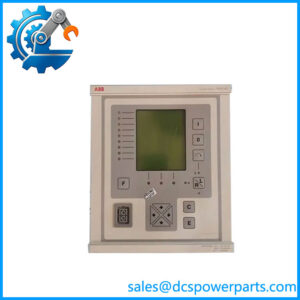
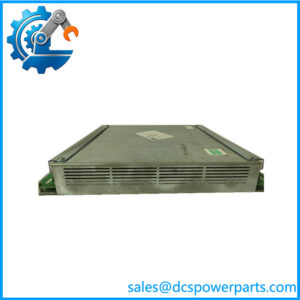
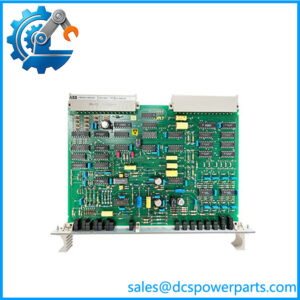
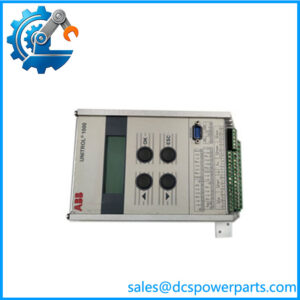
The ABB HC800A HPC800 Control Processor Module is the central processing module used in ABB’s HPC800 controller architecture within the Symphony Plus SD Series. It is designed to execute configured control strategies and function blocks rather than provide field-level I/O directly. ABB specifies support for up to 30,000 function blocks, giving the HPC800 platform the processing capacity required for substantial process-control applications. The HC800A is the conformal-coated version, making the coating distinction important when matching installed hardware and maintenance stock.
The ABB HC800A also supports Modbus TCP communication, allowing the HPC800 control platform to exchange process information with compatible Ethernet-based devices and systems. The wider HPC800 architecture can work with SD Series I/O, Harmony Rack I/O, and S800 I/O, while ABB documentation describes support for industry-standard fieldbus and network integration. The controller architecture is intended for continuous, sequential, batch, and other process-control applications.
From a maintenance perspective, the ABB HC800A should be treated as a controller-specific processor rather than a generic CPU replacement. The processor, controller base, communication processor, terminal boards, I/O network, engineering configuration, firmware, and battery-backed data all form part of the operating system. The exact controller configuration should therefore be checked before substitution. ABB lists HC800A separately from the standard HC800, while current product records identify as the coated version.
Technical Specifications
| Parameter | Specification |
|---|---|
| Product Model | |
| Manufacturer | ABB |
| Product Type | Control Processor Module |
| Controller | |
| Automation Family | Symphony Plus SD Series / Harmony |
| Function Block Capacity | Up to 30,000 |
| Communication | Modbus TCP |
| Product Construction | Conformal-coated |
| Product Classification | Central Unit |
| Dimensions — Depth | 78.74 mm |
| Dimensions — Height | 243.84 mm |
| Dimensions — Width | 210.82 mm |
| Net Weight | 0.88 kg |
| Battery | 1 × lithium button cell |
| Battery Type | Button cell |
| Mounting | controller assembly |
| Operating Voltage | Not established from the available product sheet |
| Operating Temperature | Not established from the available product sheet |
| Protection Rating | Not established |
| I/O Capacity | System-dependent; not a direct I/O module |
| Coating | Conformal coating |
ABB’s current product sheet provides the dimensions, weight, battery information, function-block capacity, Modbus TCP capability, and coated construction. It does not specify an independent operating-voltage, IP-rating, or temperature specification for in that sheet, so those values should be taken from the applicable system documentation rather than guessed.
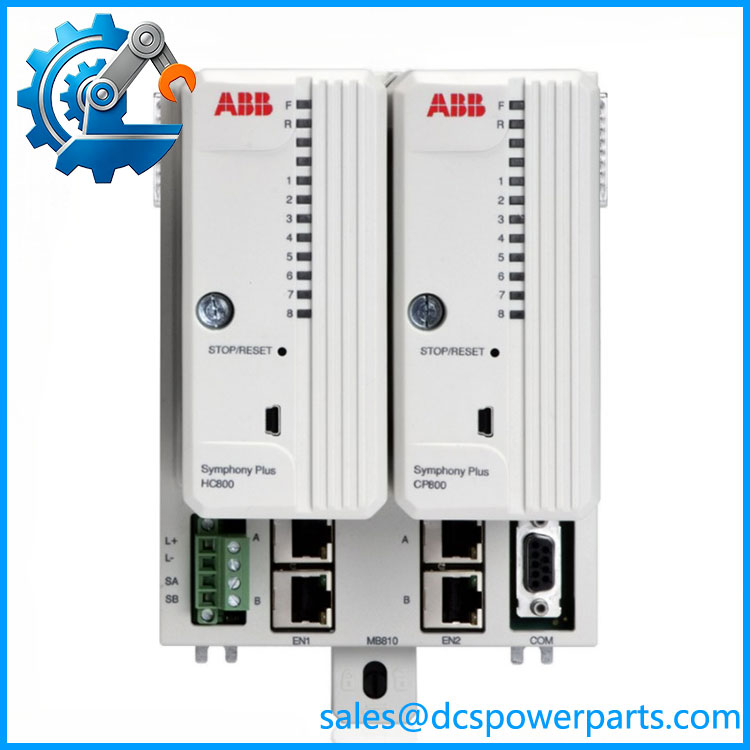
ABB HC800A
Main Features and Engineering Considerations
Central Processor
is the processing core of the controller. It executes the configured control strategy and function blocks while working with the associated hardware. It should not be confused with CP800A, which serves as the communication processor for PN800 plant-network communications. Current ABB-related product records list these as separate modules.
30,000 Function-Block Capacity
ABB specifies support for up to 30,000 function blocks. This is a controller-level capacity rather than an indication of the number of physical I/O channels connected directly to . The actual plant configuration depends on the controller architecture, I/O subsystem, engineering configuration, and application strategy.
Modbus TCP
Modbus TCP support gives the platform Ethernet-based connectivity to compatible devices and systems. For an existing installation, verify the actual communication architecture rather than assuming that Modbus TCP is the only network interface in use. Network addressing, device mapping, polling configuration, and engineering database configuration can all affect successful replacement.
Conformal-Coated Construction
The designation is significant because ABB identifies this version as the conformal-coated control processor. The coating is intended for applications where additional environmental protection of the electronics is required. It should not be treated as merely a cosmetic revision; when replacing a coated module, verify the original equipment specification and environmental requirements.
Integration with I/O
The architecture can communicate with SD Series I/O, Harmony Rack I/O, and S800 I/O. ABB documentation also describes HN800 redundant I/O networking and integration of field devices, IEDs, and third-party PLCs through standard networks and fieldbuses.
Battery Consideration
ABB’s product data identifies one lithium button cell. For maintenance work, battery status and replacement procedures should be checked before removing a controller from service. Do not assume that all configuration or runtime data is stored independently of the battery-backed hardware.
Application Scenarios
- Symphony Plus SD Series process-control systems
- controller installations
- Power-generation automation
- Continuous process control
- Sequential control applications
- Batch-control applications
- Harmony system modernization
- Legacy SD Series controller maintenance
- Replacement and maintenance inventory
- Ethernet/Modbus TCP process integration
Engineer’s Guide: Field Pitfalls
Do not confuse with CP800A. is the control processor, while CP800A is the communication processor associated with PN800 plant-network communications.
Do not ignore the “A” suffix. ABB identifies as the conformal-coated version. If the installed controller is specified for a coated environment, replacing it with a standard HC800 should be evaluated carefully.
Check the complete assembly. Processor compatibility alone does not establish compatibility with the MB810A base, CP800A, CTB810A/CTB811A communication terminal boards, I/O network, or installed controller configuration.
Preserve the controller configuration before replacement. Record the existing engineering database, controller configuration, firmware/software baseline, network parameters, and application information before removing the processor.
Verify the battery condition. The ABB product data specifies one lithium button cell. Battery condition should be included in preventive-maintenance checks.
Do not assume Modbus TCP is the complete communication architecture. ‘s Modbus TCP capability does not replace the separate controller and plant-network communication hardware used elsewhere in the system.
Check I/O architecture before commissioning. can work with several I/O families, including SD Series, Harmony Rack, and S800 I/O. The existing I/O topology and network configuration must remain compatible after processor replacement.
Frequently Asked Questions
What is ABB ?
ABB is a Control Processor Module for the controller in the Symphony Plus SD Series / Harmony control architecture. ABB identifies it as a central control unit.
How many function blocks does support?
ABB specifies support for 30,000 function blocks.
Does support Modbus TCP?
Yes. ABB’s product description specifically identifies Modbus TCP communication as a capability of .
Is an I/O module?
No. is the control processor of the . Physical process I/O is handled through the associated I/O architecture.
What is the difference between HC800 and ?
The is identified by ABB as the conformal-coated version. Standard HC800 and should therefore be matched according to the installed system’s environmental and hardware requirements.
What system uses ?
is used with the controller within ABB’s Symphony Plus SD Series / Harmony architecture. ABB describes as supporting SD Series I/O, Harmony Rack I/O, and S800 I/O.
Is a standalone controller?
No. It is a processor module within the controller assembly. The complete controller requires its associated base, communication hardware, terminal boards, I/O network, power arrangement, and configured application environment.
Procurement Note
For procurement, specify ABB — Control Processor Module of , and explicitly state that the required version is the conformal-coated . Do not substitute HC800, , CP800A, or a complete controller kit solely because the modules appear physically similar.
For a replacement unit, verify the controller configuration, firmware/software baseline, battery condition, installed I/O architecture, communication modules, and engineering application. ABB’s current documentation confirms the core identity and specifications, while system-level compatibility must be established from the actual installation.