Description
Key Technical Specifications
| Parameter | Specification |
|---|---|
| Manufacturer | ABB |
| Model | AV94A |
| Main Part Number | HESG440940R11 |
| Assembly Reference | HESG216791/A |
| Product Type | Legacy Control / Electronics Module |
| Product Family | AV94A |
| Application | Industrial Automation / Control Systems |
| Installation | System-specific ABB control hardware |
| Communication | Application-dependent |
| Input/Output Configuration | Application-dependent |
| Operating Voltage | Not reliably documented in available sources |
| Operating Temperature | Not reliably documented in available sources |
| Mounting | Cabinet / system-specific |
| Status | Legacy / older-generation hardware |
Procurement caution: Publicly available descriptions disagree on the exact functional classification of this assembly, with some identifying it as a control module and others labeling it as an analog or drive-related board. I would not publish an assumed voltage, channel count, communication protocol, or output rating without the original ABB documentation or a clear nameplate photograph.
That distinction matters during replacement. A wrong technical description can lead to an electrically incompatible substitute even when the part number appears similar.
Application Scenarios & Pain Points
The main problem with this type of legacy ABB hardware is identification. A cabinet may contain several boards with visually similar connectors, while the application depends on a very specific hardware revision.
- Legacy ABB control cabinets: Used where an existing AV94A assembly remains part of an installed control architecture.
- Plant maintenance spares: A sensible candidate for strategic spare inventory when the original system cannot be economically migrated immediately.
- Control-system repair: The complete AV94A / HESG440940R11 / HESG216791/A identification helps maintenance personnel distinguish this assembly from neighboring ABB boards.
- Legacy system replacement: Useful when an engineer needs to restore an existing installation rather than redesign the control architecture.
Field note: Before accepting a replacement, compare the connector arrangement and PCB markings with the failed board. Check for oxidation around edge connectors and inspect the board for heat discoloration—small physical differences can expose a revision mismatch before power is applied.
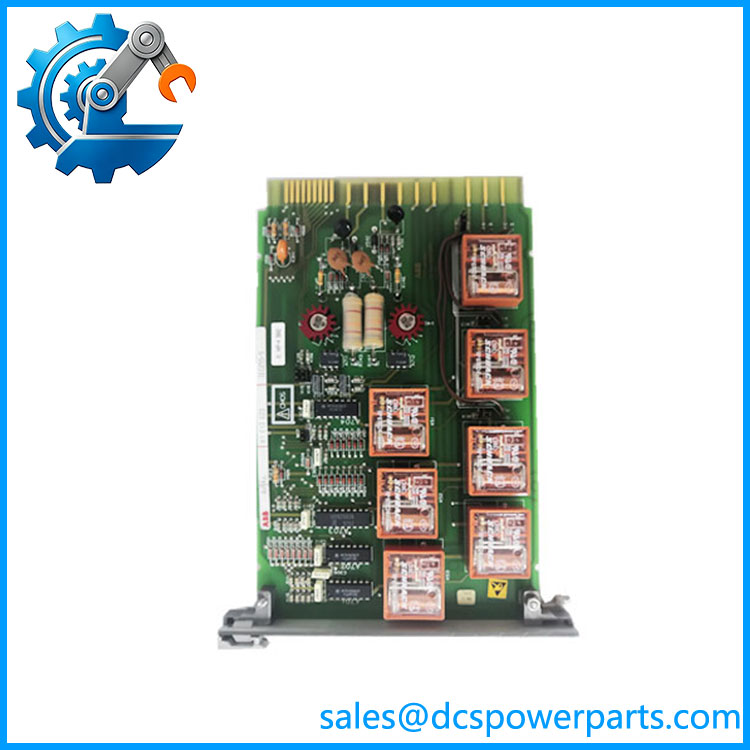
AV94A HESG440940R11
Related Products
- ABB AV94A HESG440940R11 HESG216791/A — Exact assembly covered here. All three identifiers should be retained when requesting a replacement.
- ABB 216EA61B — Older ABB control/electronics hardware from a related legacy generation. It should not be treated as a functional substitute without system documentation.
- ABB 216DB61 — Legacy ABB electronics module commonly encountered in older automation installations. Its function differs from the AV94A assembly.
- ABB 216BM61B — Another legacy ABB module using the HESG identification convention. Useful as a reference when identifying older cabinet architectures, but not a direct substitute.
- ABB 216GD61A — Older ABB electronic module with a different hardware function. Compatibility depends on the original system design.
- ABB UFC718AE101 HIEE300936R0101 — ABB industrial electronics module from a later/different hardware family; potentially relevant when evaluating broader system modernization, not as a drop-in replacement.
- ABB UAC389AE02 HIEE300888R0002 — ABB control hardware from another legacy platform. It should be considered an alternative only after the complete system architecture is identified.
- ABB KUC711AE01 3BHB004661R0001 — ABB control/drive-related electronics from a different product generation. Functional and electrical compatibility must be established before substitution.
The Engineer’s Guide: Field Pitfalls to Avoid
⚠️ Do not buy from “” alone.
is not enough information for procurement because the assembly is also identified by HESG440940R11 and HESG216791/A.
How to avoid it: Put all three identifiers on the purchase specification and request photographs of the actual nameplate/PCB markings.
⚠️ Do not assume the published functional descriptions are accurate.
Available secondary references classify this hardware inconsistently.
How to avoid it: Verify the installed cabinet drawing, board schematic, connector assignment, and original ABB documentation before specifying electrical characteristics.
⚠️ Watch for hardware-revision mismatch.
A visually similar legacy board can have different component revisions or firmware/configuration requirements.
How to avoid it: Record revision markings before removal. Compare PCB layout, connector keys, jumpers, labels, and any firmware/configuration information before energizing the replacement.
Frequently Asked Questions (FAQ)
What is ABB HESG440940R11 HESG216791/A?
It is an ABB legacy industrial control/electronics assembly identified by the designation and the HESG440940R11 and HESG216791/A part references. Multiple industrial automation references associate these identifiers with the same ABB hardware.
Is a PLC CPU?
It should not be automatically classified as a conventional PLC CPU. Available references describe it broadly as control/electronics hardware, but reliable public documentation for its exact architecture is limited.
What is the operating voltage of ?
A reliable primary-source specification for the operating voltage was not found in the available documentation. Do not use a generic voltage value from a reseller listing for system design or replacement approval.
Are and /A separate products?
They appear to be identification references associated with the assembly rather than separate products. For purchasing, retain both references together with .
Can I replace with another ABB control module?
Not without an engineering comparison. The fact that another ABB board has similar dimensions or connectors does not establish electrical or functional compatibility.
Check:
- Complete part number
- Hardware revision
- Connector arrangement
- Cabinet/rack position
- Power requirements
- Signal assignment
- Firmware/configuration
- Adjacent-module dependencies
How should a refurbished be tested?
A basic power-on test is not enough for a legacy control board. Ideally, the supplier should provide:
- Nameplate and PCB photographs.
- Hardware-revision identification.
- Visual inspection report.
- Power-up test.
- Relevant I/O or interface testing.
- Functional test in an appropriate test setup.
- Test date and report.
- Warranty terms.