Description
Key Technical Specifications
| Parameter | Value |
|---|---|
| Manufacturer | ABB |
| Model | APBU-44C |
| Product ID | 64669982 |
| ABB Type Designation | PPCS BRANCH. & DA APBU-44C |
| Product Type | PPCS Branching Unit / Data Logging Unit |
| Product Family | ACS800 |
| Primary Application | Parallel converter modules |
| Function | Signal/data branching and converter data logging |
| Auxiliary Supply | 24 VDC |
| Typical Current Consumption | 400 mA |
| Maximum Listed Current | 400 mA |
| Weight | Approx. 0.9 kg net |
| Gross Weight | Approx. 0.945 kg |
| Typical System | ACS800-104 / ACS800-67 |
| Installation | Converter cabinet / system assembly |
| Country References | Finland, Estonia, India |
| Lifecycle | Legacy ACS800 hardware |
ABB’s ACS800-67 technical documentation lists APBU-44C at 24 VDC with 400 mA nominal and 400 mA maximum current in its auxiliary-device power table.
ABB also documents the APBU-44C as the unit that implements parallel connection of multiple grid-side or rotor-side converter modules and includes a datalogger for collecting and storing real-time data from power stages for fault tracing and analysis.
Do not confuse this unit with a 44 kW power module. Some secondary listings make that mistake. ABB’s own documentation identifies APBU-44C as a branching and data-logging unit, not the converter power stage.
Product Introduction
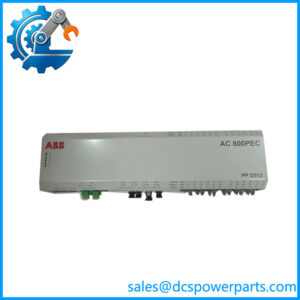
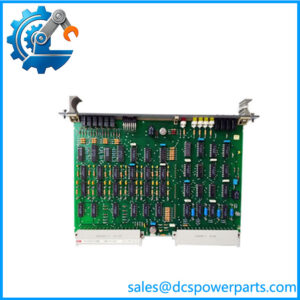
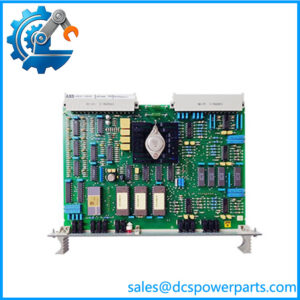
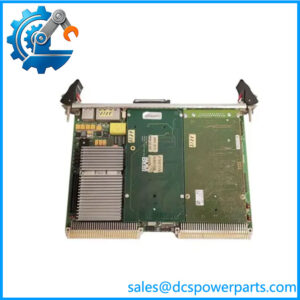
ABB APBU-44C 64669982
The ABB 64669982 is a PPCS branching and data-logging unit used in ACS800 converter systems. Its job is to manage the communication/branching associated with multiple converter modules and collect real-time information from the power stages for diagnostic purposes.
This is particularly important in parallel-converter installations. The is not the device producing motor or generator power; it sits in the control and communication architecture around the converter power modules. ABB lists it as an option within converter assemblies, including -104 variants.
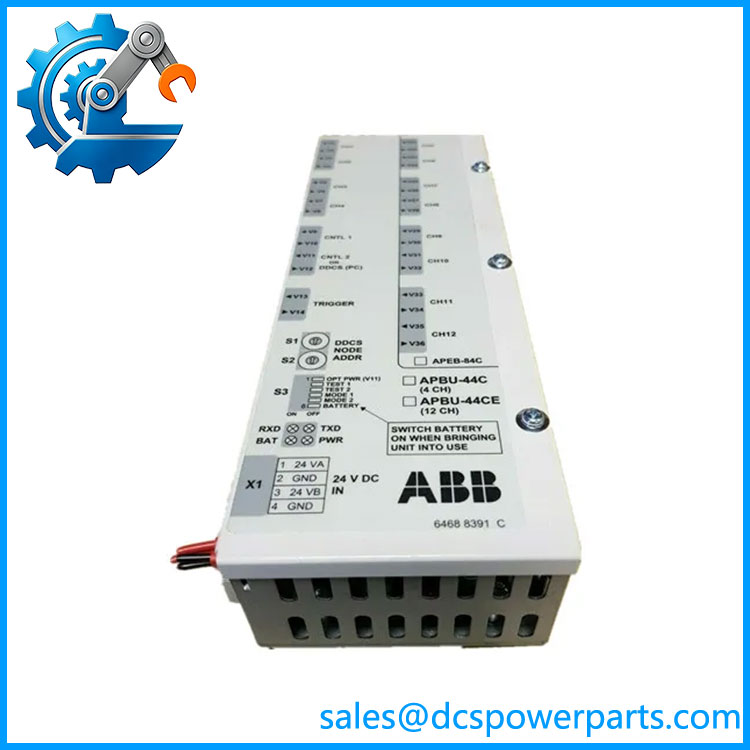
APBU-44C 64669982
Application Scenarios & Field Pitfalls
Engineering Pain Point
A parallel converter system can produce confusing faults when the communication path between converter modules is disturbed. Several power stages may be electrically healthy while the control system reports communication or synchronization-related faults. With an , engineers should inspect the branching unit, its 24 VDC supply, associated communication connections, and converter-module topology before replacing individual power stages.
Typical Applications
- Wind Turbine Converters — Parallel grid-side or rotor-side converter modules in ABB -67 systems.
- Power Conversion Systems — -104 converter assemblies using multiple parallel converter modules.
- Regenerative Drive Systems — Converter architectures requiring coordinated communication between multiple power modules.
- High-Power Industrial Drives — Parallel converter arrangements where a single control architecture manages multiple power stages.
ABB specifically documents in the -67 wind-turbine converter architecture and states that it can connect multiple grid-side or rotor-side converter modules in parallel.
Technical Pitfalls to Avoid
- Do not mistake for a power module.
The is a branching/data-logging unit. The actual power conversion is performed by the associated converter modules. - Verify the exact architecture.
ABB lists in connection with multiple -104 configurations, including -104A, 104BV2, 104C, 104DV2, 104LCA, and 104LCB. Confirm the installed system before substitution. - Check the 24 VDC auxiliary supply.
ABB’s technical data lists approximately 400 mA consumption for . A weak or unstable auxiliary supply can create intermittent control/network faults. - Inspect the branching connections.
Because the sits between multiple converter modules, one bad connection can produce several downstream communication symptoms. - Do not troubleshoot it as an ordinary PLC module.
is tightly integrated with the ABB power-converter architecture. Its function depends on the connected converter modules and their PPCS communication arrangement. - Check the datalogging function during fault investigation.
The unit is intended to collect real-time data from converter power stages for fault tracing. If diagnostic information becomes unavailable, investigate and its connections as part of the fault path. - Do not substitute a generic communication hub.
A generic network device does not reproduce the ABB PPCS branching and converter-data functions. - Document all connections before replacement.
In a multi-converter cabinet, cable routing and branch assignments can be difficult to reconstruct after the unit has been removed. - Verify the part number, not just “APBU.”
The exact designation is . ABB has several branching-unit products, and the suffix identifies the specific hardware configuration. - Check the entire converter stack.
If APBU-related faults appear simultaneously on multiple converter modules, inspect the common APBU supply and communication path before replacing several converter power modules.
Related Products
- ABB NDBU-85 / NDBU-95 — DDCS branching units used in ABB converter systems. They provide branching for optical communication networks, while has the more specific PPCS branching and data-logging role. ABB documentation references NDBU-85/95 as DDCS branching units in -67 systems.
- ABB RDCU-12 — Drive control unit used in -related converter systems. It performs control functions, while handles the PPCS branching/data-logging role. ABB’s -67 documentation lists RDCU-12 and as separate auxiliary devices.
- ABB AMC Control Board — Converter control hardware responsible for higher-level control processing. It is complementary to rather than a replacement.
- ABB NIOC — Network/interface control hardware used in converter architectures. It provides a different communication/interface function from the APBU branching unit.
- — Converter configuration explicitly listed among the systems using in ABB product documentation.
- — Another converter configuration documented with . It is relevant when identifying the original converter architecture before ordering a replacement.
- ABB -104LCA — Listed by ABB-related product documentation as an -104 configuration using .
- ABB -104LCB — Another listed converter configuration using . Confirm the complete converter assembly before replacing the branching unit.
- — Wind turbine converter family in which ABB specifically documents as the PPCS branching and data-logging unit for parallel converter modules.
- ABB Power Modules — The actual converter power-stage hardware connected through the architecture. These modules perform power conversion; provides branching and diagnostic data functions.