Description
Bently Nevada 167577-05 — 990 Vibration Transmitter
Product Introduction
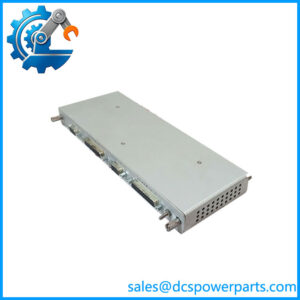
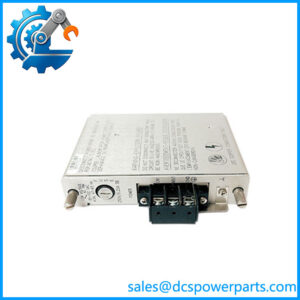
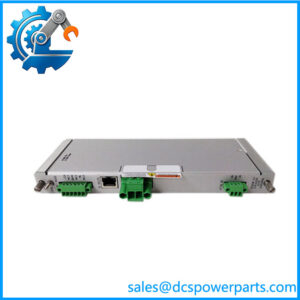
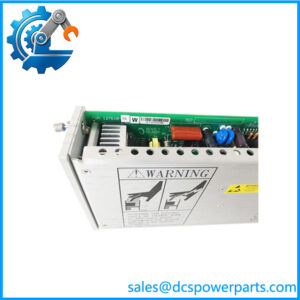
Small rotating machines do not always need a rack-based machinery monitoring system, but they still need a vibration signal that a PLC, DCS, or machine controller can interpret. The Bently Nevada 167577-05, associated with the 990-04-XX-02-05 configuration, is part of the 990 Vibration Transmitter family. It accepts a 3300 NSv proximity probe signal, conditions the measured shaft vibration, and provides a proportional 4–20 mA output for machinery monitoring and control logic.
The 990 configuration integrates the proximity-sensing electronics into the transmitter, eliminating the need for a separate external Proximitor unit. The 04 option corresponds to a 0–4 mils peak-to-peak (0–100 μm pp) full-scale vibration range, while 02 identifies the bulkhead-screw mounting arrangement and 05 identifies the associated hazardous-area/marine approval configuration reported for this version. The 167577-05 modification identifier is important during replacement because a generic 990 transmitter should not be assumed to have identical configuration or approval characteristics.
Key Technical Specifications
| Parameter | Specification |
|---|---|
| Product Model | 990-04-XX-02-05 |
| Modification | 167577-05 |
| Manufacturer | Bently Nevada |
| Product Family | 990 Vibration Transmitter |
| Product Type | Vibration Transmitter |
| Vibration Input | 3300 NSv non-contacting proximity probe |
| System Cable Length | 5 m or 7 m, depending on XX configuration |
| Full-Scale Measurement | 0–4 mils pp (0–100 μm pp) |
| Output Signal | 4–20 mA DC |
| Output Configuration | 2-wire loop |
| Power Requirement | +12 to +35 VDC |
| Maximum Loop Resistance | 1,000 Ω including cable at 35 VDC |
| Frequency Response | 5 Hz to 6,000 Hz, +0/−3 dB |
| Current Limiting | 23 mA typical |
| Prox Out Linear Range | 1.4 mm (55 mils) |
| Prox Out Scale Factor | 7.87 mV/μm (200 mV/mil), ±6.5% typical |
| Minimum Target Diameter | 9.5 mm (0.375 in) |
| Probe Gap for Full-Scale Range | 0.5–1.75 mm (20–55 mils) |
| Mounting | Bulkhead screws |
| Output Diagnostic | Non-isolated PROX OUT and COM |
| Adjustment | Non-interacting zero and span |
| Not OK / Signal Defeat | Yes |
| Agency Configuration | CSA Division 2 / ATEX Zone 0 / Zone 2 / ABS maritime approval, subject to exact configuration |
| Modification Reference | 167577-05 |
The core 990 specifications are documented by Bently Nevada/Baker Hughes. Exact approval applicability should be checked against the transmitter’s nameplate because the 990 family contains multiple configuration options.
Major Features and Engineering Advantages
Integrated proximity measurement electronics
The 990 is not merely a 4–20 mA signal converter. Its architecture incorporates the proximity-sensing function required to process a 3300 NSv probe, allowing the transmitter to directly convert the probe measurement into a plant-standard analog output. This is particularly useful for OEM machinery packages where the control system only needs a proportional vibration signal rather than a complete rack-based monitoring system.
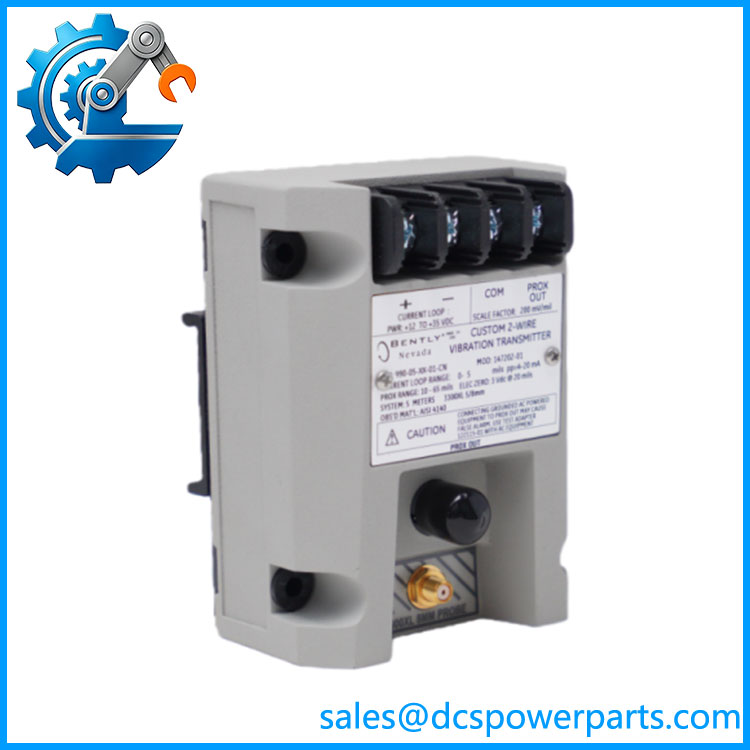
167577-05
0–4 mils peak-to-peak configuration
The 04 option identifies the 0–4 mils pp (0–100 μm pp) full-scale range. This should be treated as a configuration-specific measurement range, not a generic specification for every 990 transmitter. When replacing a transmitter, compare the complete ordering code rather than purchasing another 990 based only on the family name.
Direct 4–20 mA interface
The transmitter produces a proportional 4–20 mA signal suitable for connection to a control or monitoring system. Bently Nevada specifies the 4–20 mA output in a two-wire configuration, with loop accuracy within ±1.5% over the specified full-scale range under the stated test conditions.
Wide measurement bandwidth
The documented frequency response is 5 Hz to 6,000 Hz with a +0/−3 dB response specification. That bandwidth makes the device suitable for monitoring vibration behavior on rotating equipment where the control system requires more than a slow process-variable trend.
Diagnostic Prox Out
The transmitter provides a non-isolated PROX OUT signal and COM connection, along with a coaxial interface on the applicable configuration. This allows maintenance personnel to observe the raw proximity measurement and gap-related information during commissioning or troubleshooting rather than relying exclusively on the 4–20 mA loop.
Not OK / Signal Defeat protection
The 990 includes a Not OK/Signal Defeat function intended to prevent a defective probe or connection problem from being interpreted as a legitimate high vibration signal. Bently Nevada’s datasheet specifies that the output falls below 3.6 mA within 100 μs after a Not OK condition and returns after the fault is removed according to the specified recovery behavior.
Application Scenarios & Field Pain Points
Centrifugal compressors
The 990 family was designed in part for OEM applications involving centrifugal air compressors. A proportional vibration signal can be sent directly to the machine controller or plant control system for alarming and shutdown logic.
Small pumps and motors
For smaller rotating assets, a dedicated 990 transmitter can provide a practical interface between a proximity probe and the plant’s analog input system without installing a complete machinery-monitoring rack.
Fans and auxiliary rotating equipment
The 4–20 mA output is useful when the DCS or PLC already handles equipment alarming and the engineering requirement is a continuously scaled vibration variable rather than a dedicated vibration-monitoring display.
OEM packaged machinery
This is one of the more important use cases. The 990 was specifically intended for OEMs wanting a simple proportional vibration signal. The integrated sensing electronics can simplify the machinery package, but only when the probe type, cable length, measurement range, and transmitter configuration are correctly matched.
Related Products
- Bently Nevada 990 Vibration Transmitter — Same general transmitter family with different range, cable, mounting, and approval configurations.
- Bently Nevada 991 Thrust Transmitter — Related 990/991 family product intended for axial/thrust measurement rather than radial vibration.
- Bently Nevada 3300 NSv Proximity Probe — The specified probe family used with the 990 transmitter.
- Bently Nevada 3300 NSv Extension Cable — Matching extension cable used to complete the probe system.
- Bently Nevada 3300 XL Proximitor System — Separate proximity measurement architecture; not automatically interchangeable with a 990 installation.
- Bently Nevada 3500 System — Rack-based machinery monitoring platform with substantially different architecture and I/O requirements.
The 990 should not be treated as a drop-in replacement for a 3300 XL Proximitor or a 3500-series monitoring channel. The measurement architecture, probe/cable combination, output type, and machine-control logic are different.
Engineer’s Guide — Field Pitfalls to Avoid
1. Do not buy by 167577-05 alone.
The modification number identifies a particular configuration reference. The complete 990-04-XX-02-05 MOD: 167577-05 combination is much more useful for procurement. Check the transmitter label and installed probe/cable before approving a replacement.
2. Confirm the 04 measurement range.
The 04 configuration corresponds to 0–4 mils pp (0–100 μm pp). Installing a transmitter with a different full-scale range can change the relationship between actual shaft vibration and the 4–20 mA value.
3. Verify the 5 m or 7 m system length.
The XX portion of the configuration is associated with the system-length option. Do not substitute a different probe/extension arrangement merely because the connector appears compatible.
4. Check probe gapping.
Bently Nevada specifies a probe gap of approximately 0.5–1.75 mm (20–55 mils) for the full-scale operating range. Poor mechanical gapping can produce an electrical problem that looks like a transmitter fault.
5. Check loop resistance before commissioning.
The maximum specified loop resistance is 1,000 Ω including cable at 35 VDC. Long cable runs, barriers, isolators, and DCS input resistance all contribute to the loop budget.
6. Do not treat PROX OUT as an isolated analog output.
The documented PROX OUT is non-isolated. If it is connected to test equipment or another monitoring device, check the grounding and signal-reference arrangement before making the connection.
7. Verify hazardous-area approvals from the actual nameplate.
The exact 05 configuration is associated with CSA Division 2, ATEX Zone 0/Zone 2 and ABS maritime approval in available product references. Approval markings and certification conditions should still be checked on the actual unit for a safety- or hazardous-area installation.
FAQ
What is Bently Nevada 167577-05?
167577-05 is a modification reference associated with the Bently Nevada 990-04-XX-02-05 Vibration Transmitter configuration. It is not, by itself, the complete functional model number. The complete 990 configuration should be used when identifying a replacement.
What does the Bently Nevada 990-04-XX-02-05 measure?
It measures vibration displacement from a compatible 3300 NSv proximity probe and converts that measurement into a proportional 4–20 mA signal. The 04 option provides a 0–4 mils pp (0–100 μm pp) full-scale range.
Is the 990-04-XX-02-05 a two-wire transmitter?
Yes. The 990 uses a two-wire 4–20 mA arrangement and requires +12 to +35 VDC at the transmitter terminals. Maximum loop resistance is specified as 1,000 Ω including cable at 35 VDC.
Which probe is compatible with the 990 transmitter?
The documented input is a Bently Nevada 3300 NSv non-contacting proximity probe with its matching extension cable. The probe, extension cable, transmitter configuration, and system length should be treated as one measurement chain when troubleshooting or replacing components.
What is the frequency response?
The 990 datasheet specifies 5 Hz to 6,000 Hz, +0/−3 dB. The PROX OUT path also provides the raw proximity measurement for diagnostic purposes.
What should I verify before purchasing a replacement for 167577-05?
Verify the complete 990-04-XX-02-05 MOD: 167577-05 identification, the 0–4 mils pp range, 5 m or 7 m probe-system length, 3300 NSv probe compatibility, mounting arrangement, hazardous-area approval markings, and actual inventory condition. For an installed machine, also compare the existing transmitter’s nameplate and calibration settings before accepting an alternative 990 configuration.
Is 167577-05 interchangeable with every Bently Nevada 990 transmitter?
No. The 990 is a configurable product family. Range, system length, mounting, approvals, and modification references can differ. A transmitter that belongs to the same 990 family is not automatically an equivalent replacement.