Description
Product Introduction
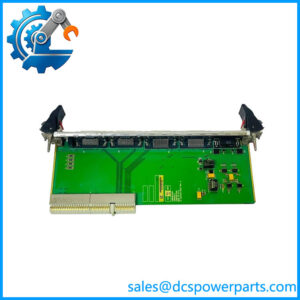
In marine automation, a fault in a data-handling module can interrupt signal exchange between monitoring and control equipment, making it harder for the crew to distinguish a communication problem from a field-device fault. The STN Atlas MXM401, part number 271.130 436, is identified as a multiplexer module used in marine automation equipment. Related listings connect the model with STN Atlas, Lyngsø Marine, and SAM Electronics systems.
For maintenance engineers, correct variant identification is the first priority. Confirm the full suffix, associated system, connector arrangement, and existing module documentation before sourcing a replacement. Public product listings provide limited verified electrical and interface specifications, so signal capacity, communication protocol, and supply requirements should be checked against the installed unit rather than inferred from the MXM401 name alone.
Key Technical Specifications
| Parameter | Details |
|---|---|
| Model | MXM401 |
| Part Number | 271.130 436 |
| Manufacturer / Brand | STN Atlas / STN Systemtechnik Nord; associated listings include Lyngsø Marine and SAM Electronics |
| Product Type | Marine multiplexer module |
| Primary Function | Signal or data multiplexing within a compatible automation system |
| Application | Marine monitoring and control systems |
| Related Identifier | 962.004.900, appearing in associated listings |
| Known Part Variants | 271.130 436/A, 271.130 436/E, 271.130 436/EC |
| Power Supply | Must be verified from the exact module documentation |
| Communication Interface | Exact interface and protocol not independently confirmed |
| Mounting / Connections | Confirm against the installed unit and system drawings |
| Operating Temperature | Verify using the applicable technical manual |
| Condition | New, surplus, or refurbished; confirm for the offered unit |
Procurement caution: Do not assume the 436, 436/A, 436/E, and 436/EC versions are interchangeable. Confirm the full label and any associated part or system identifiers before approving a substitute.
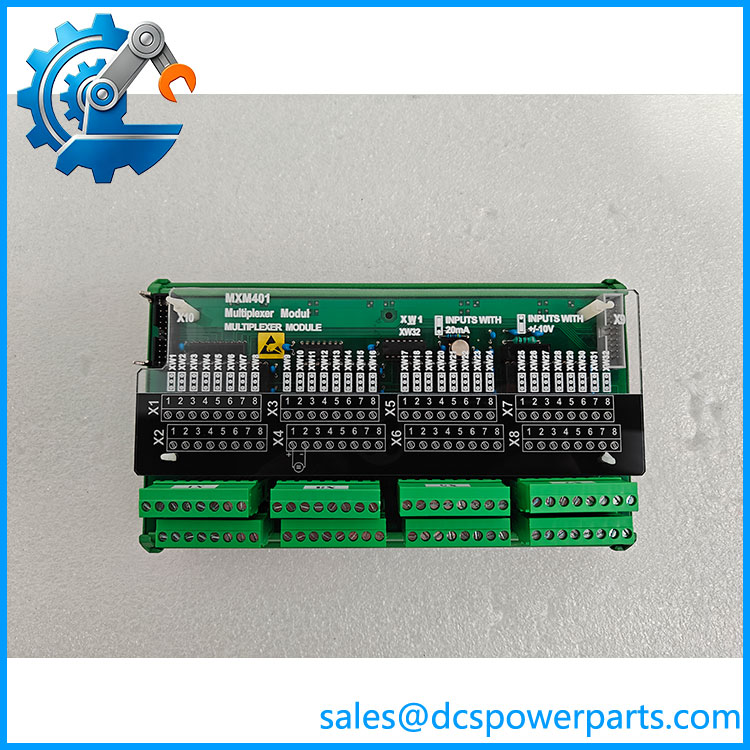
MXM401 271.130 436
Application Scenarios & Pain Points
Marine automation systems often contain legacy modules that are difficult to identify from a partial part number. A replacement that looks similar may still differ in interface, system compatibility, or configuration.
- Shipboard automation maintenance: Source a replacement multiplexer module for an existing STN Atlas or Lyngsø Marine installation.
- Monitoring and control system troubleshooting: Investigate suspected signal-transfer or communication faults before replacing field devices unnecessarily.
- Legacy vessel support: Maintain older marine control systems where original documentation and spare-part availability may be limited.
- Planned maintenance and spare inventory: Keep a verified replacement available after matching the module’s full part number and installed system.
Field note: If the system reports missing or inconsistent data, check upstream signal sources, module connections, power, and neighboring modules before concluding that the MXM401 itself has failed. Record the original wiring and configuration before removing it.
Related Products
These modules appear in the same broader STN Atlas / Lyngsø Marine equipment ecosystem. They perform different functions and are not confirmed drop-in replacements for the MXM401.
- DEM401 — Digital Input Module: Handles digital input signals in compatible marine automation systems.
- AEM401 — Analog Input Module: Used for analog signal acquisition; verify its full part number and input ranges.
- DRM401 — Digital Relay Module: Associated with relay and input functions in the system.
- DSM401 — Diesel Control Module: Related to diesel-engine control applications.
- ZM401 — Central Module: A central control component identified in the STN Systemtechnik product family.
- SIM401 — Dual Serial Interface Module: Provides a serial-interface function in compatible equipment.
- MXM402 — Multiplexer Module: A related multiplexer model, but compatibility with an MXM401 installation must be established from the system documentation.
Engineer’s Guide: Field Pitfalls to Avoid
1. Ordering against an incomplete part number
The family appears in listings with multiple suffixes and associated identifiers. A partial match can result in a module that does not fit the existing configuration.
Avoid it: Photograph the entire nameplate and record every suffix, revision, and secondary part number. Compare the details with the installed module and system documentation.
2. Assuming the signal interface is identical
The available listings do not conclusively establish the exact electrical interface, signal capacity, or communications protocol for every variant.
Avoid it: Obtain the applicable wiring diagram and technical manual. Verify connector pin assignments, signal types, supply requirements, and module role before installation.
3. Replacing the module without preserving the original configuration
In a legacy marine system, wiring and configuration records may be incomplete. Removing a module without documenting its connections can extend troubleshooting time.
Avoid it: Label connections, photograph the installed assembly, and record fault indications before removal. After installation, verify expected data transfer and related alarms using the vessel’s approved commissioning procedures.
Frequently Asked Questions
Q1: What is the STN Atlas 271.130 436 used for?
It is identified in available product listings as a marine automation multiplexer module. Its precise role and supported signals depend on the host system and the specific hardware variant.
Q2: Is the same product as Lyngsø Marine or SAM Electronics ?
Listings associate these names with the family, but the brand name alone is not enough to establish complete hardware equivalence. Compare the full part number, revision, and installed-system documentation before substituting one unit for another.
Q3: What is the difference between 271.130 436/A, 436/E, and 436/EC?
These suffixes appear in product listings for variants. The available information does not establish a complete technical comparison between them. Check the unit’s label and the corresponding manufacturer documentation rather than assuming the suffixes are interchangeable.
Q4: What voltage and communication protocol does the use?
I could not verify a definitive supply-voltage range or communication protocol for the exact 271.130 436 version from the available references. Use the module’s nameplate, system wiring diagram, and applicable technical manual to confirm these details before installation.
Q5: How can I verify the condition of a replacement module?
Request clear photographs of the actual unit, its complete part number and revision, and a written condition classification. For a used or refurbished unit, ask for evidence of inspection and functional testing in a compatible system.
Q6: Can MXM402 replace ?
Not automatically. Although both are listed as multiplexer modules, a shared function does not prove compatible electrical interfaces, signal handling, or system configuration. Require documented compatibility before approving an MXM402 substitution.
Q7: What should I provide when requesting a quotation?
Provide the full model , part number 271.130 436, all visible suffixes, the host system or equipment model, required quantity, preferred condition, and delivery deadline. Include a photograph of the nameplate if possible, and request written confirmation of compatibility, testing, warranty, and return terms.