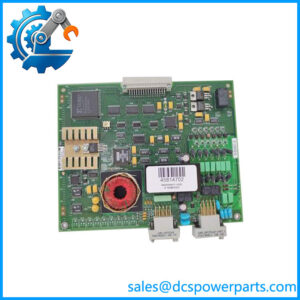
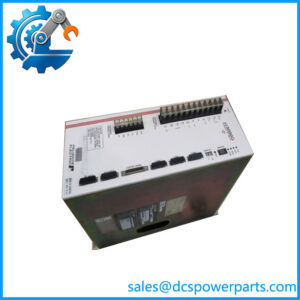
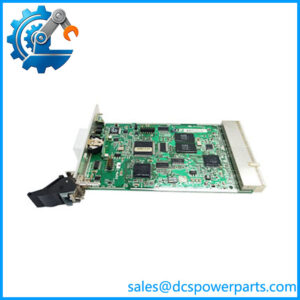
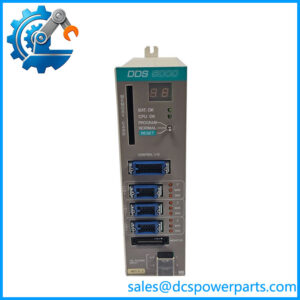
Description
RELIANCE ELECTRIC 45C992
Key Technical Specifications
| Parameter | Specification |
|---|---|
| Manufacturer | Reliance Electric |
| Model | 45C992 |
| Product Family | Shark XL II |
| Product Type | Analog Input Module |
| Number of Inputs | 8 channels |
| Input Signal | 0–10 VDC |
| Resolution | 8-bit |
| Input Impedance | 100 kΩ |
| Conversion Time | Approximately 1 ms |
| Input Isolation | No isolation between individual analog inputs |
| Operating Temperature | 0 to 55°C |
| Storage Temperature | -20 to +70°C |
| Operating Humidity | 30–90% |
| Installation | Shark XL II controller I/O system |
Rockwell Automation’s Shark XL II documentation explicitly identifies 45C992 as the 8-channel 0–10 VDC analog input module. The same manual distinguishes it from 45C990, which is the 8-channel 4–20 mA input module.
Product Introduction
The RELIANCE ELECTRIC 45C992 is an eight-channel analog input module designed for the Shark XL II programmable controller platform. Its primary job is to accept 0–10 VDC field signals and convert them into digital values that the PLC can process for monitoring, sequencing, and closed-loop control. The module provides eight analog input points through the Shark XL II I/O architecture, making it suitable for applications where several voltage-output instruments must be connected to the controller.
For maintenance teams, the RELIANCE ELECTRIC 45C992 is mainly a legacy-system replacement item. It should not be treated as a general-purpose modern analog input card. Compatibility depends on the Shark XL II hardware configuration, I/O addressing, wiring arrangement, and application configuration. The original Rockwell manual remains particularly useful here because it defines 45C992 as a dedicated 0–10 VDC module rather than a universal voltage/current input device.
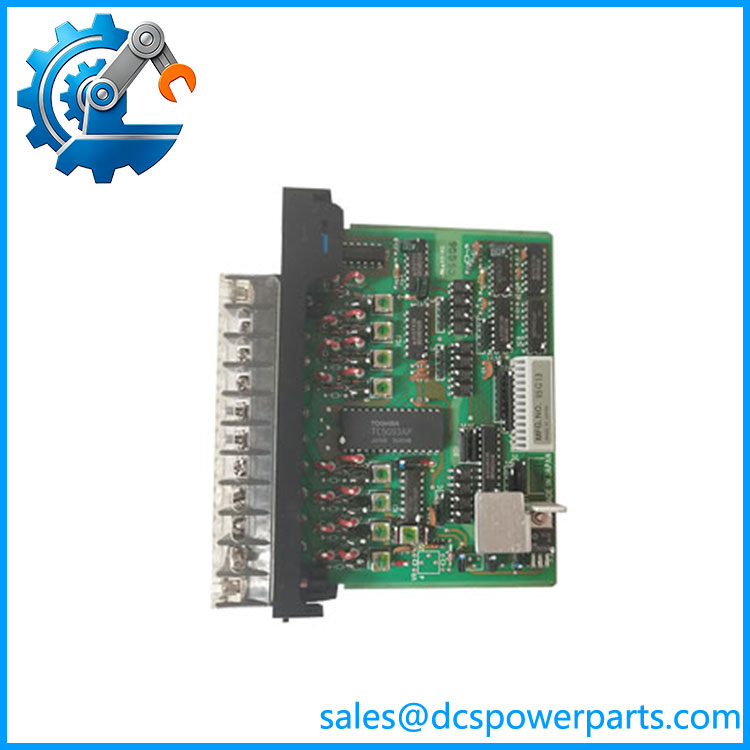
45C992
Application Scenarios & Field Pitfalls — The Engineer’s Perspective
Engineering Pain Point
A frequent problem with older PLC installations is finding a replacement analog module while preserving the original field wiring and application configuration. The 45C992 is straightforward electrically—eight 0–10 VDC inputs—but it belongs to a legacy Shark XL II architecture. Substituting a superficially similar analog card without checking the controller family can create addressing, scaling, or wiring problems.
Typical Applications
- Process monitoring: Acquisition of 0–10 VDC signals from pressure, level, position, and other transmitters.
- Machine automation: Reading analog feedback from sensors and machine instrumentation.
- PLC-based control: Supplying analog process values to Shark XL II CPU logic.
- Legacy system maintenance: Maintaining existing Reliance Electric installations without an immediate controls migration.
Technical Pitfalls
1. Do not confuse 45C992 with 45C990.
The Shark XL II manual identifies 45C990 as the 8-channel 4–20 mA analog input module, while 45C992 is specifically the 8-channel 0–10 VDC version.
2. Do not assume current-input capability.
Some secondary catalogs incorrectly describe 45C992 as accepting configurable voltage and current signals. The Rockwell documentation is more specific: 45C992 is a 0–10 VDC input module.
3. Check the signal source before installation.
A 4–20 mA transmitter should not simply be wired to the 45C992 as though it were a current-input card. If the existing instrument is current-output, the correct Shark XL II input module or an appropriate signal-conditioning arrangement must be established.
4. Account for the lack of individual input isolation.
Available technical documentation reports no isolation between the analog inputs. Grounding and common-reference arrangements therefore deserve attention, particularly when signals originate from different pieces of field equipment.
5. Verify scaling in the PLC program.
Replacing the hardware does not automatically guarantee correct engineering-unit values. Confirm the original raw-value scaling, zero/span assumptions, alarm thresholds, and channel assignments after replacement.
6. Test every channel when using surplus inventory.
For an older 45C992, a visual inspection is not enough. Apply known 0–10 VDC test signals across the required channels and verify that the PLC receives stable and correctly scaled values.
Related Products
- RELIANCE ELECTRIC 45C990 — 8-channel 4–20 mA analog input module; the closest functional alternative, but it uses a different field signal type.
- RELIANCE ELECTRIC 45C993 — 2-channel 4–20 mA analog output module.
- RELIANCE ELECTRIC 45C994 — 2-channel 0–10 VDC analog output module.
- RELIANCE ELECTRIC 45C995 — 4-channel 4–20 mA analog output module.
- RELIANCE ELECTRIC 45C997 — 4-channel 0–10 VDC analog output module.
- RELIANCE ELECTRIC 45C980 — Shark-series digital input hardware.
- RELIANCE ELECTRIC 45C982 — Shark-series digital output hardware.
- RELIANCE ELECTRIC 45C200 Series — Shark controller CPU hardware.
Procurement note: For a 45C992 replacement, specify the complete 45C992 part number and confirm that the existing system is Shark XL/XL II. For a used unit, request photographs of the actual module label and terminal area, then verify the eight-channel 0–10 VDC configuration before installation.