Description
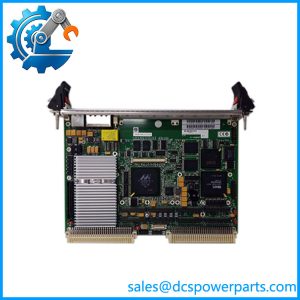
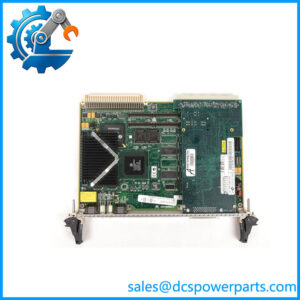
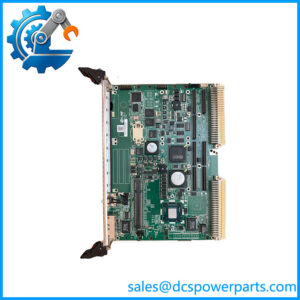
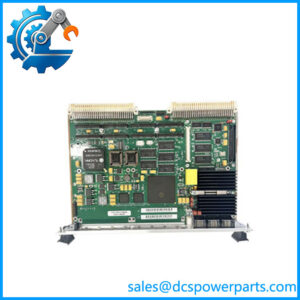
Motorola MVME51105E-2161
Product Introduction
In older VME control computers, the processor board is often the part that becomes difficult to replace long after the application software and I/O hardware remain serviceable. The Motorola MVME51105E-2161 was built for exactly this type of architecture: a 6U VME single-board computer using the MPC7410 PowerPC processor, 512 MB ECC SDRAM, 17 MB flash, and 2 MB of L2 cache. Its role is the computing and control layer rather than a conventional PLC I/O module.
For maintenance teams supporting legacy VME platforms, the important procurement issue is configuration accuracy. The MVME51105E-2161 should not be treated as interchangeable with every MVME5100/MVME5110 board. Processor speed, memory configuration, front-panel style, PMC requirements, rear-I/O hardware, and installed software all need to match the existing system. In a migration or legacy PLC/DCS computer replacement, checking the complete part number and board markings before installation can prevent a surprisingly expensive commissioning problem.
Key Technical Specifications
| Parameter | Specification |
|---|---|
| Product Model | MVME51105E-2161 |
| Manufacturer / Brand | Motorola |
| Product Family | MVME5100 / MVME5110 |
| Product Type | 6U VME Single Board Computer |
| Processor | MPC7410 PowerPC |
| Processor Speed | 400 MHz |
| Main Memory | 512 MB ECC SDRAM |
| Flash Memory | 17 MB |
| L2 Cache | 2 MB |
| Front Panel | Scanbe 5E |
| VME Interface | VME architecture |
| PMC Expansion | PMC-compatible expansion architecture |
| Typical Application | VME control, industrial computing, data acquisition, embedded real-time control |
| Installation | VME chassis / backplane |
| Condition | Legacy; verify physical and functional condition |
The published MVME5100 ordering information distinguishes the -2161 from the -2163 primarily by front-panel configuration: both are specified with 400 MHz MPC7410, 512 MB ECC SDRAM, 17 MB flash, and 2 MB L2 cache, while -2161 is the Scanbe version and -2163 is the IEEE 1101-compatible version.
Application Scenarios & Field Pain Points
A VME processor board rarely fails in isolation from the rest of the system. The bigger problem is usually finding a replacement that matches the old software image, PMC arrangement, backplane configuration, and I/O transition hardware.
Typical applications include:
- Legacy industrial control computers — Used as the processor/controller layer in VME-based automation equipment where the existing application cannot easily be migrated to a modern PLC or industrial PC.
- Data acquisition systems — The PowerPC processor and ECC memory provide the computing platform while PMC or rear-I/O hardware handles application-specific interfaces.
- Embedded real-time control — Suitable for systems built around VME backplanes and legacy real-time operating environments.
- VME system replacement — Useful when maintaining an existing machine or control cabinet is less disruptive than redesigning the entire VME architecture.
One practical point: do not confuse this board with a VME analog or digital I/O card. MVME51105E-2161 is the computing platform. The actual field interfaces may reside on PMC modules, transition modules, or other VME cards.
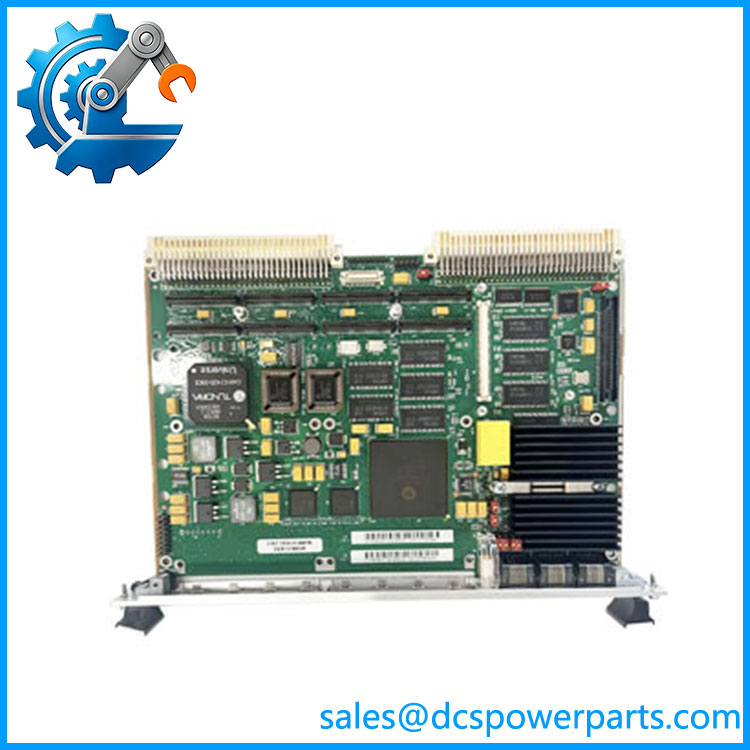
MVME51105E-2161
Related Products
The following parts belong to the same MVME5100 architecture or are documented as compatible expansion hardware. They should be treated as related components, not automatic drop-in replacements.
- MVME51105E-2163 — Same 400 MHz MPC7410 / 512 MB / 17 MB flash / 2 MB L2 configuration, but with IEEE 1101-compatible front-panel hardware.
- MVME51105E-2261 — 500 MHz MPC7410 version with 512 MB ECC SDRAM, 17 MB flash, 2 MB L2 cache, and Scanbe front panel.
- MVME51105E-2263 — 500 MHz MPC7410 configuration with IEEE 1101-compatible front panel.
- MVME51005E-0161 — MPC750-based MVME5100 variant with 512 MB ECC SDRAM, 17 MB flash, and 1 MB L2 cache.
- MVME51005E-0163 — IEEE-front-panel version of the corresponding MPC750 configuration.
- MVME5107-2161 — Extended-temperature configuration with 512 MB ECC SDRAM, 17 MB flash, and 2 MB L2 cache.
- IPMC7126E-002 — Multifunction rear-I/O PMC module supporting SCSI, parallel and serial interfaces.
- IPMC7616E-002 — Rear-I/O PMC option associated with the MVME5100 architecture.
- MVME712M6E — Transition module providing rear-I/O connections including serial, AUI, parallel and SCSI interfaces.
- MVME7616E-001 / -011 — Transition-module options for corresponding rear-I/O configurations.
The official ordering information specifically lists IPMC7126E-002, IPMC7616E-002, MVME712M6E and MVME7616E-series hardware as compatible I/O options.
Engineer’s Guide: Field Pitfalls to Avoid
1. Do not confuse -2161 with -2261
This is the first procurement trap.
MVME51105E-2161 = 400 MHz MPC7410.
MVME51105E-2261 = 500 MHz .
They look very similar in the ordering code. A purchasing system that truncates or incorrectly normalizes the part number can create a substitution problem. Verify the complete label before accepting a replacement.
2. Do not assume every MVME5110 front panel is interchangeable
The -2161 uses the Scanbe 5E front-panel configuration. The -2163 uses an IEEE 1101-compatible configuration.
If the board is being installed into an existing VME chassis, check the mechanical/front-panel arrangement rather than relying only on the processor and memory specifications.
3. Check the PMC and rear-I/O architecture
The processor board itself does not tell you the complete system configuration. PMC cards and transition modules may provide SCSI, serial, parallel, or other application-specific interfaces.
Before removing the old board, photograph and document:
- PMC modules
- P1/P2 rear connections
- Transition module
- VME slot position
- Serial console connection
- Boot configuration
- Application storage arrangement
4. Verify the software environment
Hardware replacement does not guarantee application compatibility.
Older installations can depend on a specific firmware image, board-support package, real-time operating system, device driver set, or application binary. If the original system uses a customized VxWorks or similar environment, preserve the existing software image before replacing hardware.
5. Inspect the VME connectors carefully
On long-service VME equipment, connector condition can be more important than the CPU itself. Oxidation, mechanical wear, contamination, or damaged pins can produce intermittent failures that initially look like processor faults.
Inspect P1/P2 connectors and the chassis backplane before declaring the replacement board defective.
6. Check the battery-backed circuitry on older boards
A legacy VME processor may have spent many years powered continuously, followed by years in storage. Battery-backed NVRAM/RTC components therefore deserve inspection during incoming testing.
For used inventory, record the board’s boot behavior and retain any existing configuration data before performing firmware or NVRAM changes.
7. Do not accept a generic “” substitution
, MVME5110, and related MVME variants are not one universal hardware configuration.
The exact processor, memory, front-panel configuration and associated I/O hardware matter. A vendor offering “equivalent ” hardware should be asked for the exact part-number photograph and board revision rather than a family-level description.
FAQ
What is the Motorola ?
It is a 6U VME single-board computer in the Motorola /MVME5110 family. The documented -2161 configuration uses a 400 MHz PowerPC processor, 512 MB ECC SDRAM, 17 MB flash and 2 MB L2 cache.
Is a PLC I/O module?
No. It is a VME processor/SBC board, not a discrete or analog I/O module. Field I/O and application-specific interfaces are normally provided through the surrounding VME/PMC architecture.
What is the difference between and MVME51105E-2261?
The documented difference is processor speed. -2161 is 400 MHz, while -2261 is 500 MHz. Both are specified with 512 MB ECC SDRAM, 17 MB flash and 2 MB L2 cache in the ordering information.
Is the same as MVME51105E-2163?
They share the documented 400 MHz / 512 MB / 17 MB / 2 MB configuration, but the front-panel configuration differs. -2161 is Scanbe 5E; -2163 is IEEE 1101-compatible. Mechanical compatibility should therefore be checked before substitution.
Can replace another board?
Only after checking the complete system configuration. Processor speed, front-panel style, PMC hardware, rear-I/O modules, firmware, operating system and application software all matter. Treat a family-level “equivalent” claim with caution.
What should be checked when purchasing a used ?
Request clear photographs of the full part-number label, PCB markings, connectors, PMC area and front panel. For functional testing, verify power-up behavior, console access, memory detection, VME communication and the installed application environment. Do not rely solely on a seller’s statement that the board is “tested.”
Why are some listings showing different specifications for ?
There are conflicting secondary listings. Some incorrectly associate the -2161 with 500 MHz operation or substantially different memory configurations. The ordering documentation consistently identifies as 400 MHz / 512 MB ECC SDRAM / 17 MB flash / 2 MB L2 cache / Scanbe 5E.
For procurement, I would use the full nameplate number rather than a generic family description.