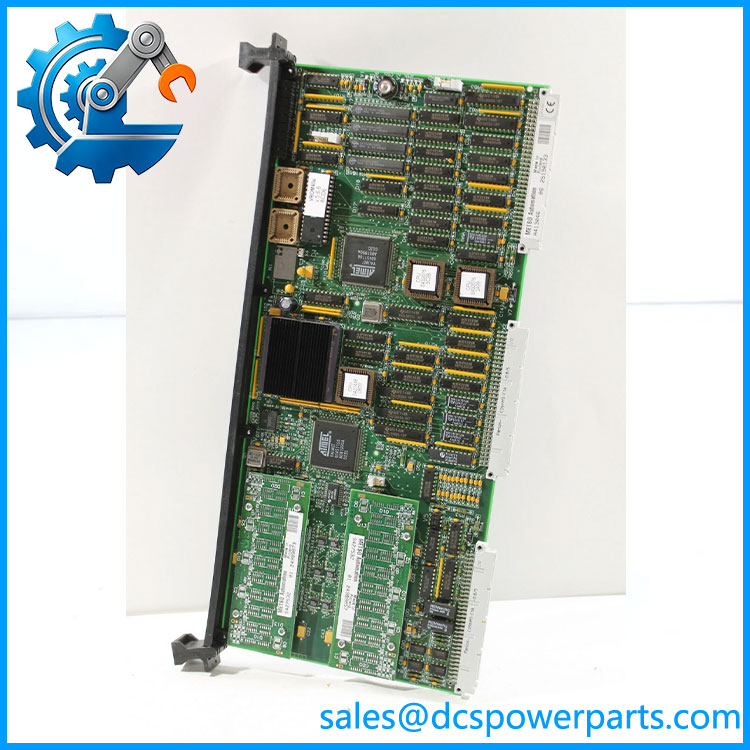
Description
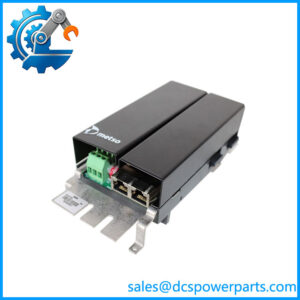
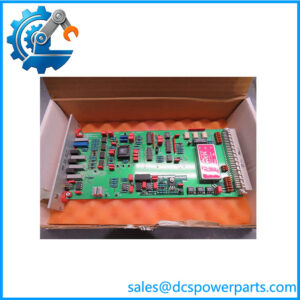
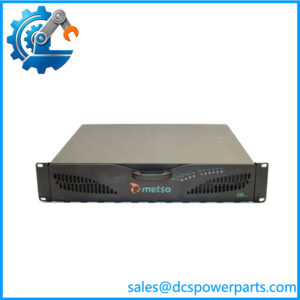
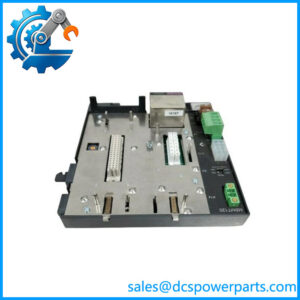
Metso Automation A413046 Central Processing Unit
Product Introduction
A controller failure in an older Metso automation installation is not always a field-I/O problem. When the central processing hardware stops executing correctly, the symptoms can spread across multiple control functions at once—communications, sequence execution, operator information, and downstream I/O behavior. Metso Automation A413046 is identified as a Central Processing Unit circuit board assembly, associated with Metso Automation and Valmet legacy control hardware.
The A413046 should be treated as a processor-specific spare, not as a generic replacement for other A413xxx boards. Public records confirm its CPU classification and discontinued status, but do not provide sufficiently reliable revision-specific information for memory capacity, processor speed, power requirements, or communications interfaces. For a real plant replacement, the installed board identification, revision, system configuration, and firmware compatibility should be checked before the spare is powered up.
Key Technical Specifications
| Parameter | Specification |
|---|---|
| Product Model | A413046 |
| Manufacturer / Brand | Metso Automation / Valmet |
| Product Type | Central Processing Unit |
| Hardware Type | Circuit Board Assembly Module |
| System Category | PLC / Industrial Control |
| Primary Function | Central processing and control execution |
| Application | Legacy Metso/Valmet automation systems |
| Product Status | Discontinued by manufacturer |
| Reported Weight | Approx. 1.23 lb / 0.56 kg |
| CPU Architecture | Verify against installed revision |
| Memory Capacity | Verify against installed revision |
| Supply Voltage | Verify from system documentation |
| Communication Interfaces | Verify from system documentation |
| Firmware Requirements | Verify against target controller |
| Operating Temperature | Verify against applicable system documentation |
The available manufacturer/industrial inventory identification is specific enough to classify A413046 as a CPU / central processing unit circuit board assembly, but not enough to responsibly fill in detailed electrical or firmware specifications.
Application Scenarios & Pain Points
A413046 is relevant primarily to maintenance of installed Metso/Valmet automation systems where the existing controller architecture remains in service.
- Legacy CPU replacement: Used when diagnostic testing points to the central processing board rather than a field I/O module.
- DCS/PLC maintenance: Suitable as a processor spare for an existing installation where replacing the complete control architecture is not yet practical.
- Planned shutdown work: A verified CPU spare can reduce outage exposure when the installed processor has significant operating hours.
- Control-system refurbishment: Useful when aging processor hardware is being renewed while the surrounding rack, I/O, and field wiring remain unchanged.

A413046
Field Note
If the system is still partially operational, capture the existing diagnostics before removing . Record alarms, indicator states, configuration information, firmware identification, and communication behavior. A replacement CPU can restore hardware operation while leaving a configuration or firmware mismatch unresolved.
Related Products
The following Metso/Valmet components can be relevant when reconstructing the surrounding legacy control architecture:
- A413001 — PCB central processor module; another processor-related board, but not automatically interchangeable with .
- A413016 — NCU2 circuit board assembly; a different system board with a separate NCU2 designation.
- A413040 — DCU board; processor/control hardware with a different system function.
- A413042 — CPU board; another Metso/Valmet processor-related assembly requiring exact system matching.
- A413062 — DMU PLC board; different board function.
- A413076 — FBC PLC board; different control/interface role.
- A413077 — FBC2 PCB driver board; driver circuitry rather than the central processor.
- A413160 — FIU-1 analog input module; field-input hardware, not a CPU replacement.
The A413xxx numbering family covers multiple hardware functions. Do not select a substitute based only on the shared A413 prefix. The processor designation, system generation, revision, and firmware/configuration requirements must agree.
Engineer’s Guide — Field Pitfalls to Avoid
1. Do not confuse with another A413xxx CPU board
Metso/Valmet has multiple processor-related boards carrying different A413xxx numbers.
Procurement rule: specify the complete identification and photograph the installed board label before ordering.
2. Firmware compatibility can matter as much as the PCB
A physically correct CPU board may still fail to operate correctly if the firmware or stored configuration is incompatible with the target controller.
Before replacement: document firmware/version information and establish whether configuration data must be transferred to the replacement board.
3. Do not assume memory or processor specifications
Secondary parts databases often reduce legacy boards to a generic “CPU board” description. That does not establish the processor generation, memory size, or execution capabilities of every revision.
Avoid: copying specifications from A413001, A413042, or another CPU board onto .
4. Preserve configuration information before removal
A failed processor may still contain recoverable configuration information.
Maintenance practice: back up available configuration data and record system settings before removing the original board whenever the plant procedure permits it.
5. Inspect the board-to-rack interface
A processor replacement will not correct a damaged connector, contaminated edge contact, unstable power rail, or rack backplane problem.
Before condemning the CPU: verify power distribution and inspect the mechanical/electrical interface.
6. ESD handling is mandatory
A CPU circuit board contains static-sensitive electronic components.
Use: grounded ESD handling, conductive packaging, and controlled storage. Do not leave the replacement board exposed on a workbench while technicians troubleshoot the cabinet.
7. Verify actual inventory condition
Legacy units can appear in different supply conditions. Industrial inventory records distinguish new, unused-original-packaging, refurbished, and used categories.
Receiving inspection: verify the exact part number, board revision, physical condition, connector condition, and functional-test status rather than relying only on a supplier’s condition label.
FAQ
What is Metso Automation ?
is a Metso Automation / Valmet Central Processing Unit circuit board assembly used as processor hardware within a legacy industrial control system. Industrial records place it in the CPU/control-board category.
Is a PLC CPU?
It is identified as a central processing unit / CPU circuit board assembly and is also described in secondary industrial records as a PLC board. The exact controller architecture should still be verified from the installed system before describing it as a particular PLC family.
Is discontinued?
Yes. Industrial parts records identify as discontinued by the manufacturer. That makes verified spare inventory and exact hardware matching important for plants still operating the associated legacy system.
Can A413001 replace ?
Do not assume direct interchangeability. Both are identified as processor-related Metso/Valmet boards, but different part numbers can represent different controller generations, interfaces, firmware requirements, or system positions. Compatibility needs to be confirmed from the target system documentation.
What specifications should I verify before purchasing ?
At minimum, verify the complete part number, revision/version, processor identification, firmware requirements, memory/configuration requirements, connector arrangement, rack position, and system generation. These details are more important than a generic statement that the board is a “CPU replacement.”
What should I check if a replacement does not start the controller?
Start with the basics: incoming and rack power, connector seating, board revision, configuration/firmware compatibility, and diagnostic indicators. If the new board produces exactly the same fault as the original, investigate the rack or power architecture before assuming that two CPU boards have failed.
Is a used acceptable for plant maintenance?
It can be considered for legacy maintenance, but condition should be verified independently. Ask for the exact board identification, revision, photographs, previous-use information when available, and evidence of functional testing. A clean PCB is not proof that a processor board is operational.
Should I keep an as a critical spare?
That decision depends on the installed system’s remaining service life, failure history, replacement lead time, and availability of an approved migration path. For an installation where the is a single point of failure and the control system is still required for production, documenting and validating a spare can be part of a sensible maintenance strategy.